Wildstyle in Shoreditch: how the writing on the wall changes.
Words and Pictures by Connor Tao Fitzpatrick.
While London’s graffiti tours bring millions of visitors in a year, there’s a hidden stylistic war between local taggers on the brick walls of UK cities.
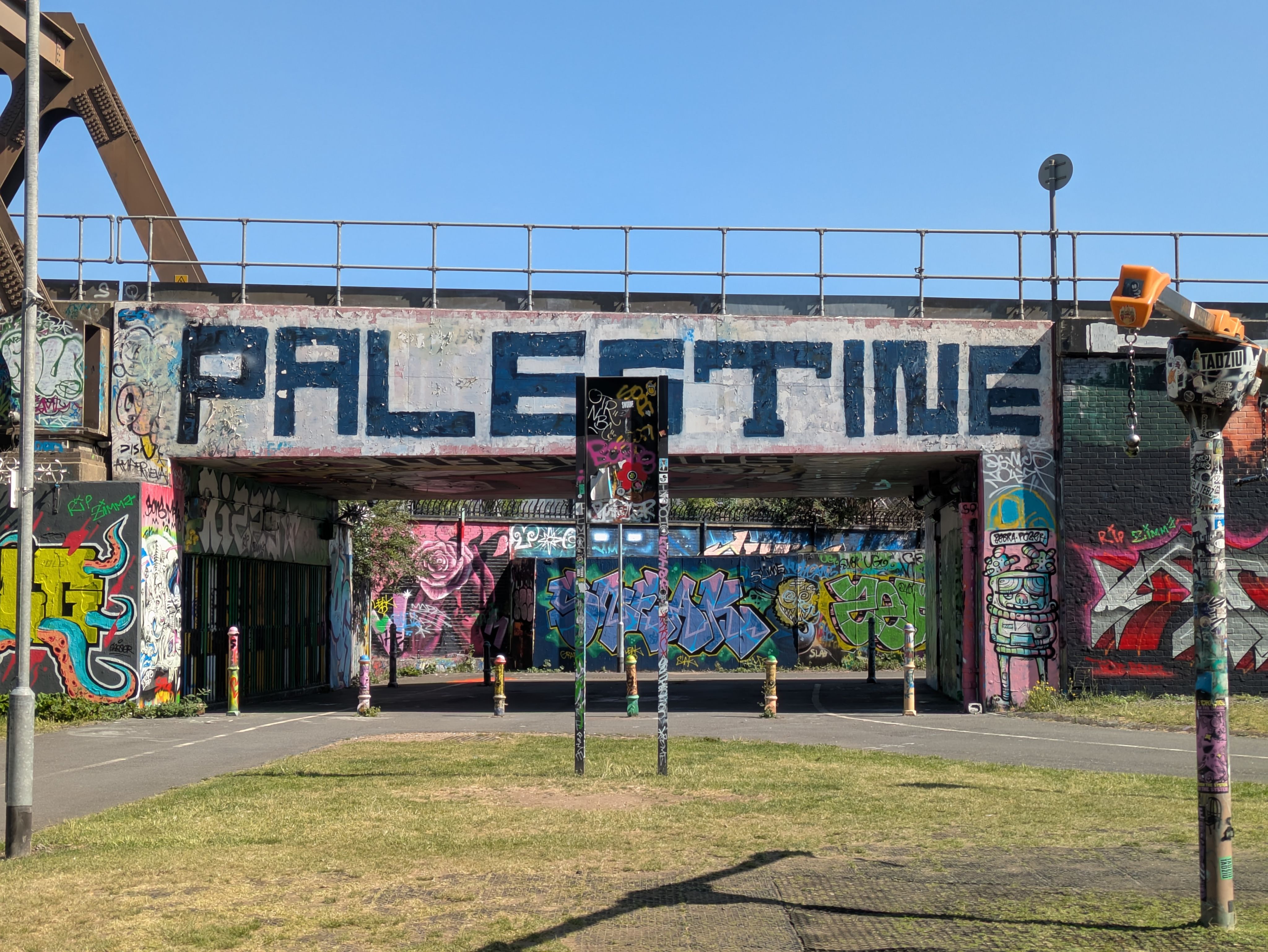


Graffiti and street art hotspots in London and Birmingham are attracting more and more visitors each year.
Areas like Shoreditch, in East London alone, attracted hundreds of thousands of people in 2023, while areas like Digbeth in Birmingham are seeing significant investment into their public art scenes. Tour groups in Shoreditch (London) or the many varieties (music, arts, culture, etc.) of festivals in Digbeth (Birmingham) are an increasingly common sight.
World-renowned artists like STIK or the muralist, Mohammed Ali, emerged from these scenes in the 2010s, and now, the establishment of legal walls and much wider street art commissioning schemes gives artists the freedom to work in broad daylight and safety
It’s a developing culture, with this era defined by the mash-up of styles gained from the influence of social media. In the 90s, it was the tip towards commercialisation that defined the UK street art scenes, bringing underground midnight taggers pendent steps into the world of commercialised art.
Nowadays, that impact is clear; we have two different but merging styles of art-on-the-street: the throw-ups and tags of graffiti and grand murals of street artists.
Legal walls in Shoreditch attract graffiti artists from all over the UK and are ever-changing. They’ve been increasingly introduced to promote tourism and vibrancy, according to a University of Helsinki-published academic paper.
Underground graffiti pre-90s defined the styles we see today popping up as individuals created them. There are hints and locally known names, but due to its illegal nature and anonymity, who knows which collective truly developed the first wildstyle or straight letter pieces?

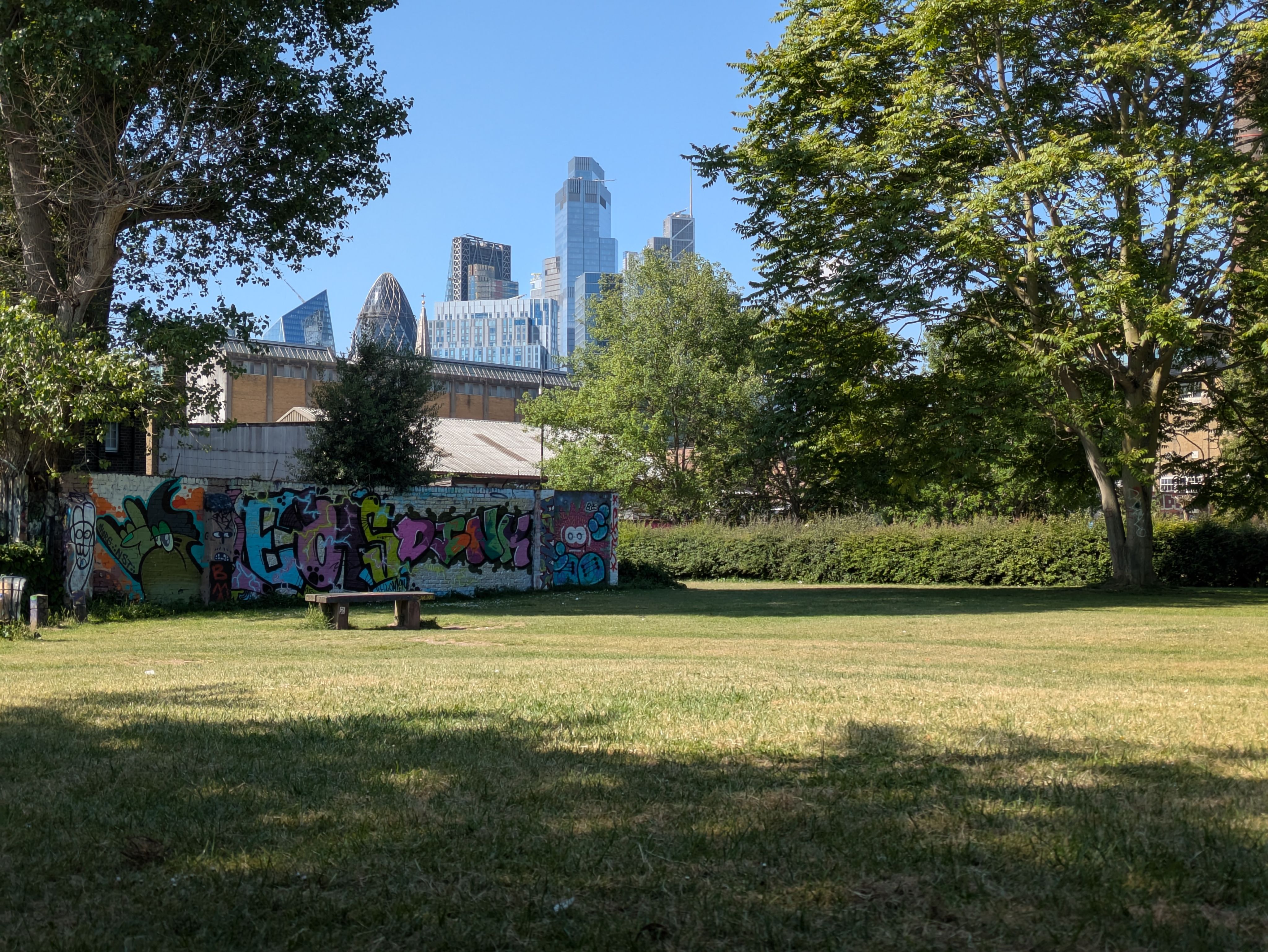
No escape: no matter where you turn in Shoreditch; there’s always a tag.
No escape: no matter where you turn in Shoreditch; there’s always a tag.

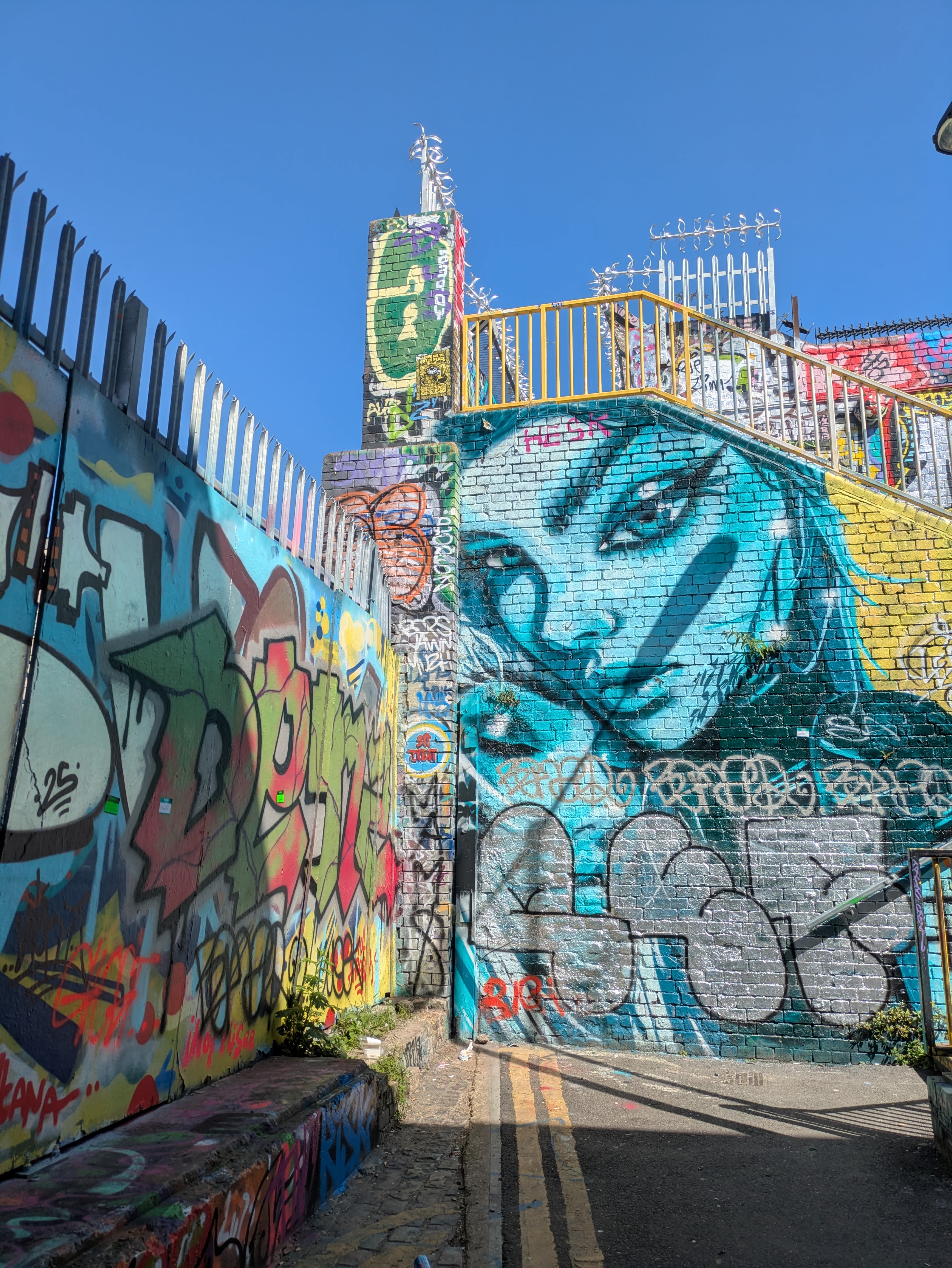
Second coat: this staircase in Shoreditch has pieces layered over eachother
Second coat: this staircase in Shoreditch has pieces layered over eachother
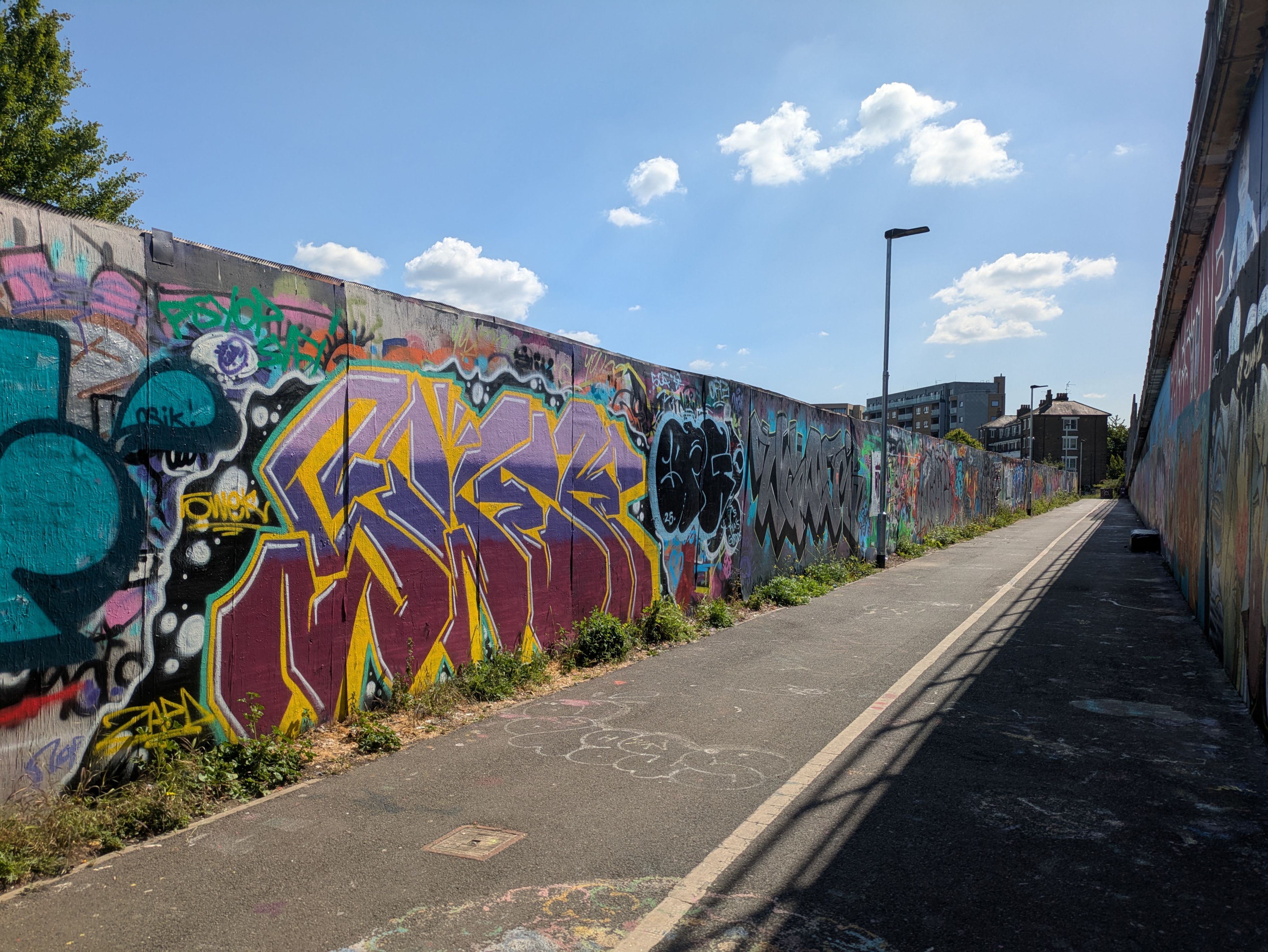
Straight letter: examples of straight letter in Shoreditch
Straight letter: examples of straight letter in Shoreditch
Jason Strout is a self-described striking coach (think everything from kickboxing to Muay Thai) in New York City. He’s visiting Shoreditch while in London, leaving a few of his own pieces while he travels.
Strout said: “Areas like this kind of give you an outlet.”
According to him, it’s the underground community and unique perspective of locals only visible through public art displays that motivates him to pay attention to the writing on the wall in each place he visits.
He tells me about ongoing tensions between graffiti and street art communities before reminiscing about the world of graffiti when he was younger - before commissions or legal walls existed in the 80s.
Strout said: “Back in the day, you did it, but it was a little more hostile.
“Getting back into it in this era of my life is different.”

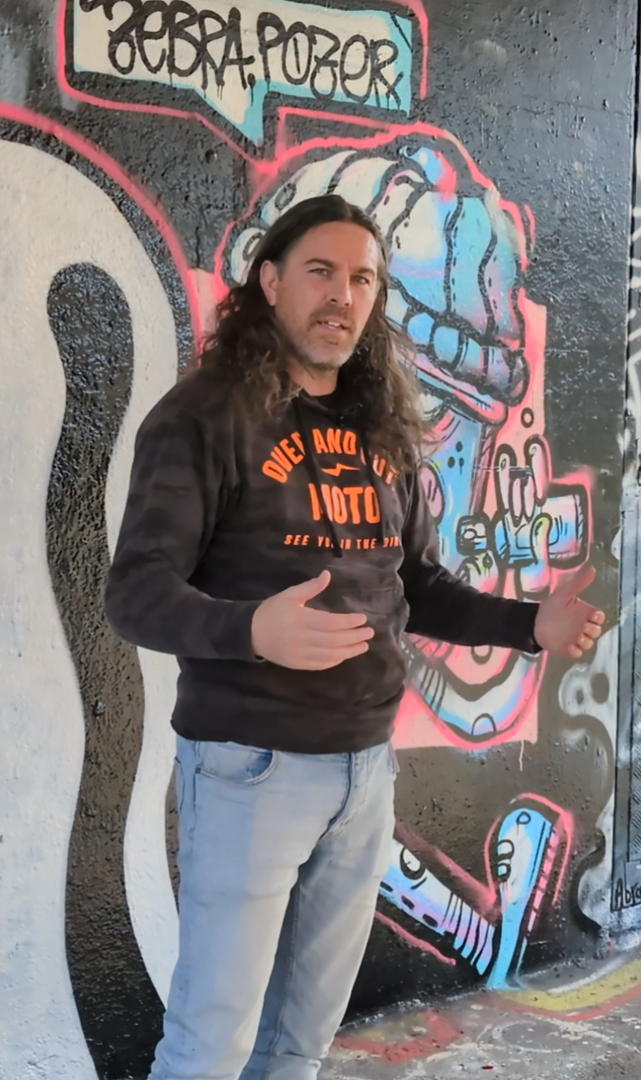
Jason Strout standing in front of his piece.
Jason Strout standing in front of his piece.

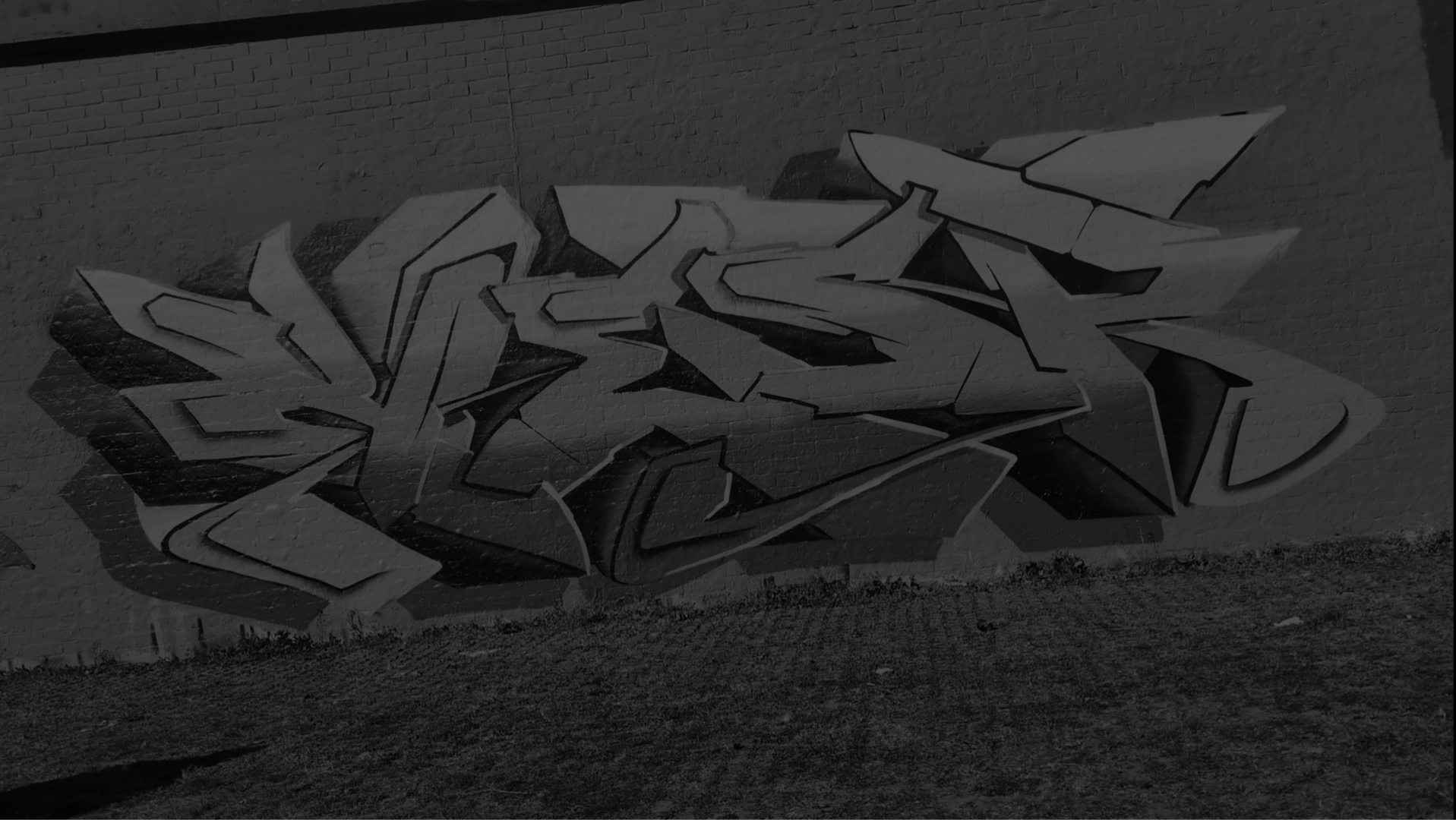

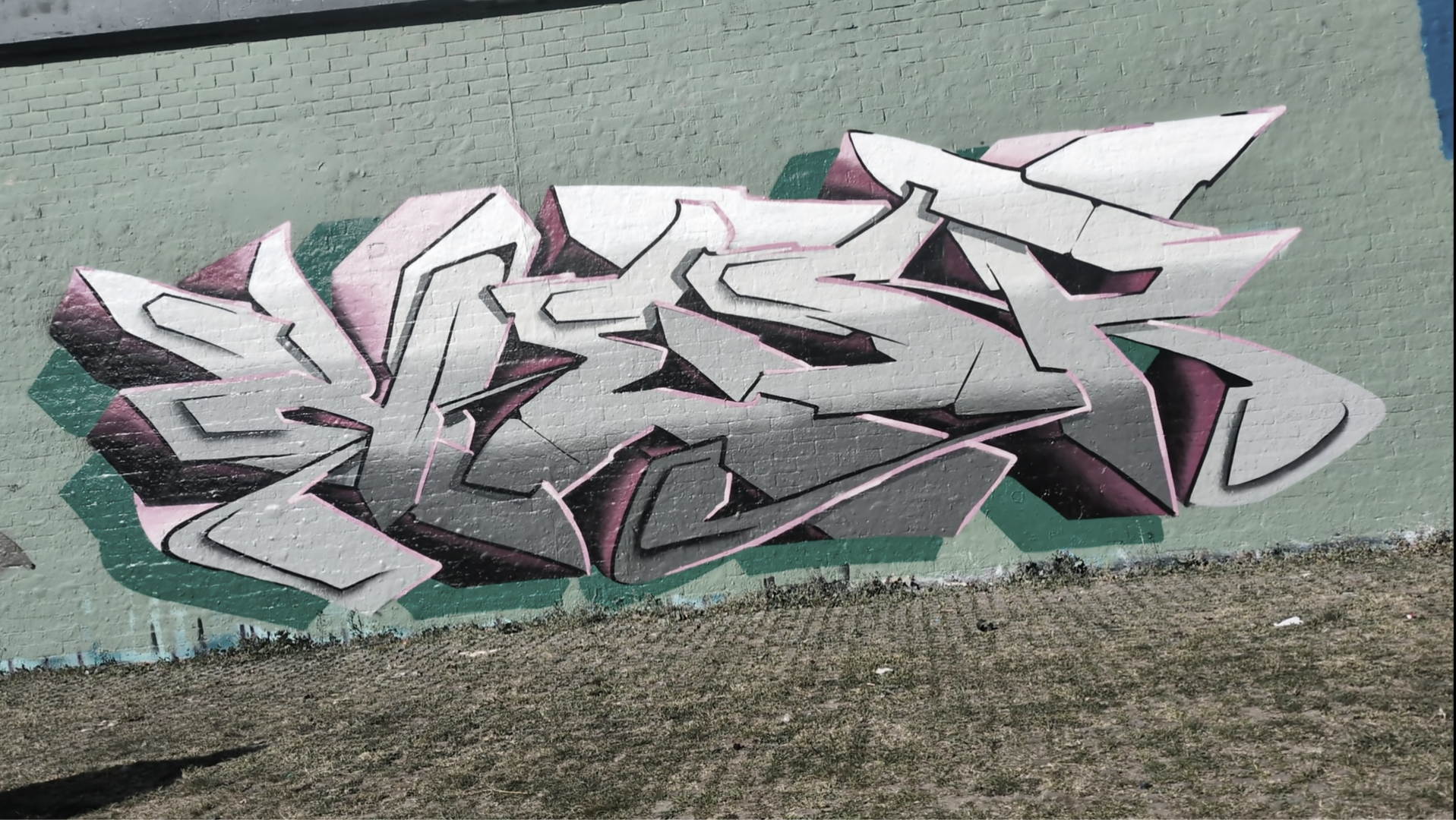

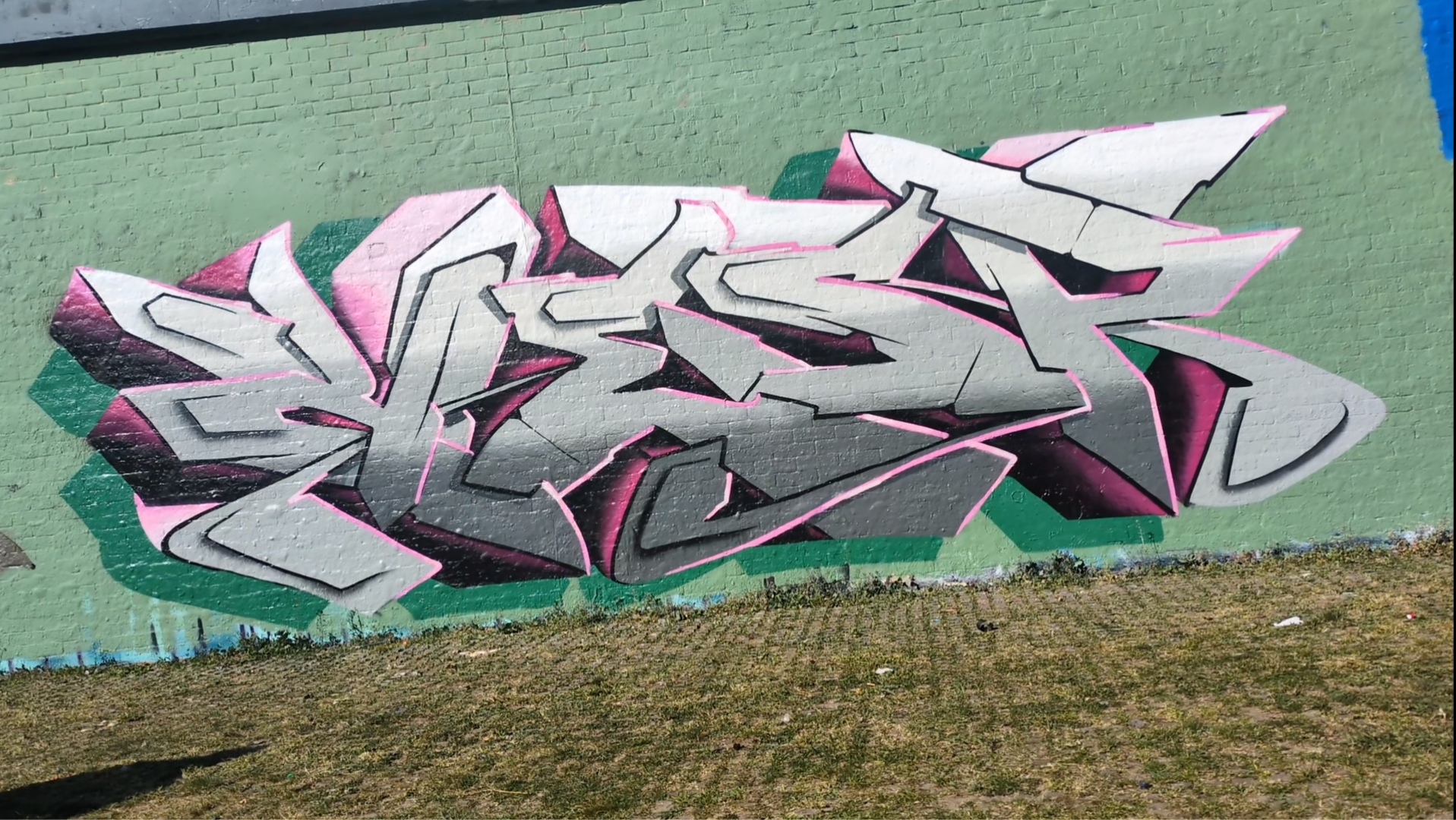
few weeks later, nearby, at a park near Brick Lane on a warm Saturday, there’s a group of self-named graffiti artists at work on a legal wall - most putting up “straight letter” (a type of graffiti focusing on minimalism and boldness).
One artist, known as “Mr Kespone”, is working on a wildstyle piece.
Almost the eclectic uncle of straight letter, wildstyle is complex and highly styilised; you’d be hard-pressed to find any minimalism in Kespone’s pieces.
Kespone said: “This is quite controversial, I think the London scene is a bit behind at the minute because it’s still stuck in straight letter.
“But a legal wall like this, you’ve got all day to paint.”
He compared it to the scene in Birmingham, where he said ultimately it’s the legacy of artists that makes the modern culture. He cites artists like “Bench” returning to Birmingham, revitalising the city’s graffiti communities, but he doesn’t dismiss cultural differences as a factor.
Kespone said: “I think London has this mentality of everyone is rushed, everyone is watched.
“You’ve got eight hours to paint - enjoy yourself!”
I asked about why artists choose to frame themselves in specific cities and their reasons for moving around the country.
Kespone said: “It’s a preference in style, I think, there’s a lot of calligraphy in London at the minute but the wildstyle that I’m into is taking off in Birmingham.”
It’s clear that for both Strout there’s an underground social element that drives the creativity and uniqueness of the graffiti he loves, but Strout’s past experiences of hurriedly tagging train yards accompanied with paranoid over-the-shoulder glances are vastly different from Kespone’s relaxed and time-consuming wildstyle, more for the sake of relaxation and self-expression.
The further legalisation blurs the line between the traditional seperation of street art and graffiti, with the illegal nature of graffiti gone, artists are able to hone their craft with longer legal wall sessions. It’s increasingly smilar to the time-comsuming process of self-exprissionist public art.
A walkthrough of Shoreditch back lanes. Music: Soft Piano music by Clavier Music (pixabay).
 Built with Shorthand