
VE Day at 80: how Bushey volunteers are keeping wartime memories alive
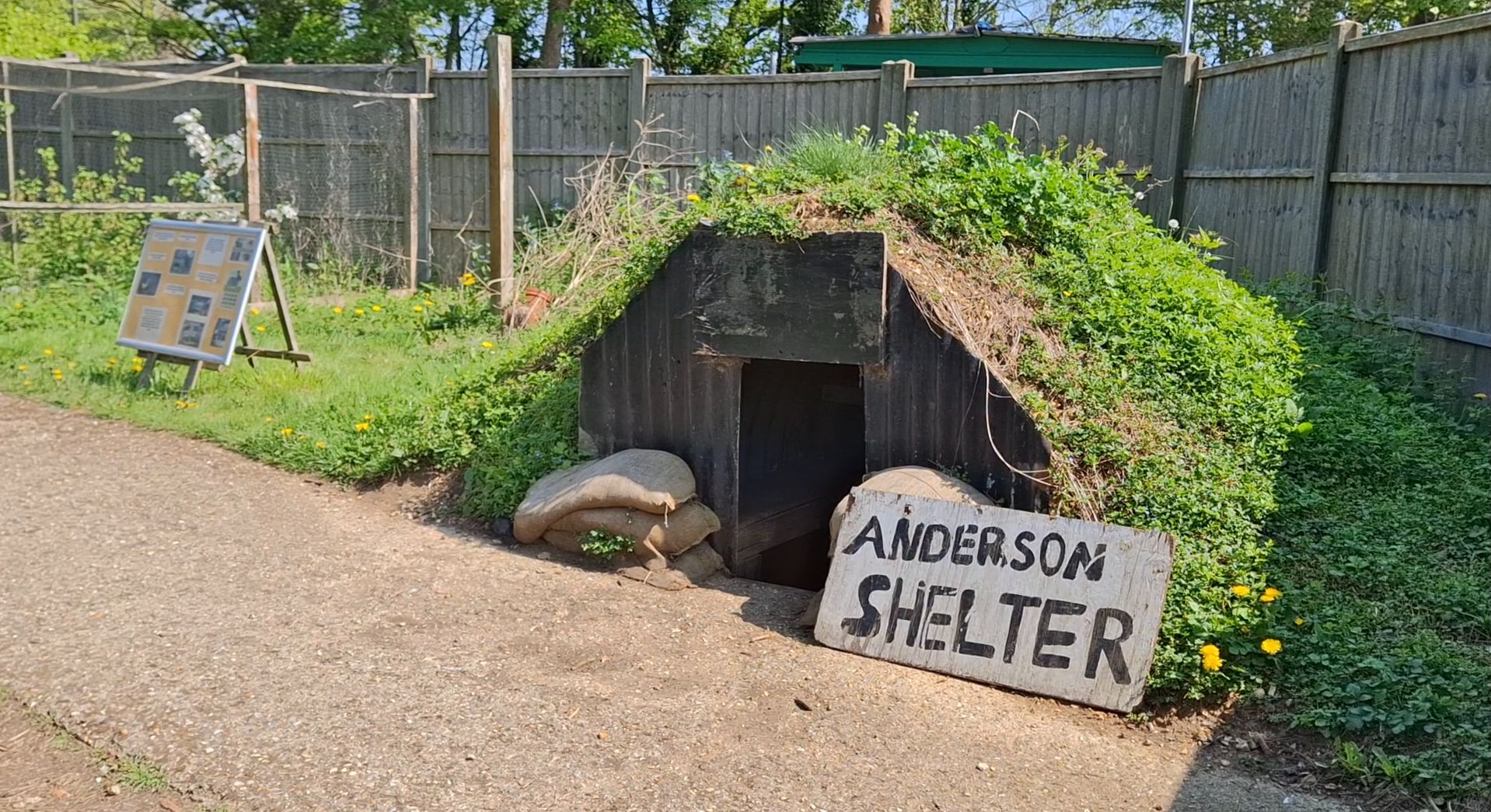

As Watford joins the rest of the country in marking 80 years since the end of the Second World War in Europe (8 May 1945), volunteers at Bushey’s Forties Experience reflect on keeping the memory of the war alive “every week”.
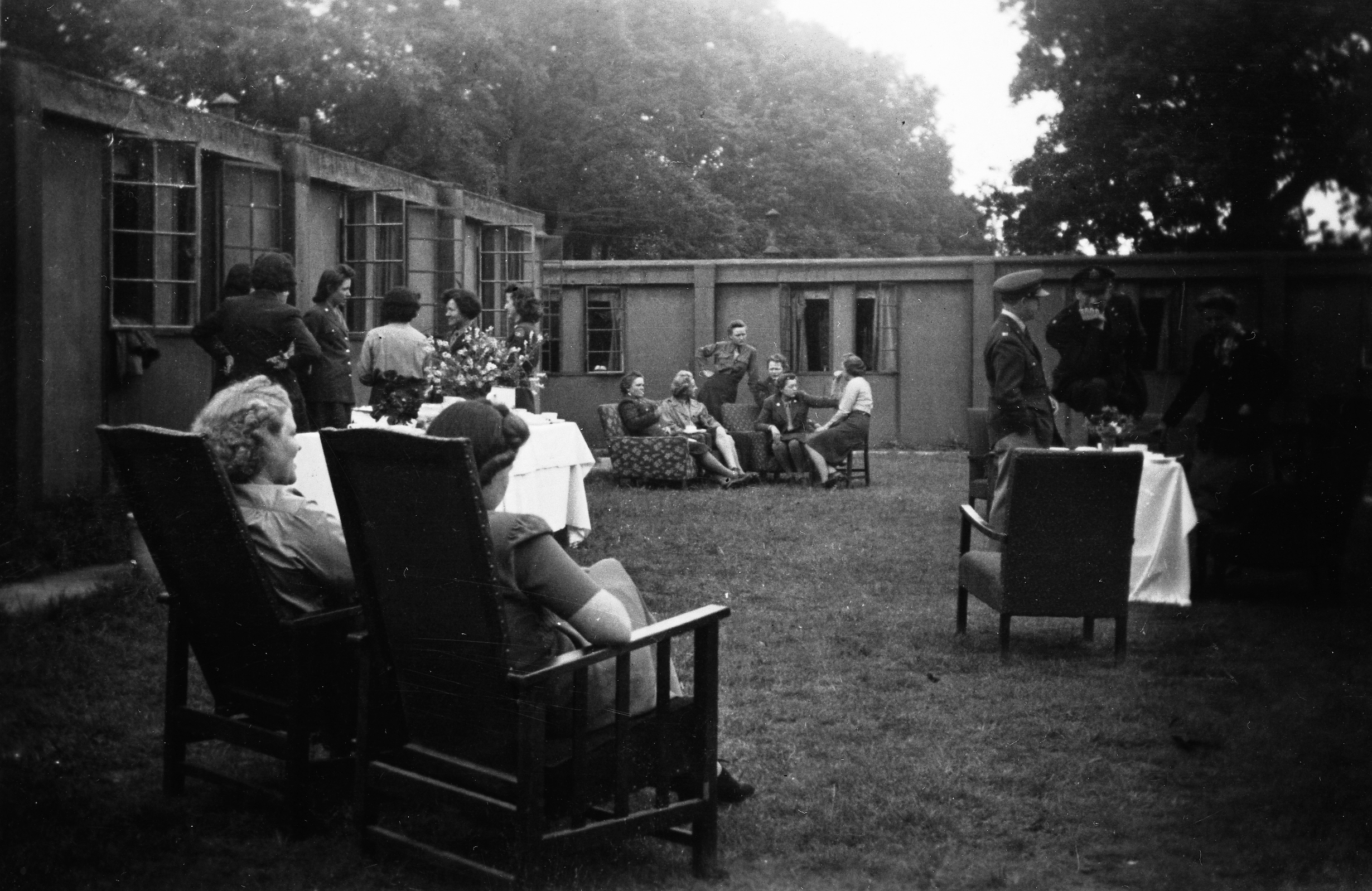
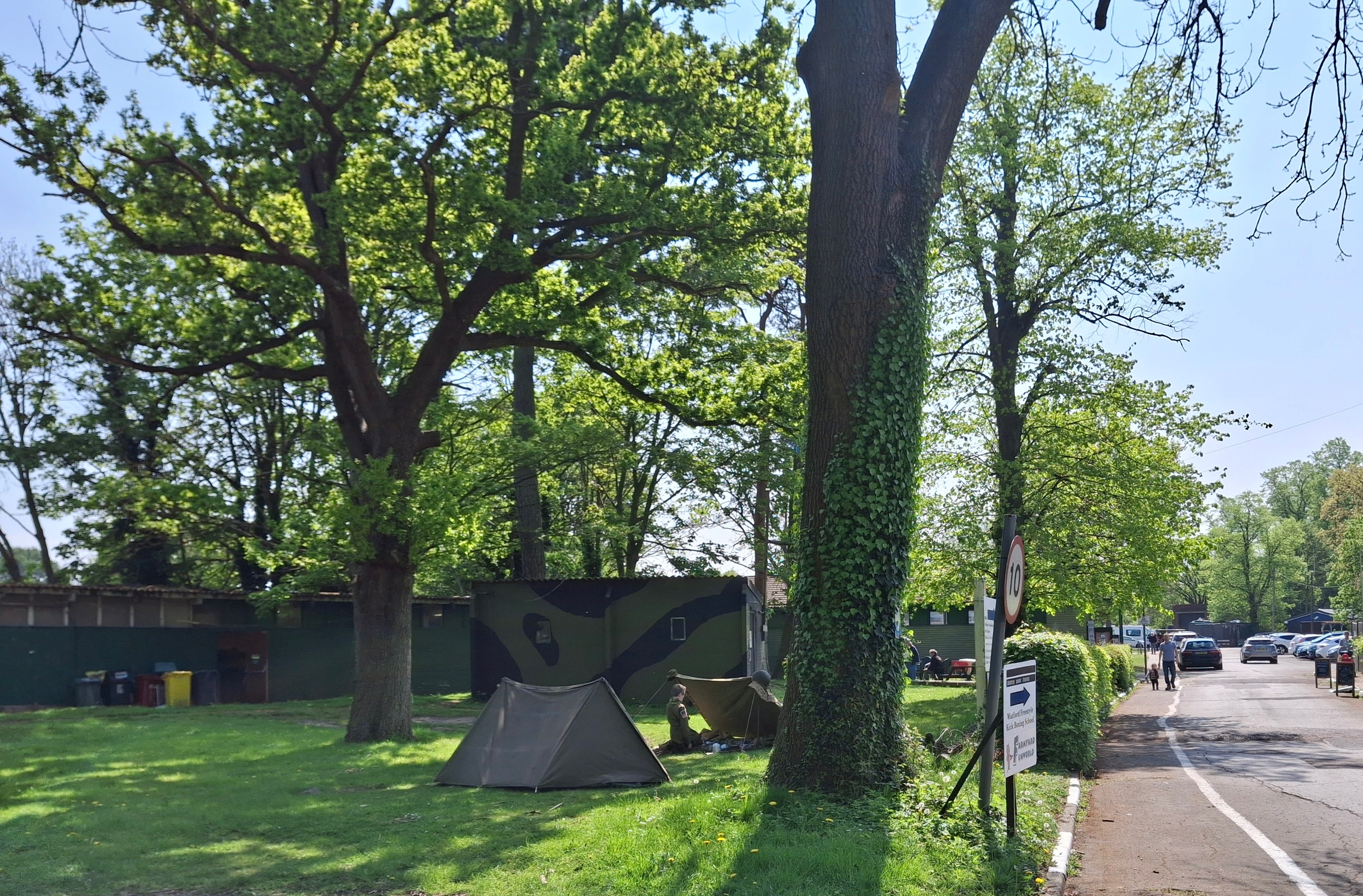
The 1940s living history museum is housed at the Lincolnsfields Centre on Bushey Hall Drive - the site of the former wartime headquarters of the 8th United States Air Force Fighter Command.

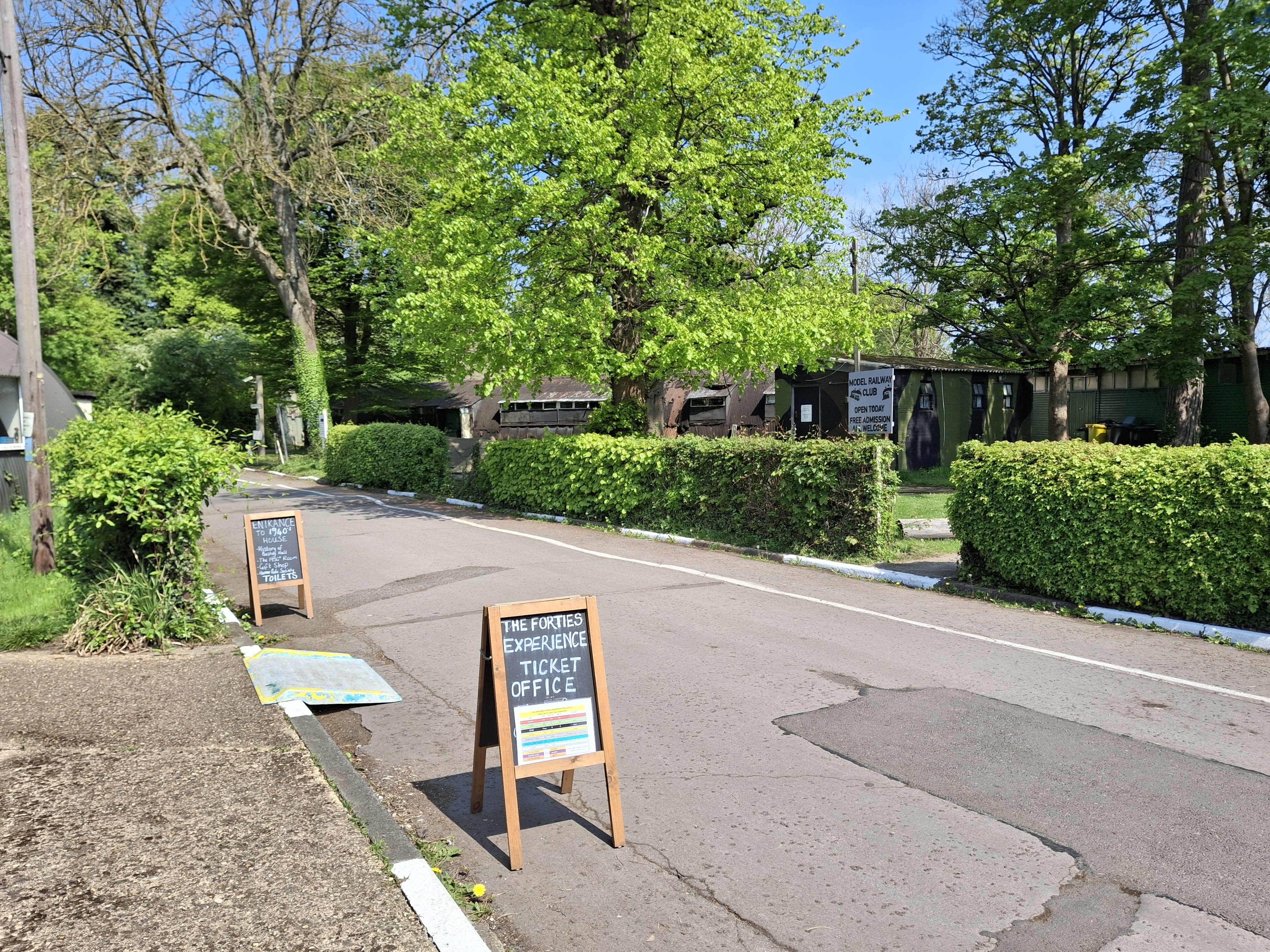
The Lincolnsfields Centre. Echoes of the site's wartime past can be seen in the background with a Nissen hut just behind the trees - a type of First World War pre-fabricated shelter, often used as barracks. Photo: Izzie Addison.
The Lincolnsfields Centre. Echoes of the site's wartime past can be seen in the background with a Nissen hut just behind the trees - a type of First World War pre-fabricated shelter, often used as barracks. Photo: Izzie Addison.

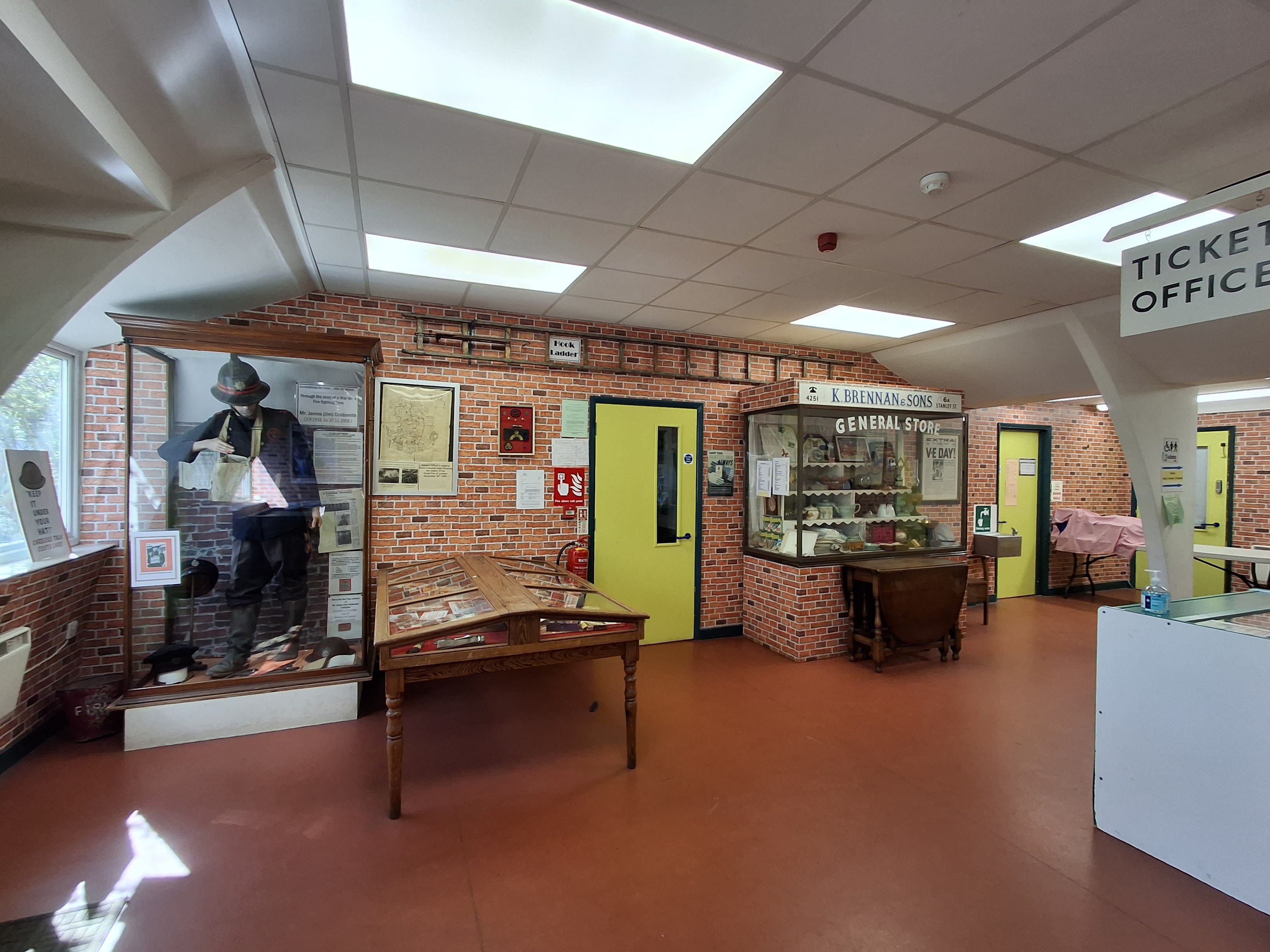
Entrance to The Forties Experience. Photo: Izzie Addison.
Entrance to The Forties Experience. Photo: Izzie Addison.
The museum, which is also an educational charity, welcomes a school group to its site every week and offers ‘Children at War’ themed residential trips for pupils to experience life as evacuees on the home front.
On the last Sunday of every month, the public is invited to explore the centre and interact with wartime memorabilia - much of it donated from people’s personal archives.

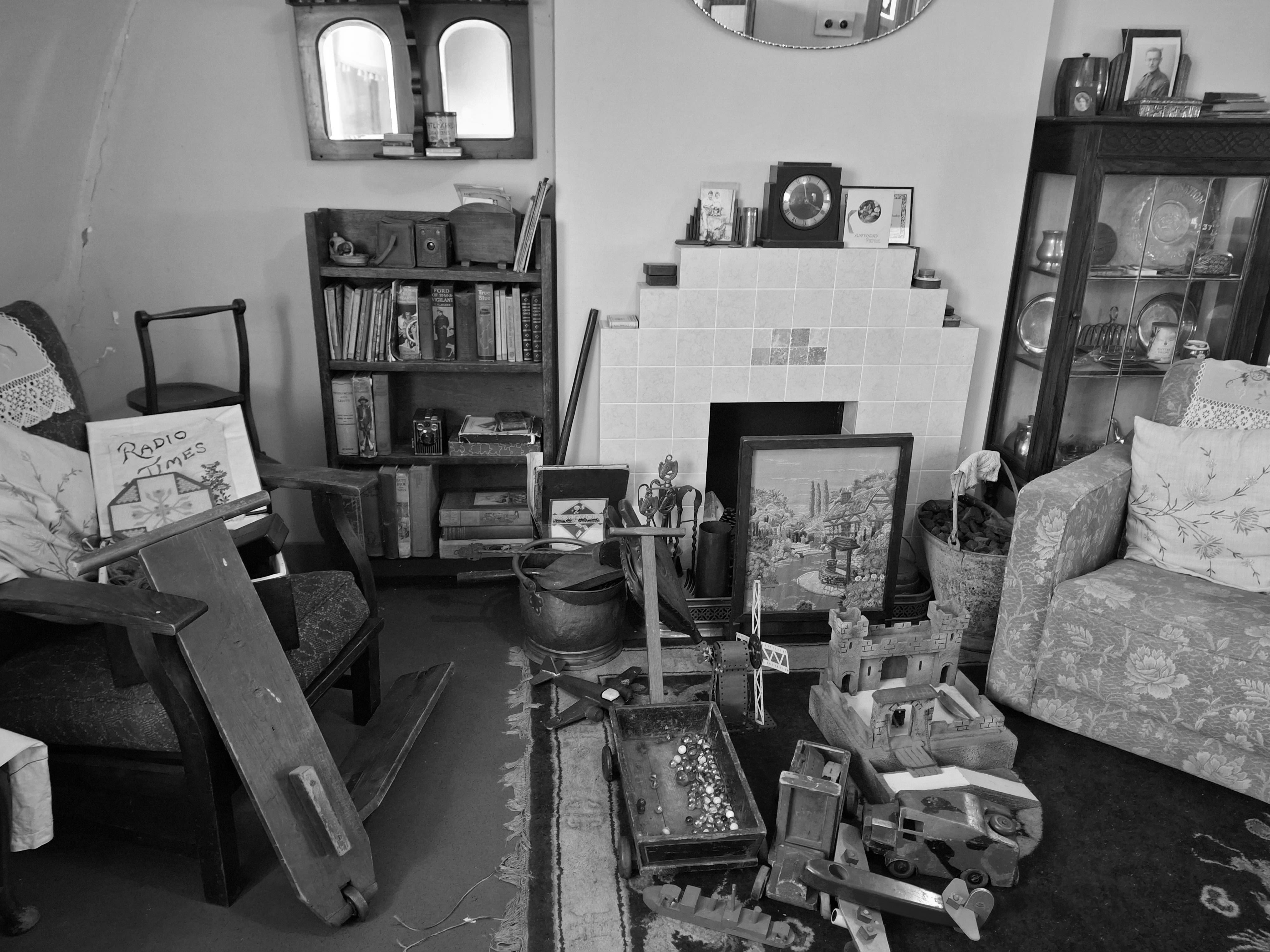

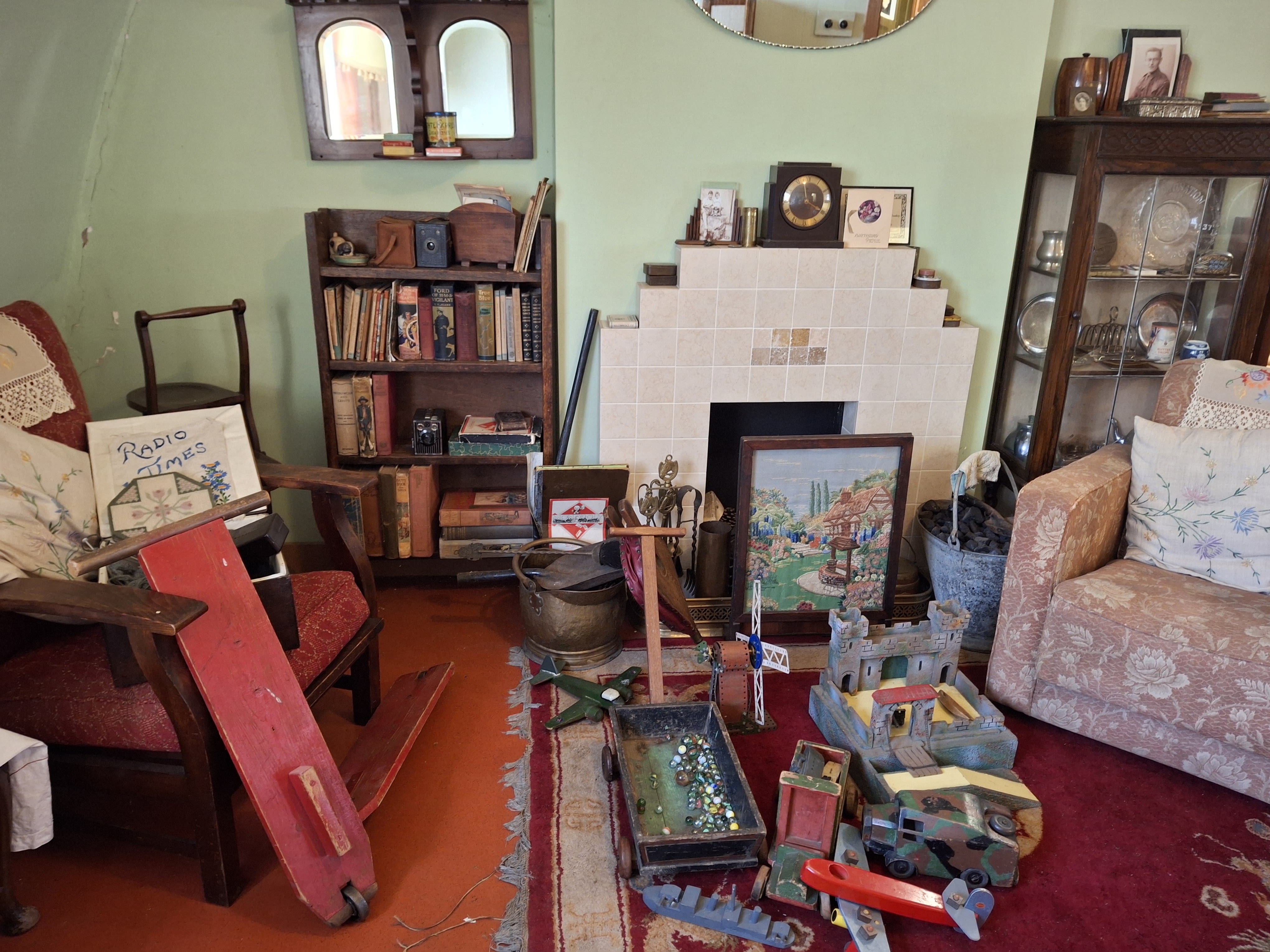
Inside The Forties Experience: the sitting room.

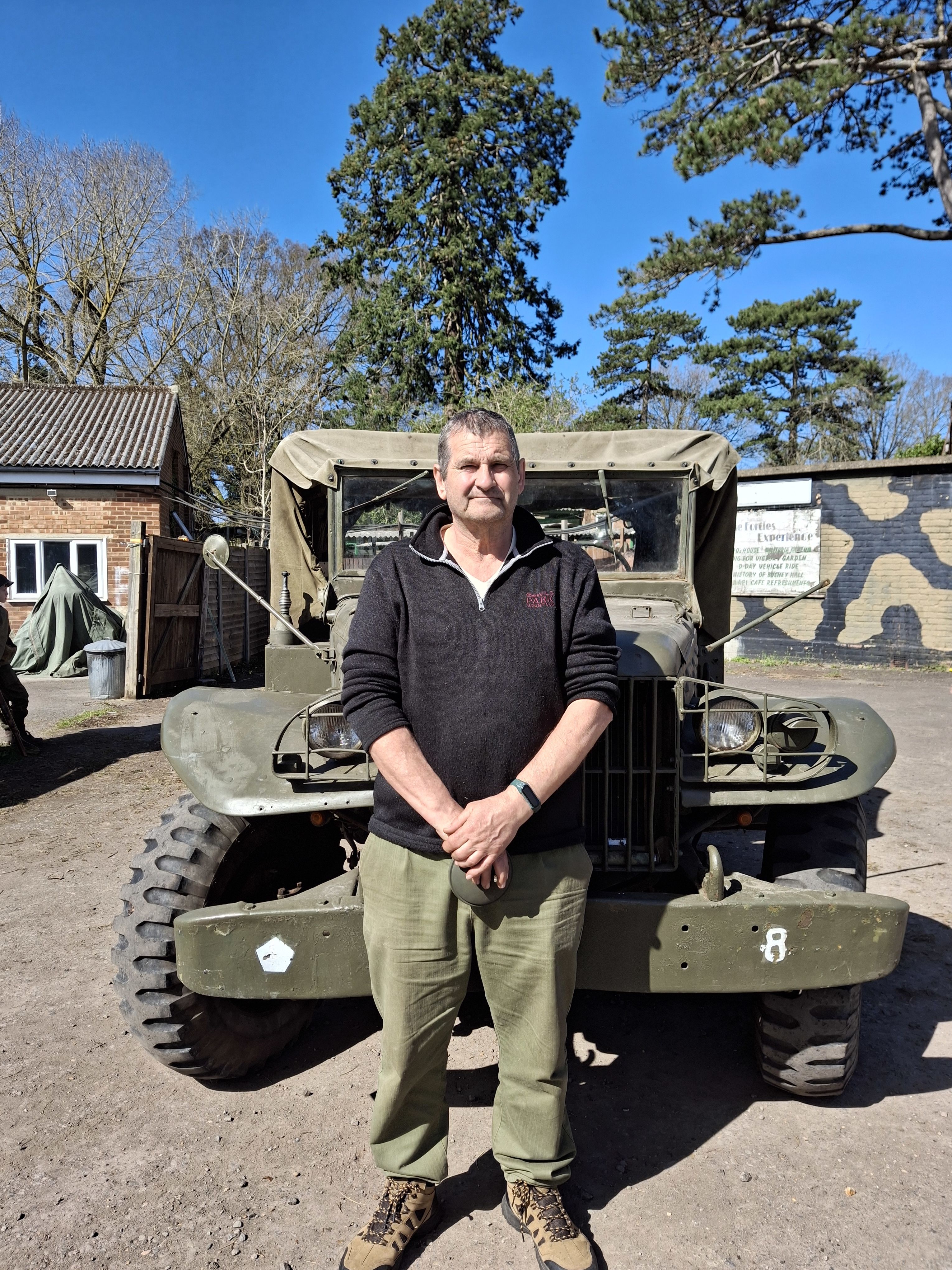
Phil Knight, standing in front of a Second World War-era jeep, often used to take visitors down to the immersive 'Blitz experience'. Photo: Izzie Addison.
Phil Knight, standing in front of a Second World War-era jeep, often used to take visitors down to the immersive 'Blitz experience'. Photo: Izzie Addison.
Phil Knight, who developed the education offer for schools, said he was inspired to do so by his own experiences with school trips growing up.
“When I was at school back in the sixties,” Phil said, “you used to go on a school trip and [the teachers] would say: ‘Right, there’s a museum, go and have a look, and meet back here at lunchtime’, and that was it.”
Phil said these museum trips often featured countless ‘do not touch’ signs on exhibits and adults who were uninterested in answering youngsters' questions.
“I wanted to make something different,” he said, “where the kids can come here and actually be part of it. They come here as an ‘evacuee’, they can pick up the equipment, they can talk to us, and we will answer their questions.
“My philosophy is if they get on that coach, and they’ve had a really good day and they’re happy - that’s what it’s all about.”
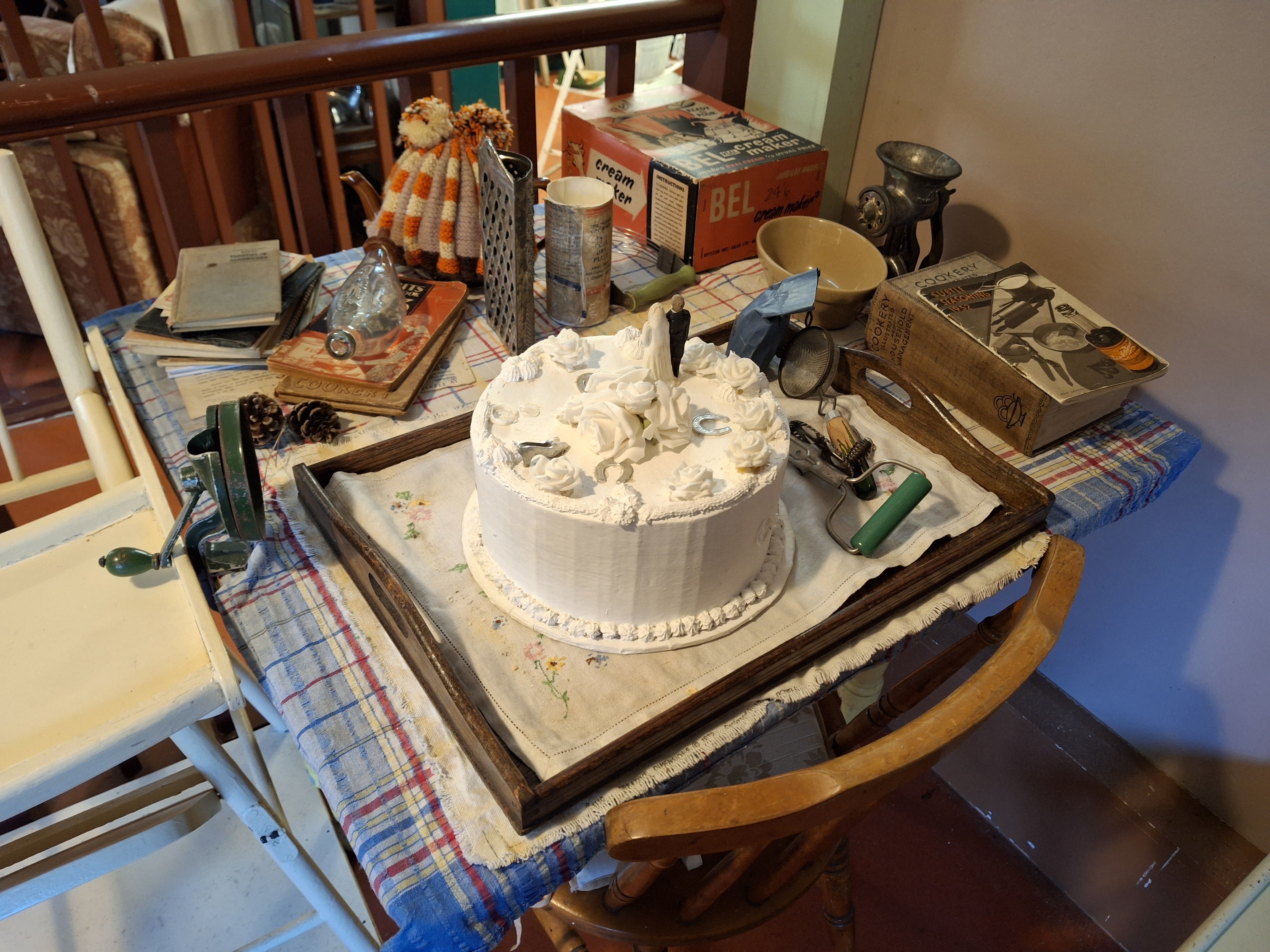
A particular favourite of children on school trips: 'wedding cakes' like this one were often just a façade during the war, with a humble fruit cake underneath the cardboard exterior. Photo: Izzie Addison.
A particular favourite of children on school trips: 'wedding cakes' like this one were often just a façade during the war, with a humble fruit cake underneath the cardboard exterior. Photo: Izzie Addison.

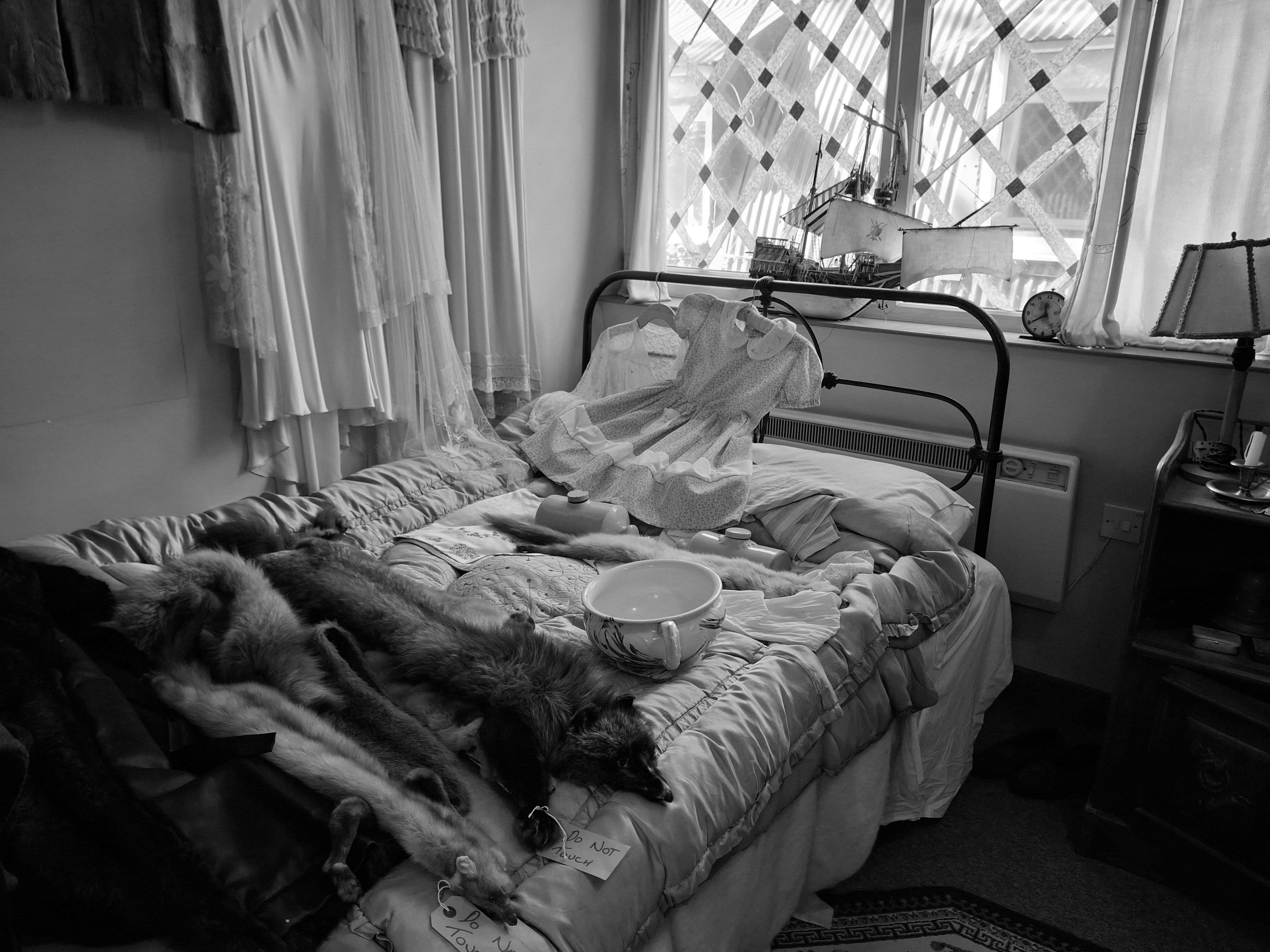

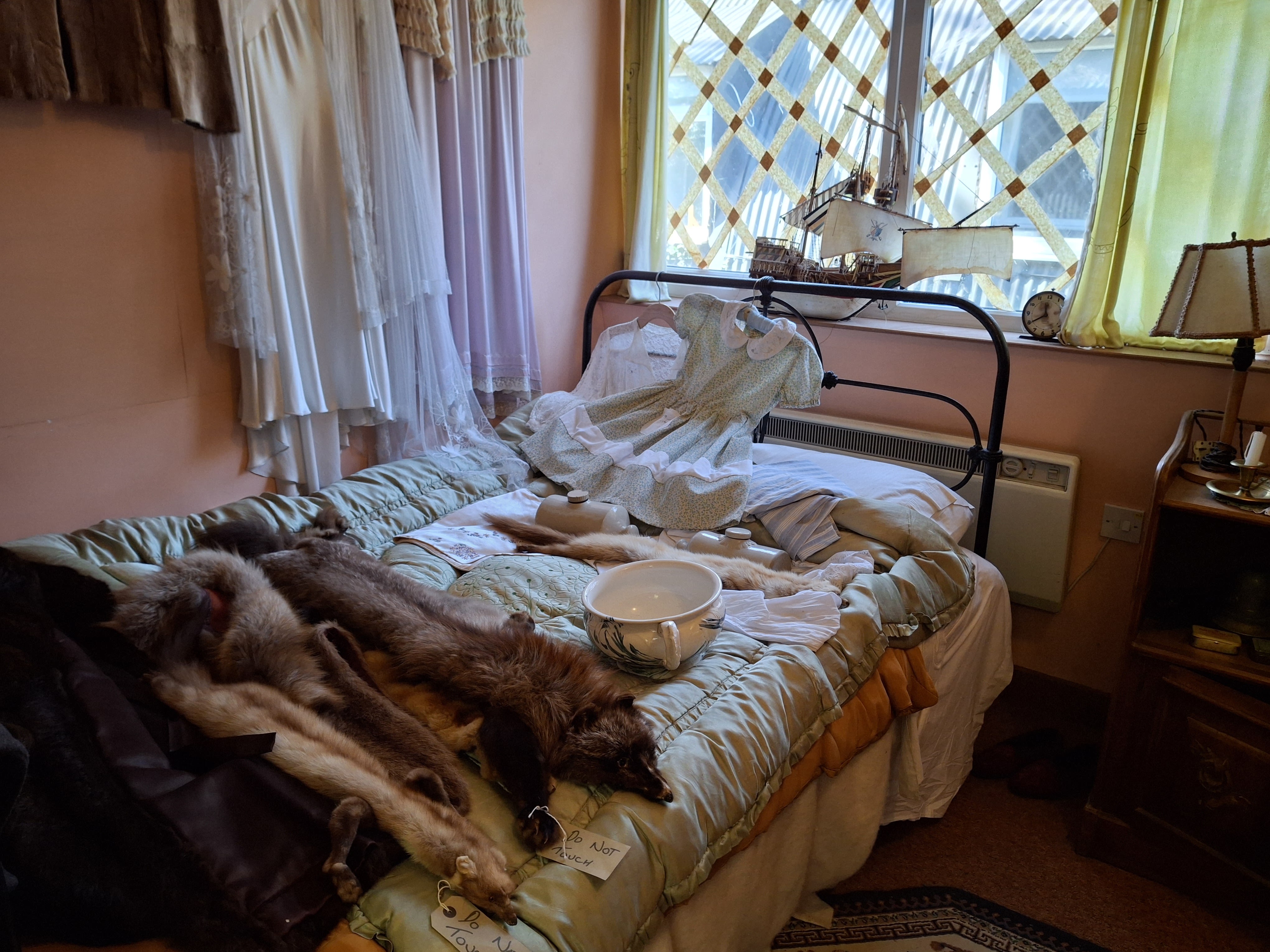
Inside The Forties Experience: the bedroom.
The ‘children at war’ residentials start with pupils being ‘billeted in’, where they are issued identity cards like those carried by wartime evacuees.
The pupils enjoy exploring the 1940s house and garden, lessons with an in-character 1940s school teacher, and an immersive ‘Blitz experience’, complete with sound effects, in a replica air raid shelter.
It all culminates in a VE Day party, where pupils sing along to wartime classics like Vera Lynn’s ‘We’ll Meet Again’, and picnic in a hall decorated with newspaper bunting and British flags.
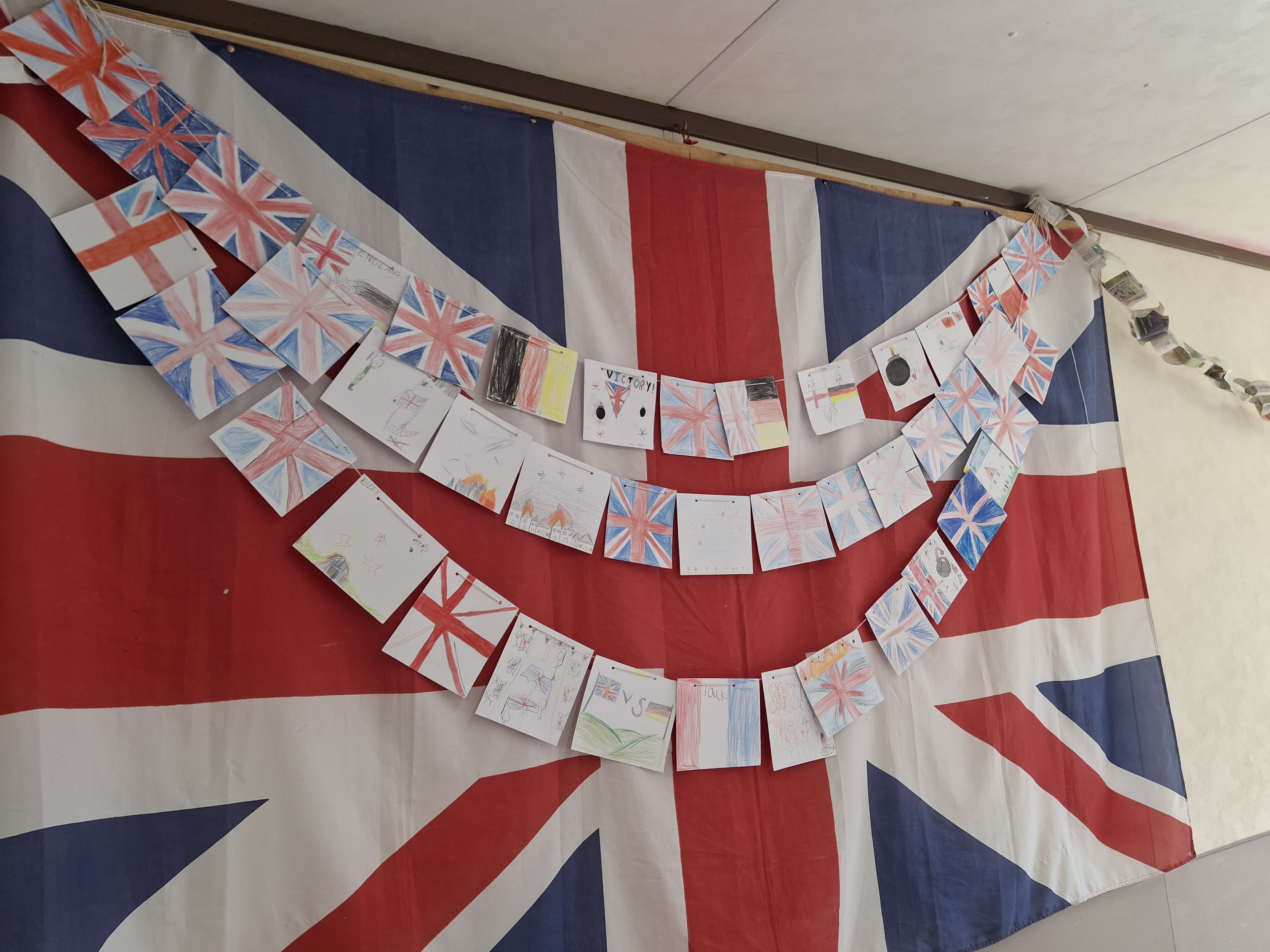
Bunting and paper chains made by children on a school trip in March for their 'VE Day' party. Photo: Izzie Addison.
Bunting and paper chains made by children on a school trip in March for their 'VE Day' party. Photo: Izzie Addison.
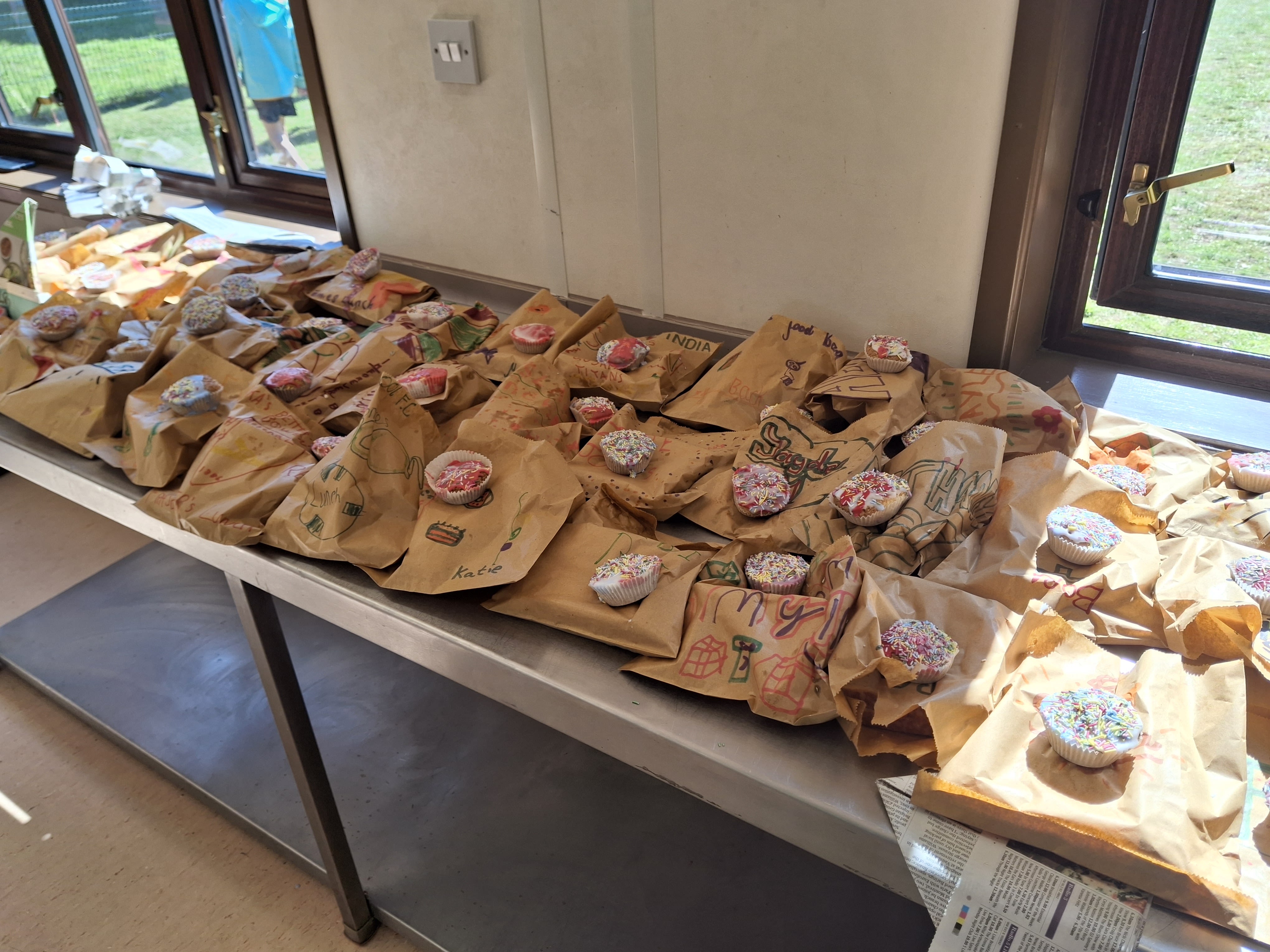
1940s-style packed lunches made by children on a school trip in March for their 'VE Day' party. Photo: Izzie Addison.
1940s-style packed lunches made by children on a school trip in March for their 'VE Day' party. Photo: Izzie Addison.

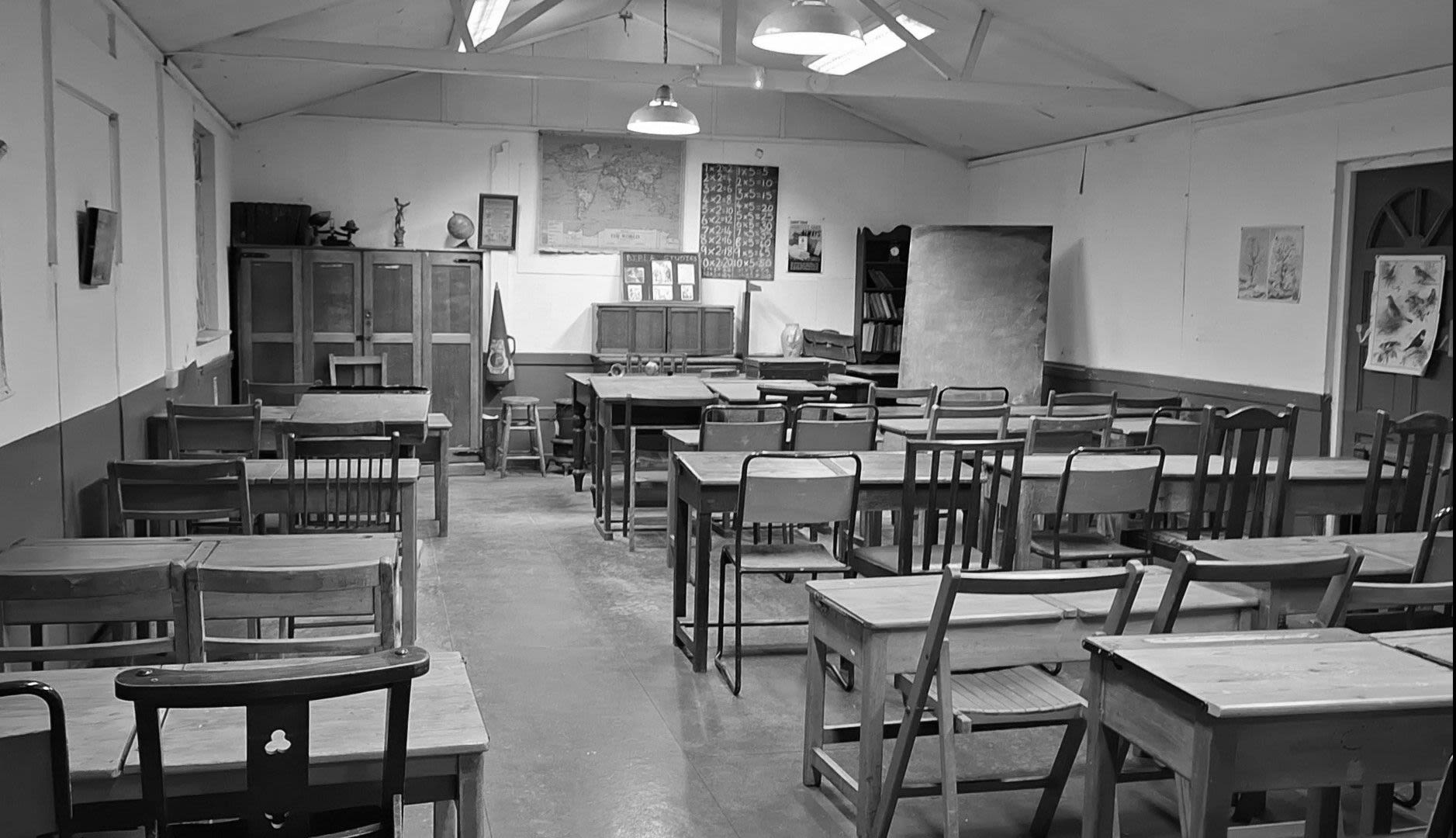

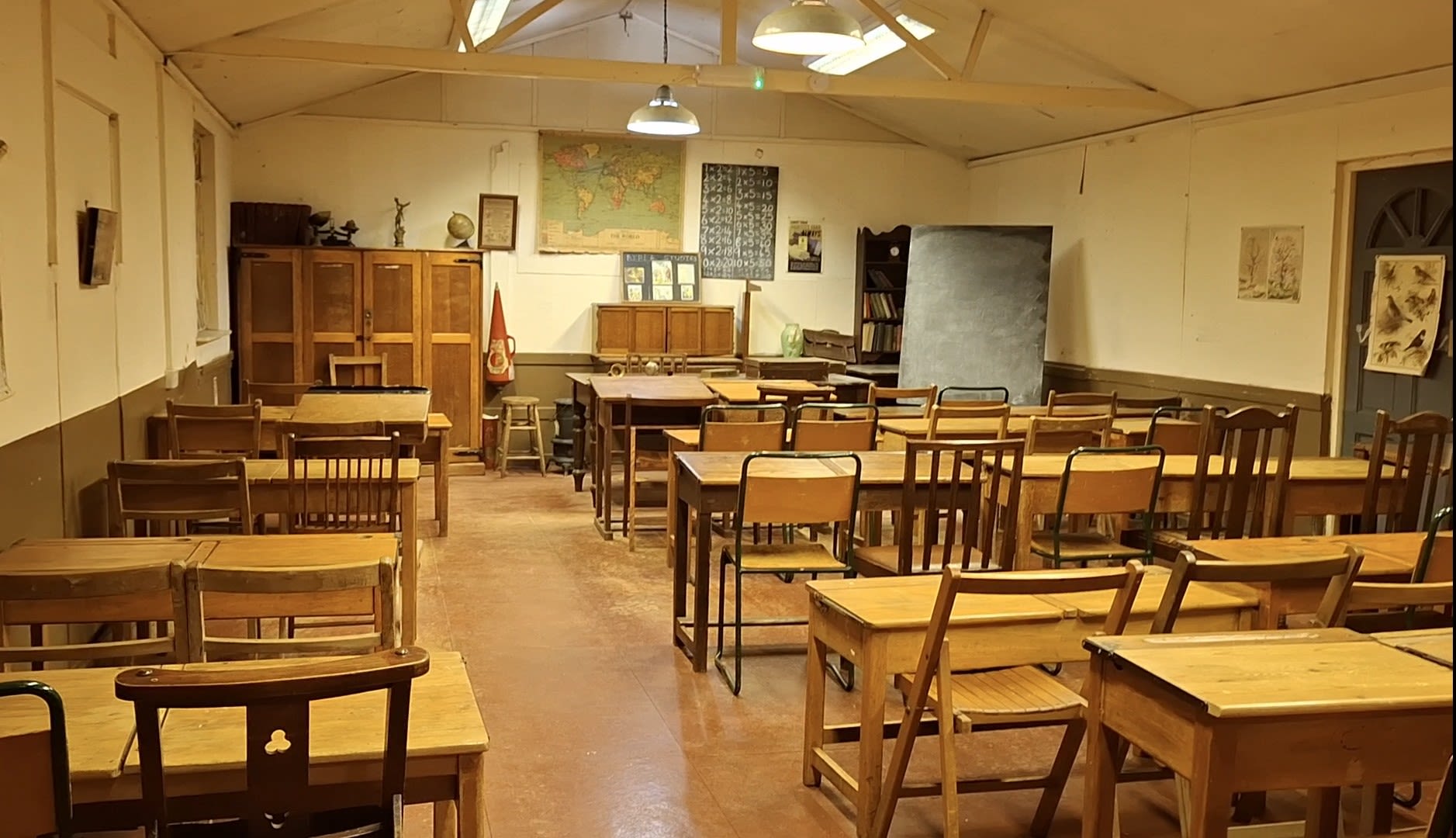
Inside The Forties Experience: the schoolroom.
Explore one of the rooms in the 1940s house.
Morrison Shelter: designed to be used inside the home, this shelter featured an iron table top with a bed underneath to provide shelter from bombing.
This large gas mask was designed for an infant - most of their body would be encased inside.
Former Royal Fusilier Stan Ellis. Stan was a volunteer at the Lincolnsfields Centre, and shared his wartime memories with today's visitors.
Like the public open days, the school trips are largely powered by volunteers like Derek Addison.
Derek, 88, was evacuated from Wembley during the war and has fond memories of his own VE Day celebrations in 1945:
“We had a VE party in the street a few weeks after [VE Day]. A lot of the houses on our road had Morrison shelters, and people dismantled those and assembled them on the road to use as tables, so the kids could all sit along them and eat their food.”
Derek even recalled a band performing on the roof of one of the street’s surface shelters - a type of communal air raid shelter constructed in streets and other public places.
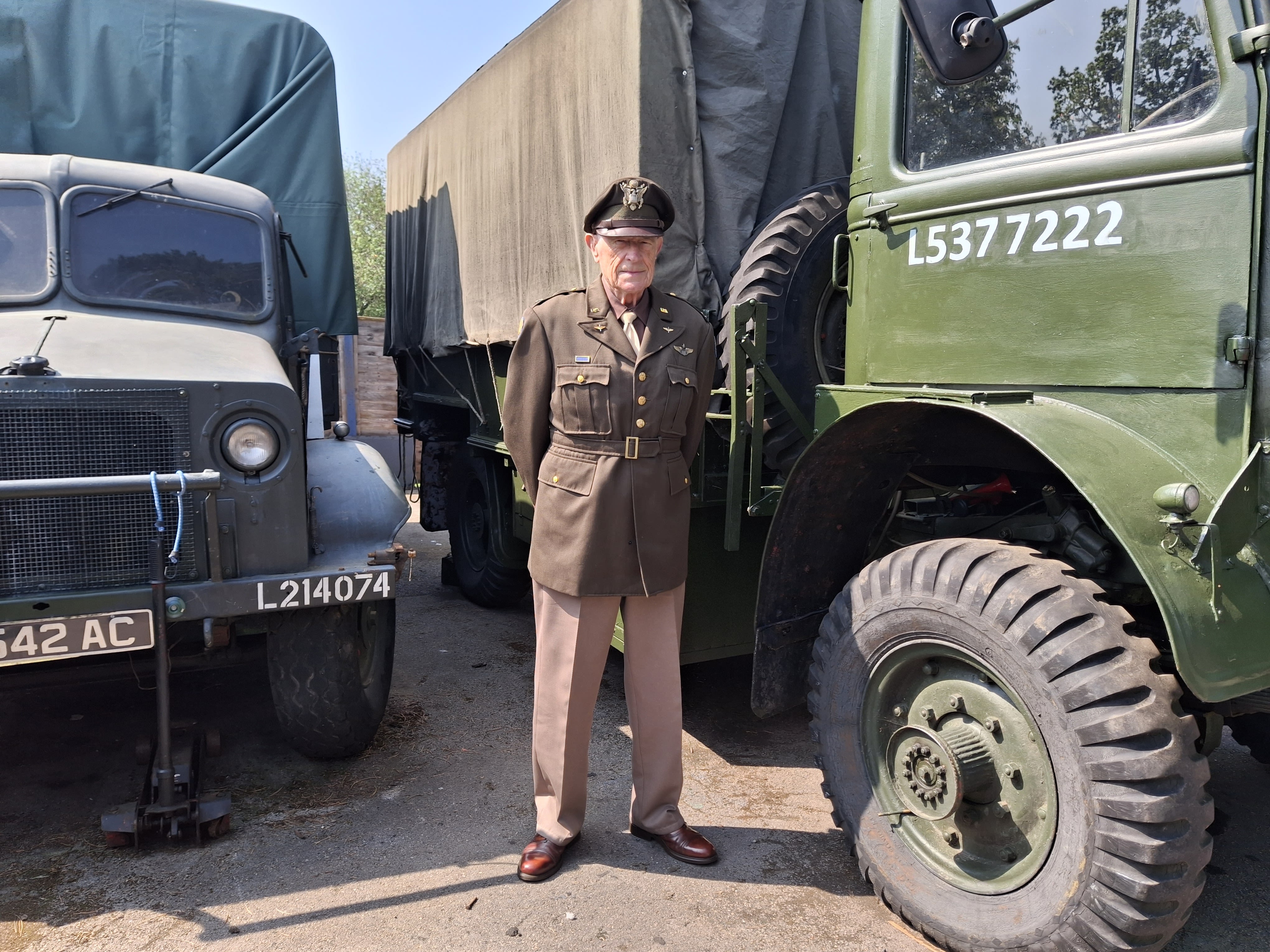
Derek Addison wearing the replica uniform of a senior US Army officer in the Second World War. Photo: Izzie Addison.
Derek Addison wearing the replica uniform of a senior US Army officer in the Second World War. Photo: Izzie Addison.

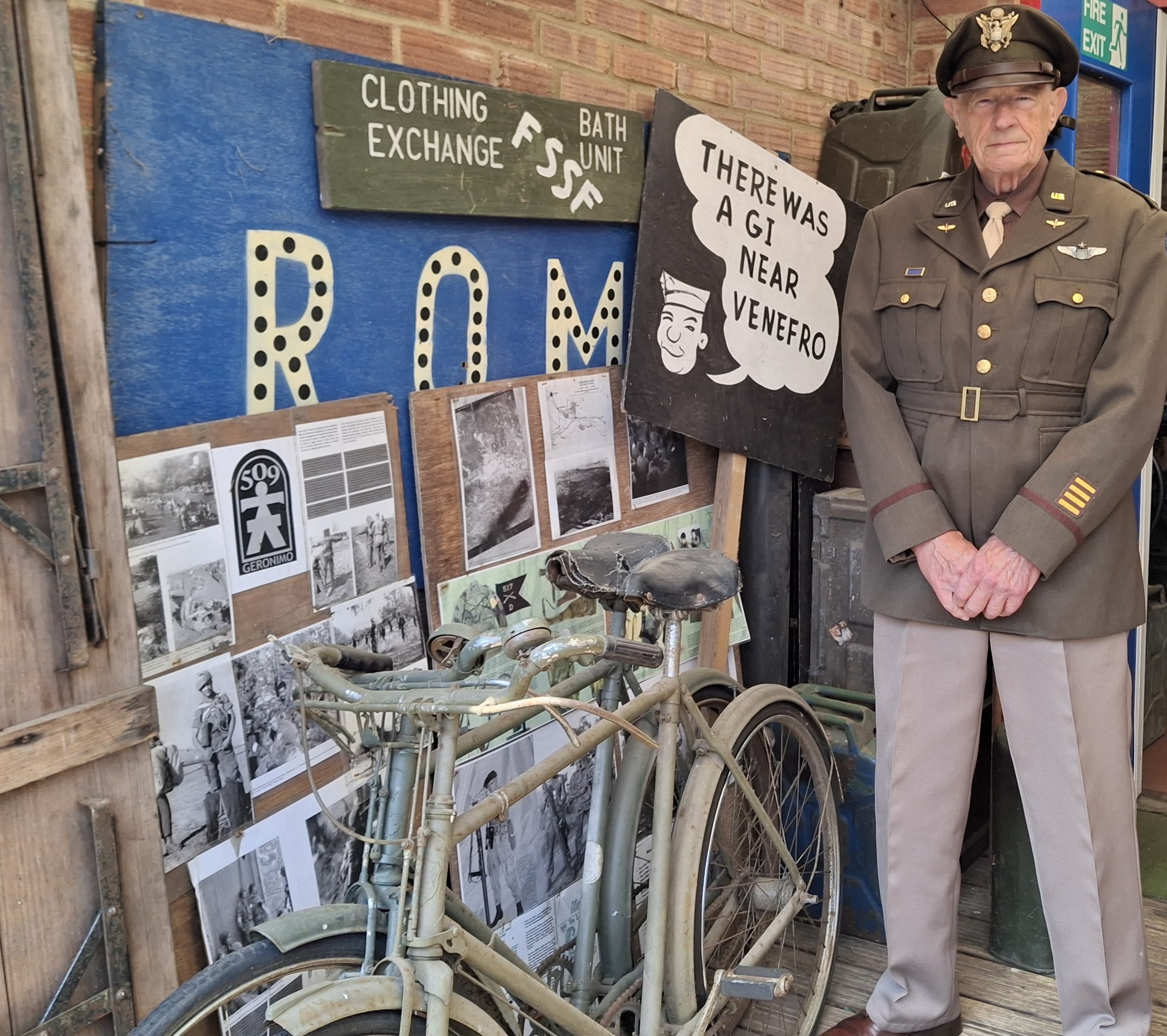
Derek Addison standing in front of one of the displays at Lincolsnfield's military museum. Photo: Izzie Addison.
Derek Addison standing in front of one of the displays at Lincolsnfield's military museum. Photo: Izzie Addison.
Derek believes Lincolnsfields' education offer is important for keeping the memory of the Second World War alive for children today:
“The war was such a significant thing that happened and it’s 80 years ago now. It could be easily forgotten, so I think it’s very important to keep the memory alive."
“I think most kids come away with a good feeling, and a feeling that this shouldn't happen again - and they’ll probably remember it for years," he said.
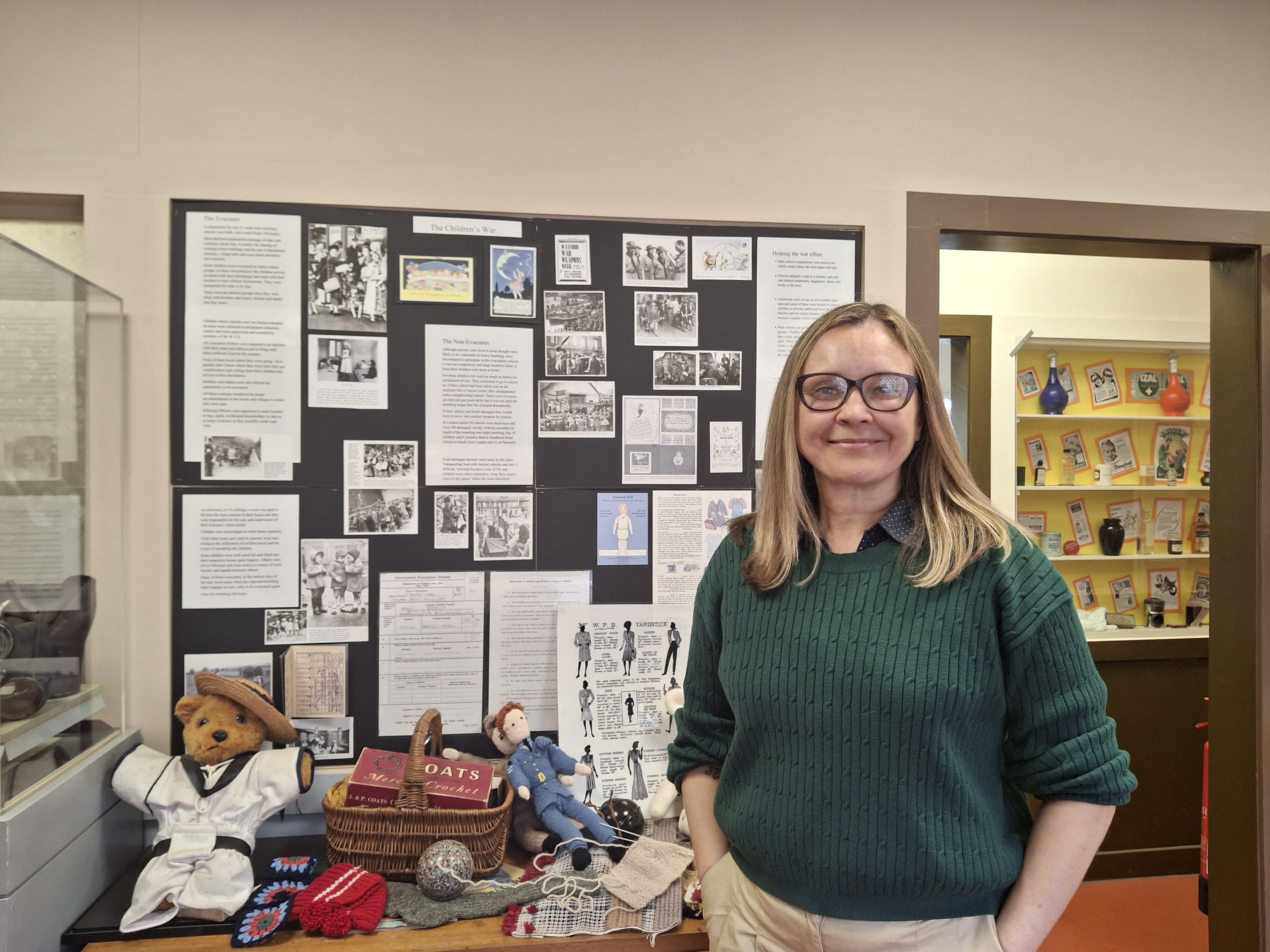
Rachel Martin standing in front of a collection of wartime children's toys at the Lincolnsfield Centre. Photo: Izzie Addison.
Rachel Martin standing in front of a collection of wartime children's toys at the Lincolnsfield Centre. Photo: Izzie Addison.
Rachel Martin has been volunteering at Lincolnsfields for two years and is now training to help with school residentials. She started volunteering alongside her 12-year-old son who developed an interest in the era, and said she learns something new every time she visits.
Rachel believes the museum plays an important role in keeping the memory of those who lived through the war alive:
“So many sacrificed so much, without question, they just got on and did it for us - for the future generations. And I think we owe it to them to remember and to always be grateful.
“I think we take a lot for granted, and when you come to places like this, it reminds you of what happened before. It's so important not to forget because we wouldn’t have the freedom we have today if it weren't for those amazing people,” Rachel said.
Rachel believes milestones like the 80th anniversary of VE Day are a good opportunity for reflection:
“VE Day was a happy time because the war had ended and it was a time to celebrate, but I also think now it's a time to remember what went on to get to that point."

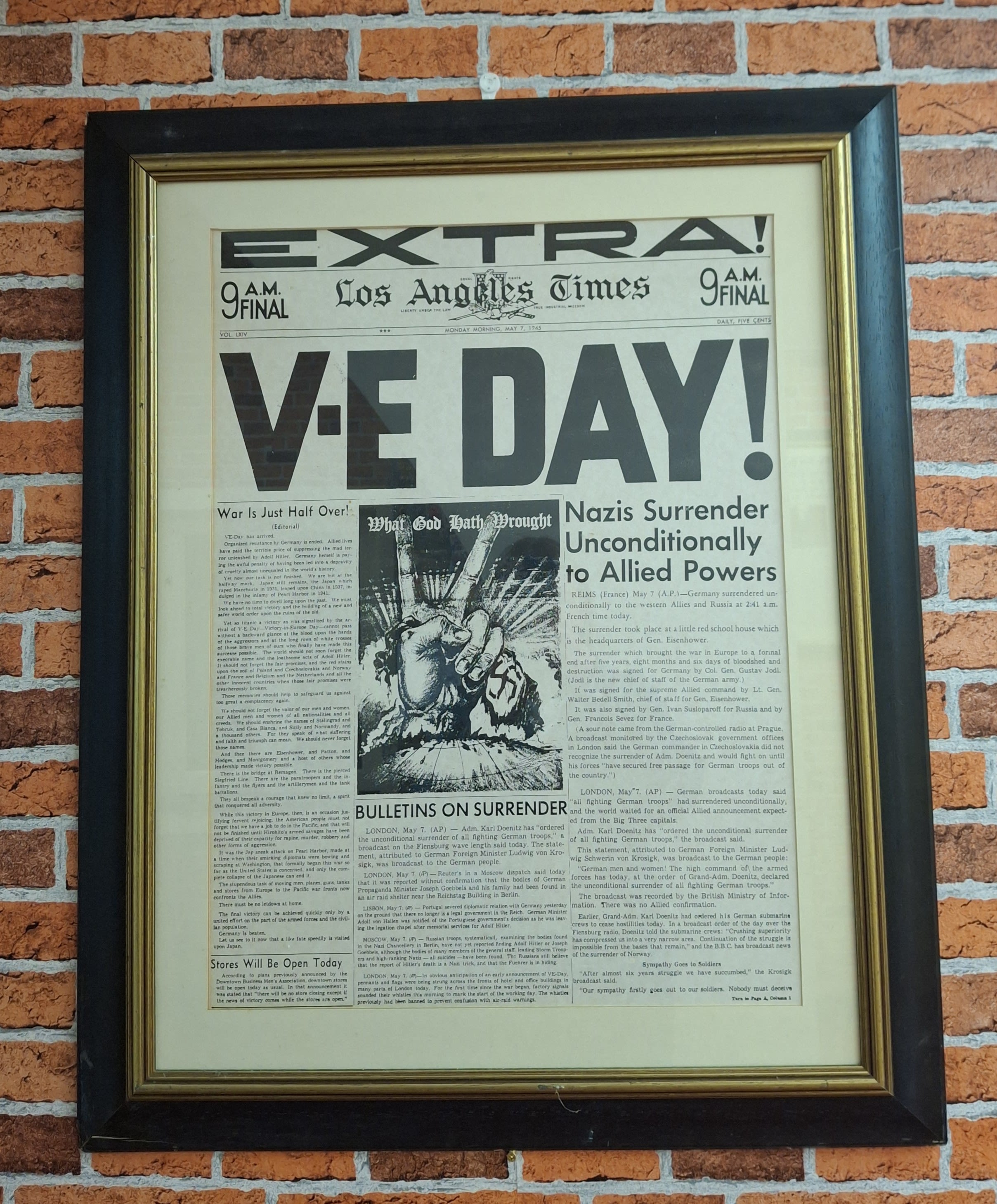
Front page of the Los Angeles Times celebrates VE Day, on display at the Lincolsnfields Centre. Photo: Izzie Addison.
Front page of the Los Angeles Times celebrates VE Day, on display at the Lincolsnfields Centre. Photo: Izzie Addison.
But for other volunteers, like Phil Knight, major anniversaries like this one can sometimes feel like “no big deal”.
For those who give so much of their time to Lincolsnfields, it must sometimes feel to them that they live half their lives in the 1940s.
Or, as Phil put it: “We're remembering the war all the time - we’re here every week”.
The volunteers are the lifeblood of Lincolnsfields - whether they lived through the war as Derek Addison did, or whether they are at the very start of their discovery journey like Rachel Martin. And they are what Phil thinks makes the centre so special.


“It’s the enthusiasm,” Phil said, “that’s the thing".
“We’re not doing it because we get paid - we’re doing it because we love it.”
 Built with Shorthand