
The Rise of the Natural Family Planning Method
The number of women using this alternative form of contraception has doubled in the past decade
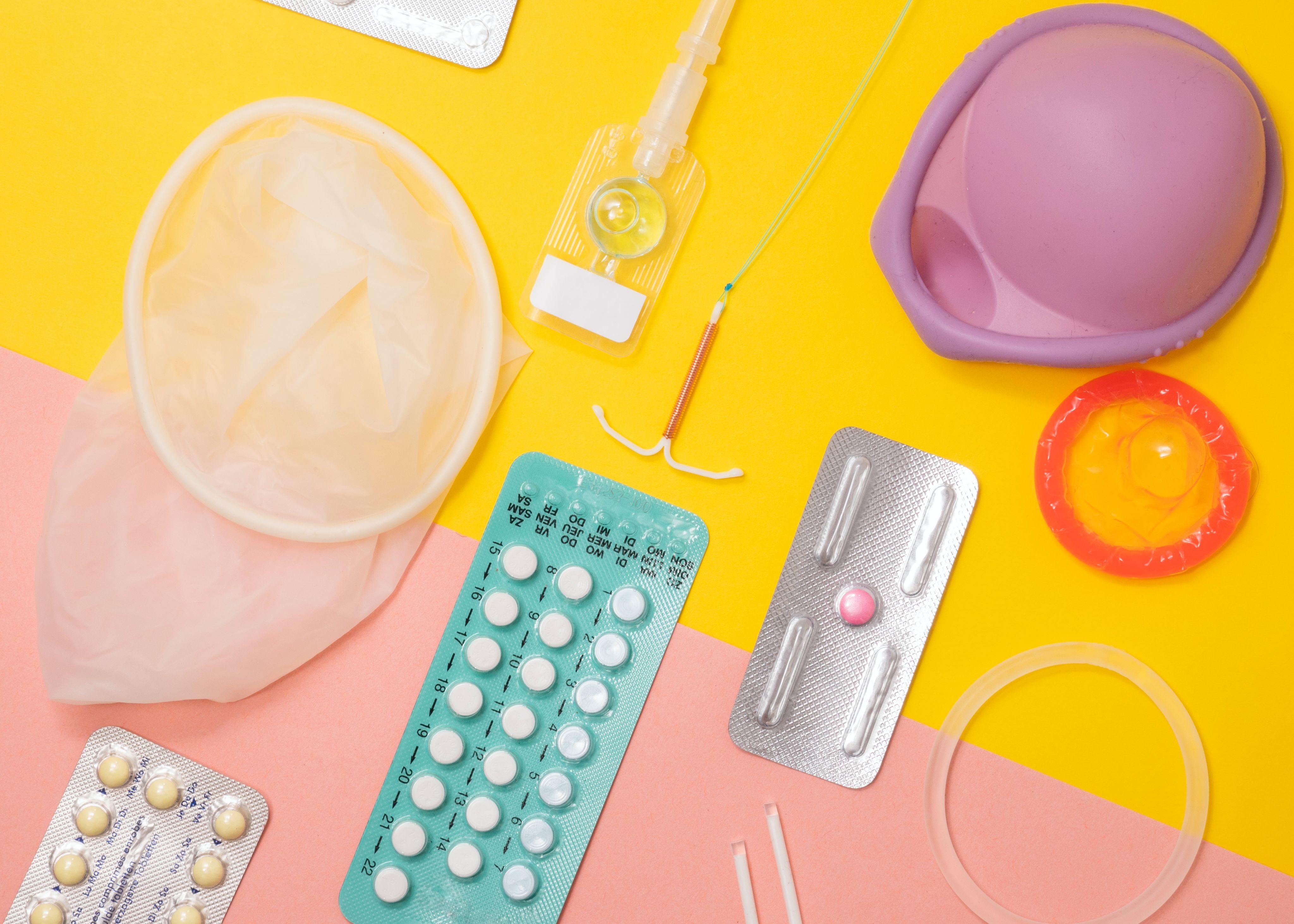

Lara Murray first went on the pill when she was a teenager. She attended a Catholic school in Northern Ireland and felt that her sex education was limited; different contraceptive options weren't discussed or debated in a healthy way. When she went to university, her friend recommended the contraceptive implant. She made the switch but for two and a half years her periods stopped, she told me: “I felt my body was screaming at me.”
Her symptoms included headaches and dizziness with a general sense of feeling unwell. This started almost from the week of having the implant inserted and felt lifted within weeks of it being removed. Lara can't confirm that it is directly correlated but is fairly certain they are related. Wanting a break from hormonal contraception, she decided to try a non-invasive method of contraception: the natural family planning method.
Recent NHS data published last month suggests that Lara's not alone. Since 2013, the number of women who use the natural family planning method as their form of contraception has doubled.
The natural family method, also known as fertility awareness, is a form of contraception where a woman monitors her menstrual cycle and tracks fertility signals to know when she’s most likely to get pregnant. A woman would log her findings, including any breast tenderness, checking her basal body temperature (BBT) and vaginal discharge. This can be tracked manually in a notebook or on an app. The five women I spoke to said they preferred tracking digitally as it is easier to manage.

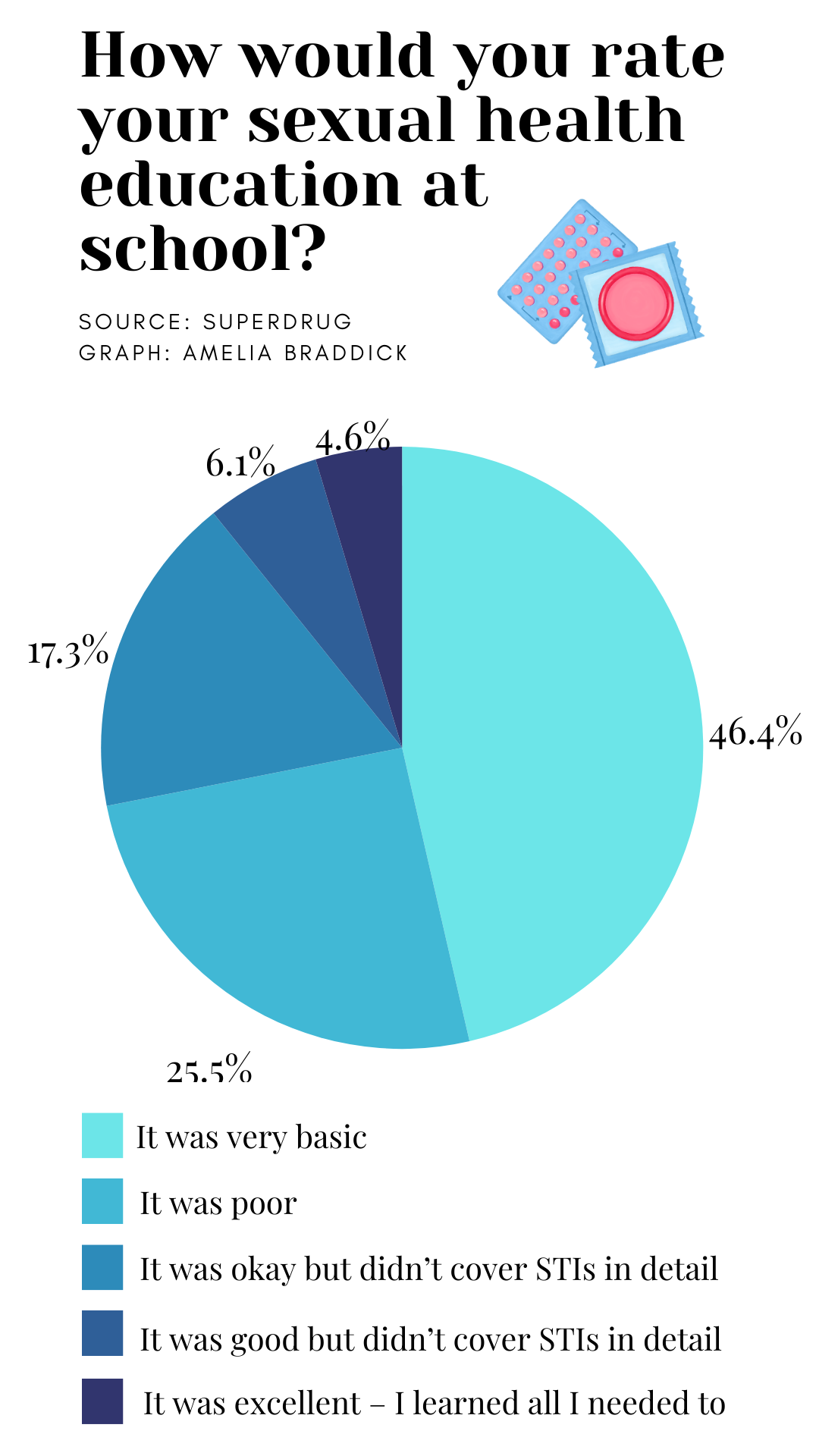
The Women’s Health Strategy for England, an ambitious 10-year plan presented by the Secretary of State for Health and Social Care, has acknowledged that there are several issues surrounding contraception, including: "Struggles to access high-quality information on women’s health issues, such as advice on accessing the right form of contraception for them."
I spoke to Grace* about her experiences of sexual health education at school. Name has been changed for anonymity.
I spoke to Dr Babak Ashrafi, who is the clinical Lead for Service Expansion at Superdrug UK, about natural family planning methods. He said:
"Using natural family planning methods as a form of contraception can be risky, not just because they don’t protect the user against STIs but also because they require a lot of attention to become accurate.
"Understanding your cycle enough to know your fertile window can take up to six months of tracking your temperature and cervical mucus meaning the effectiveness can be influenced by user adherence to the method and the specific characteristics of an individual's menstrual cycle.
"This method is not advised for people with irregular cycles, as they are harder to track. It's important to note that natural family planning methods do not provide the same level of protection against pregnancy as hormonal contraceptives or barrier methods; however, they are side effect free."


Credit: Dr Babak Ashrafi
How Effective Are Contraceptive Methods?
Source: Sexwise.org (run by the Department of Health and Social Care)
How effective are condoms?
Perfect use: 98% effective at preventing pregnancy
Typical use: 82% effective at preventing pregnancy
How effective is the combined pill?
Perfect use: 99% effective at preventing pregnancy
Typical use: 91% effective at preventing pregnancy
How effective is the contraceptive implant
Perfect use: 99% effective at preventing pregnancy
The implant lasts for three years, so once you've got one you do not need to take contraception
How effective is the IUD (Intrauterine device)?
Perfect use: 99% effective at preventing pregnancy
The IUD lasts for five years, so once you've got one you do not need to take contraception
How effective is the natural family planning method?
Perfect use: 99% effective at preventing pregnancy
Sexwise does not have data about typical use, but the website states: 'If natural family planning methods are not used according to instructions, more women will get pregnant.'
What people are saying about natural conception:

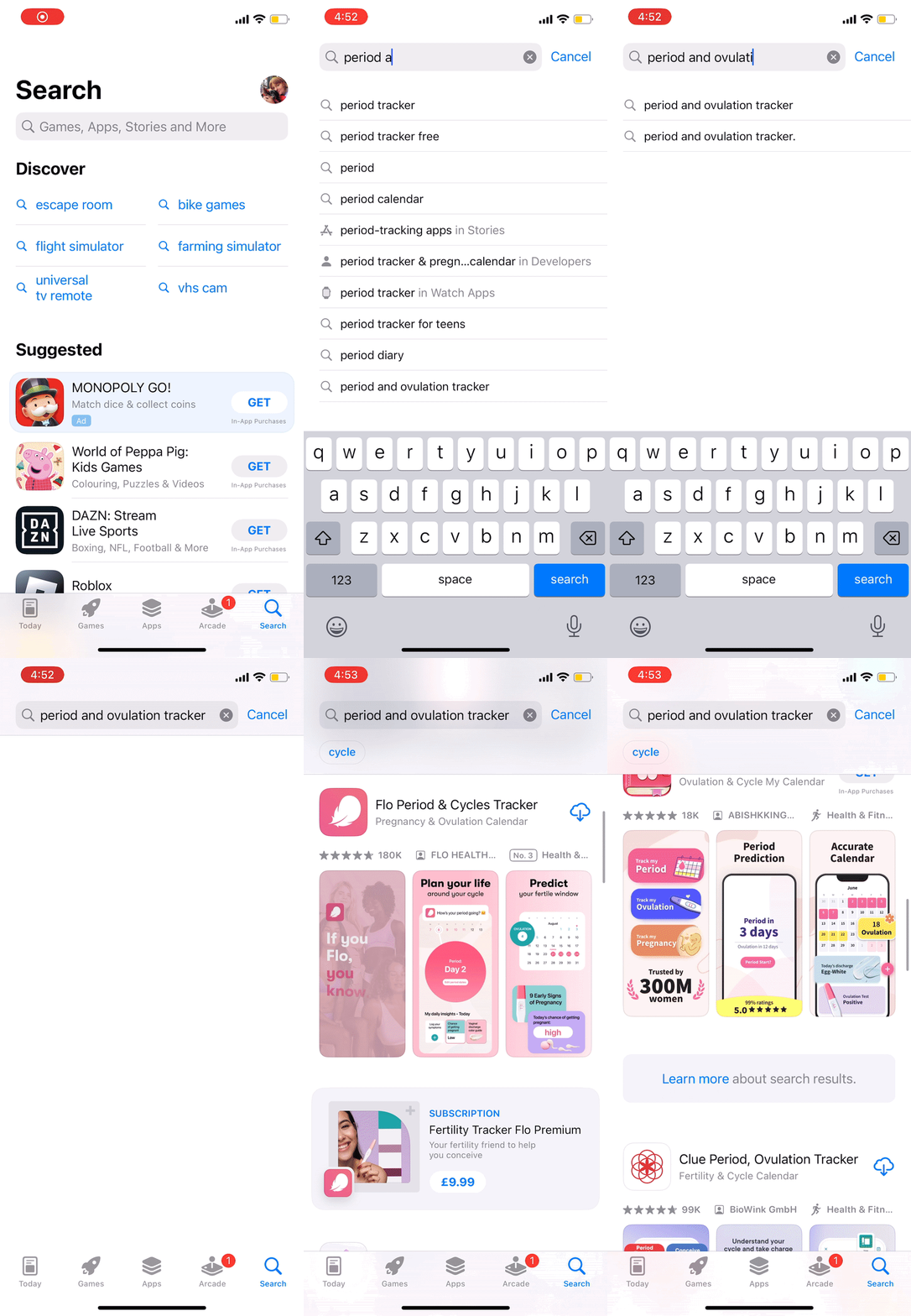
Apps
There are plenty of apps available on app stores for women to download and track their ovulation cycle.
However, currently, there is only one app which is FDA cleared as contraception and that’s Natural Cycles. It is also CE marked by Europe, listed on the Australian Register of Therapeutic Goods and is on the Singapore Medical Device Register.
Created by Elina Berglund and her husband Raoul Scherwitzl, Natural Cycles predicts when a woman is fertile through a personalised algorithm.
On their website, Natural Cycles says that their method is 93% effective in typical use and 98% effective in perfect use. Dr. Jack Pearson, Natural Cycles' UK-based on-staff medical expert said:
“Contraception is not a one-size-fits-all. Every woman is different, and so are her reproductive needs and goals. And there is a wide variety of Natural Family Planning methods available so research is especially important when choosing this route. It’s also important to not mistake period-tracking apps for contraception, as they use a less accurate method based on calendar dates rather than fertility indicators and temperature. Natural Cycles is the only app on the market certified to be used to prevent pregnancy."
Beth* tried using Natural Cycles when she first came off the pill but stopped when she realised her period hadn’t returned: she felt the app was redundant. After battling with spotting (bleeding between periods) for five years and going through rounds of tests at the doctor's, the main conclusion was that her hormonal contraceptive was causing this.
She told me: “I decided to come off the combined pill not only for this but also for the fact that I didn’t want to put these hormones into my body anymore.”
Now, she uses the Read Your Body app alongside the Justisse Method.
She said: “Despite exploring this with the NHS, I decided to seek private medical help and have been working with a fertility awareness mentor to recover my period. Part of this process includes educating me on fertility awareness through tracking both BBT (basal body temperature) and cervical mucus. This also helps my mentor read my data and understand what is going on with my body to support and guide me into recovery.”

When Lara got pregnant with her second child, she had been using an app for three years. However, on one occasion it got her dates wrong.
She said: "If I'd listened to my own body, I would have known: don't have unprotected sex, you are clearly ovulating. But I thought, no, the app says that it's not for another week. That's fine. And four weeks later, I'm peeing on a stick."
Whereas, for her first child, it was due to “The human error element of forgetting to check the damn app. The app was bang on and even had the little dots around the day saying this is the day you're going to ovulate.”
Photo credit: Lara Murray
Catherine Balavage had a miscarriage whilst she was on the pill. She didn’t know she was pregnant and continued life as normal. She said: “It was a complete shock and it took me a long time to process what happened. It annoys me that people think women taking hormonal contraception their entire lives is normal. There are side effects."
Catherine uses her app as contraception and to know when she'll have her period. She has linked up her Apple watch with the app and often wears it at night: “It’s very good at tracking your cycle and takes your temperature. You can connect it to whatever period app you’re using so it makes it more accurate."
Photo credit: Catherine Balavage
Yasmin* told me: “The pill is forcefully marketed”. She believes that doctors are too quick to prescribe the combination pill.
As she has endometriosis, tracking her cycle is especially important to her so she understands what's going on with her body.
Hoping to try tracking her temperature in the near future, Yasmin currently uses an app which monitors fluids from her cervix, breast tenderness, pain, mood changes, bloating and headaches. She said: "My app is pretty reliable and has no side effects, which is the main reason why I use all-natural contraception.”
The five women I spoke to agreed that more needs to be done regarding female contraception.
"I feel like it's unspoken amongst all women that there's a general resentment of the contraceptive options that are available to us," Lara told me.
"There should definitely be more education for women, and hopefully it's going to become more female-centric. Women should learn more than just about their cycle, but what to look out for physically. Everyone should be taught to recognise the very clear ovulation signs."
When discussing the future of sexual education, Dr Ashrafi believes it will involve greater accessibility, improved education and a more diverse offering.
Dr. Pearson hopes that in the future dedicated time will be given to women for contraceptive counselling, where all types of contraception can be discussed, including regulated hormone-free ones.
Catherine told me women deserve more power when it comes to their contraceptive choices: "We shouldn’t just put up with side effects."
Women are perhaps turning to the natural family planning method due to the side effects of hormonal contraception. More research on this is needed, and it is clear that women's needs must be at the heart of contraception, not just the outcome.
*Names changed for privacy reasons
 Built with Shorthand