
Rebuilding Elephant & Castle: Renewal or Erasure?
Who really benefits from London’s £4bn redevelopment?
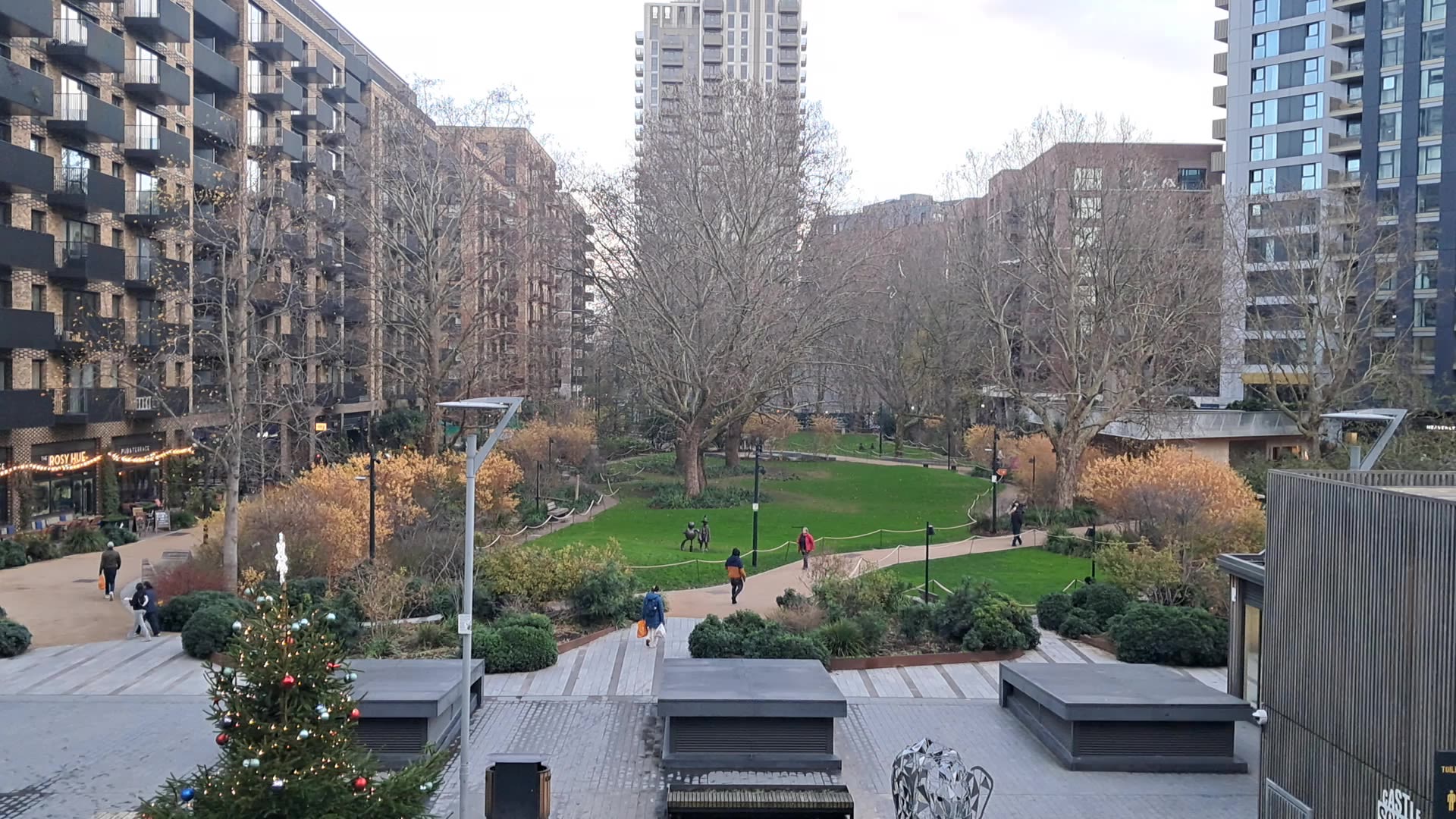

In October 2025, tension around the redevelopment of Elephant & Castle flared again when several small restaurant traders at Castle Square were locked out of their units over disputed electricity arrears. The traders, many relocated from the demolished shopping centre, said they were blindsided by bills amounting to thousands of pounds.
After public protest and pressure from campaign groups including Latin Elephant, the landlord Get Living and Southwark Council agreed to let traders return under a 12-month repayment plan. But the mood remains uncertain.
Traders approached for an interview declined to give their names, citing worry of damaging their chances of securing space in the new development. This illustrates the sense of vulnerability felt by businesses still in limbo.
"It just feels incomplete, and it can't fully be what everyone wants it to be until it is complete. So right now it's constant uncertainty."
Another trader said that "the increase of students and builders in the area has actually been good for business".
They said: "We want the area to stay true to what it is but not all change is bad change."
Another trader said they were very happy to be in the newly developed Elephant & Castle but admitted there is still work to be done.
They said: "The council is working to make this area the best it can be and so is everyone working in the area but it feels like we aren't doing it together. We should be hand in hand."
"We're working towards something which has value but it's not perhaps what was originally sold."
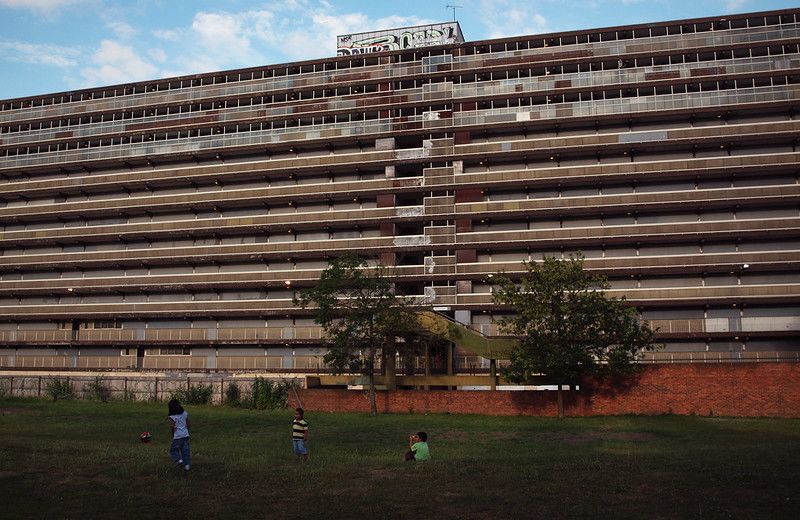
For decades, Elephant & Castle was seen as London’s confluence of traffic, industrial aftermath, post-war housing and urban neglect. Its central feature was Heygate Estate — a sprawling Brutalist housing project completed in 1974, with more than 1,200 homes and over 3,000 residents.
But by the early 2000s, the estate and surrounding area had become a symbol of failed post-war planning: car-centric streets, crumbling buildings, and poor living conditions.
In 2002, the Greater London Authority (GLA) identified Elephant & Castle as an “opportunity area” for growth, setting the stage for a large-scale overhaul.
By 2007, Southwark Council formally selected Lendlease as its master development partner — beginning what would become one of London’s most ambitious regeneration efforts.
By the time of the 2012–2013 planning applications, the vision had crystallised: demolition of the Heygate’s slab-blocks, restoration of a human-scale street layout, creation of a new green heart, mixed-use buildings, and new housing combining private and “affordable” homes.
The outline permission granted in March 2013 covered a mixed-use redevelopment across the former estate: between 2,300 and 2,469 new residential units, plus retail, business and leisure space, community facilities, a new energy centre, and a major public park and landscape works.

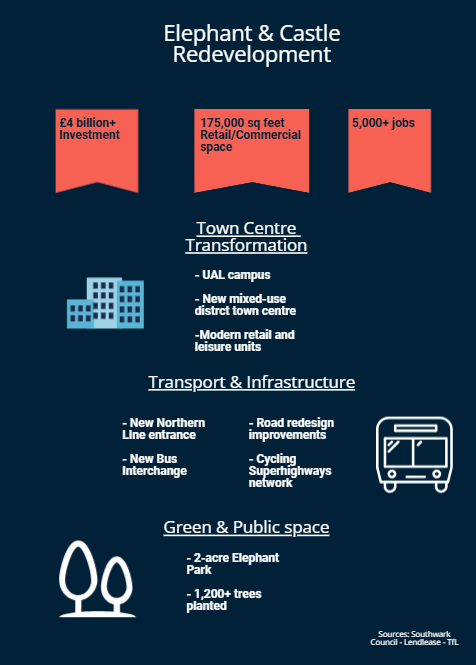





Planning and Development Framework (2002–2010)
Elephant & Castle was designated as an Opportunity Area for large-scale regeneration. Throughout the 2000s, planning frameworks and regeneration strategies were developed to outline future transformation across housing, public space and infrastructure. In 2007, property developer Lendlease was formally selected as the council’s regeneration partner, beginning early preparation and design work for what would become a multi-phase redevelopment programme.
Demolition and Site Clearance (2011–2014)
Major physical change began between 2011 and 2014 with the demolition of the Heygate Estate, a post-war housing complex containing more than 1,200 homes. The estate was dismantled over several years, and the land was fully cleared by 2014, opening a large central area of Elephant & Castle for redevelopment and future construction phases.
Masterplan and Planning Approvals (2013–2015)
Between 2013 and 2015, key planning approvals were secured, establishing the legal and structural framework for the redevelopment. Outline planning permission for the masterplan was granted in 2013, confirming plans for new residential buildings, commercial space, transport improvements and new public areas. A series of further applications and reserved matters approvals followed, formally setting out the phased delivery of the regeneration scheme.
Shopping Centre Redevelopment and Demolition (2018–2021)
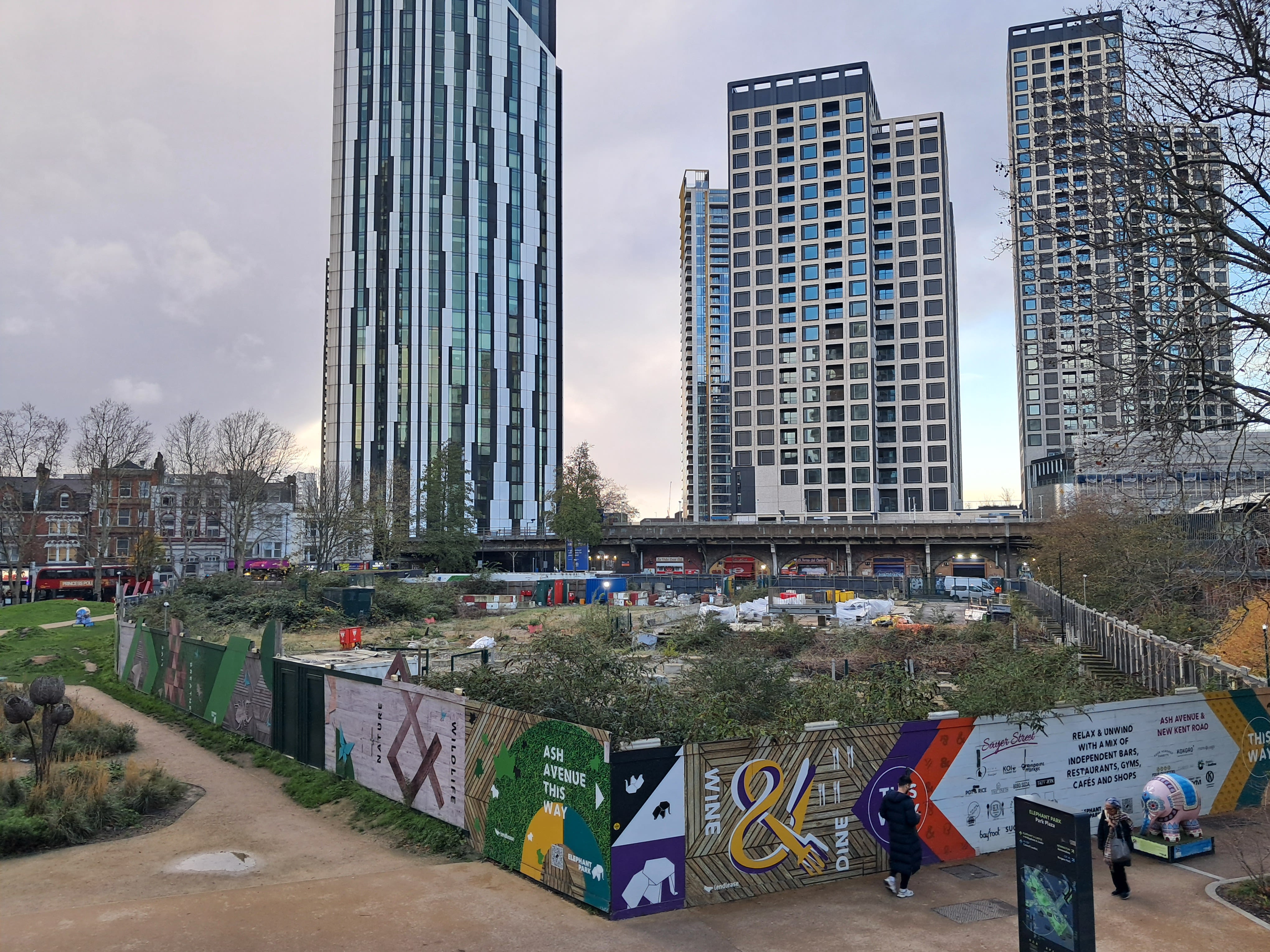
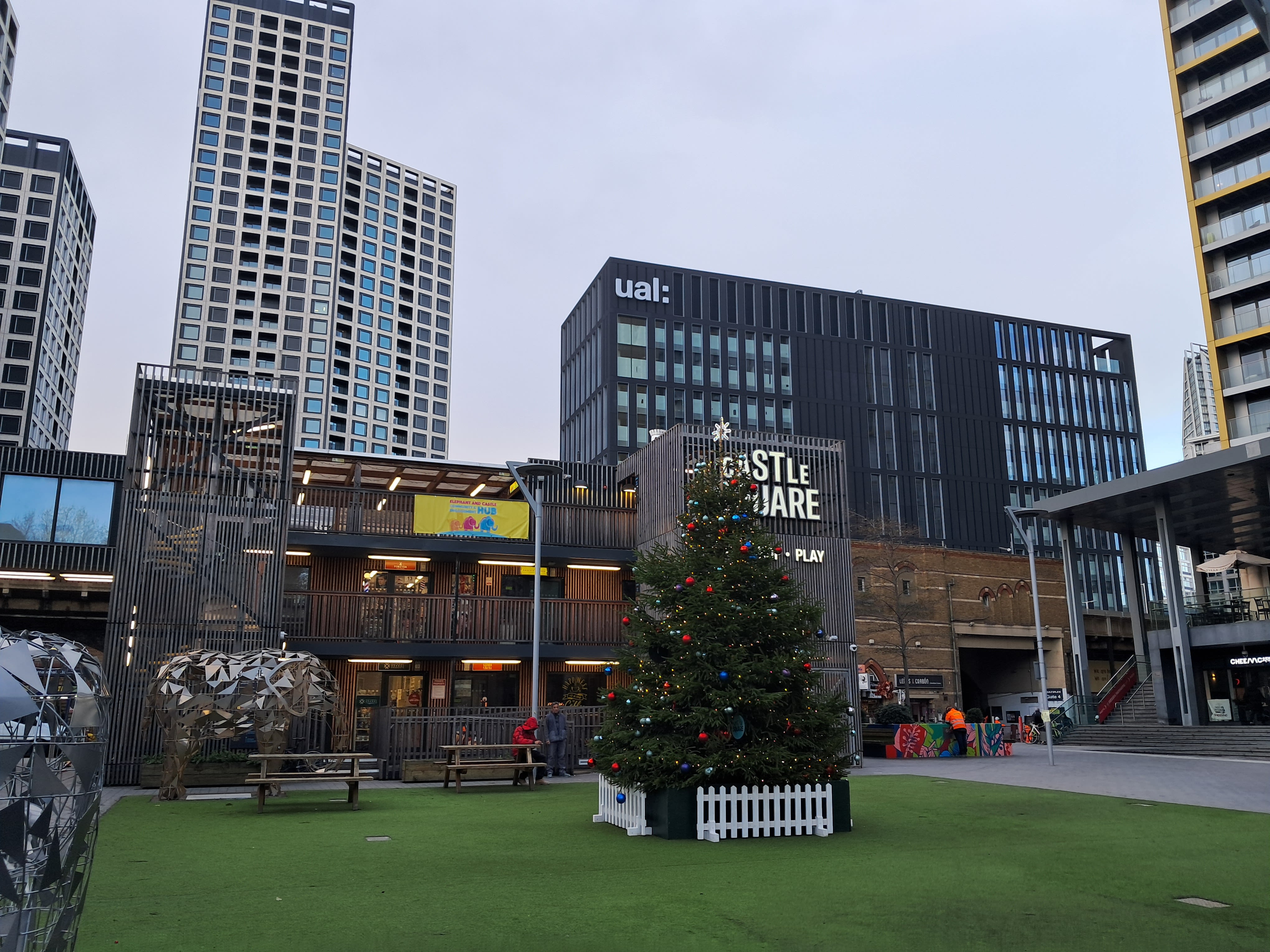
The next major phase began in 2018, when approval was granted for the redevelopment of the Elephant & Castle Shopping Centre into a new mixed-use town-centre development. The centre was permanently closed in September 2020, and demolition work began shortly afterwards. By late 2021, both the shopping centre and the adjoining Hannibal House office tower had been removed to make way for new construction, including retail and leisure space, a new University of the Arts London campus building and new public areas.
Construction and Final Delivery (2022–2030)
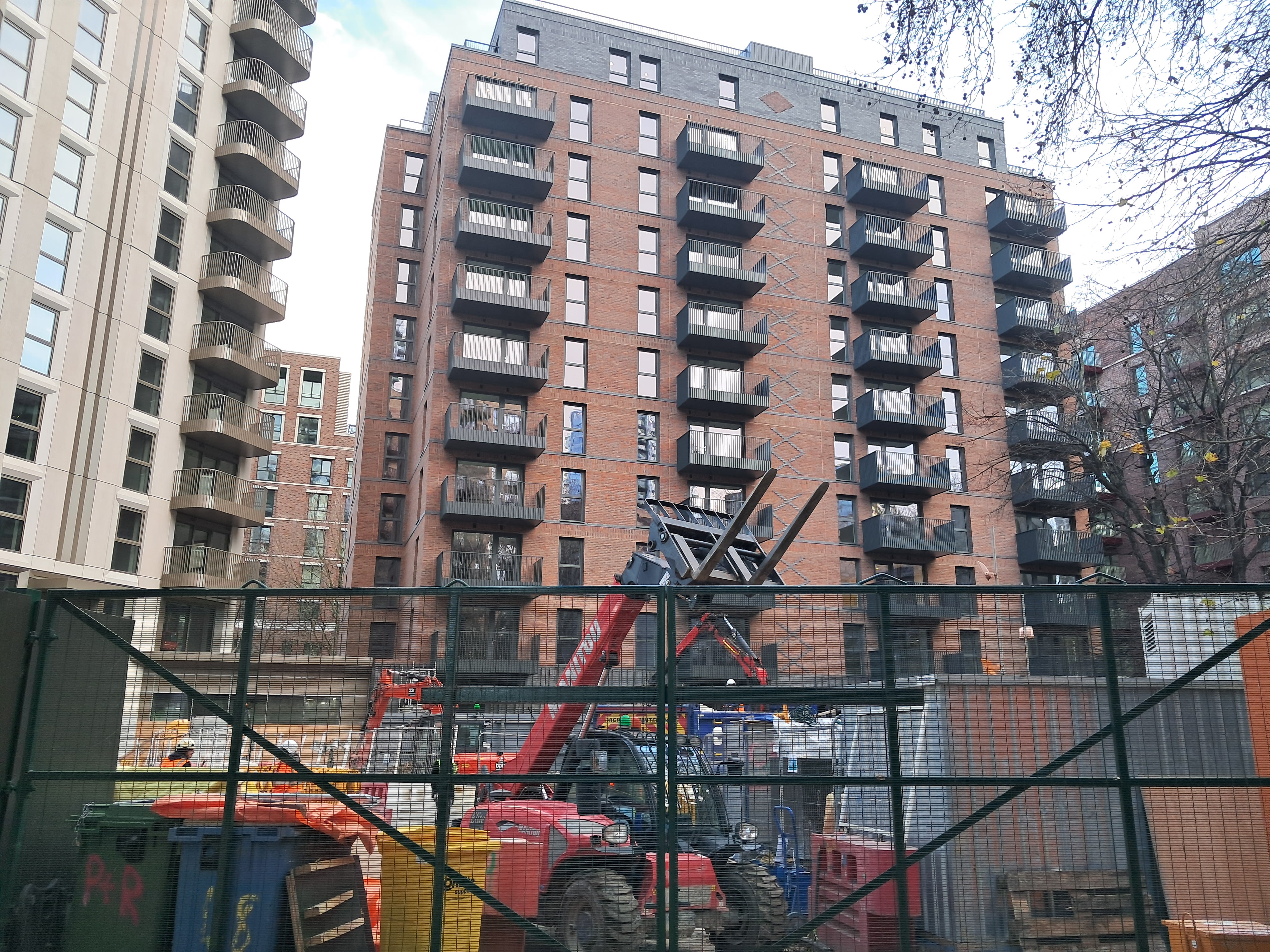
Construction of the new town-centre buildings and surrounding development sites began in 2022, including new commercial units, public spaces, cycle routes and landscaped green areas. Work also continued on transport upgrades, such as the new Northern Line station entrance and improved street layouts. The redevelopment remains underway, with phased completion expected between 2026 and 2030, marking the final delivery of the area’s new town centre and surrounding urban district.

The public realm ambition was large: almost half of the redevelopment area was earmarked for streets, squares, parks and open space. The proposed park was billed as “one of the largest new parks to be built in central London in decades.”
The estate demolition was completed in July 2014, clearing the way for new construction. Since then, developments under the banner of Elephant Park and other projects have steadily reshaped the area.
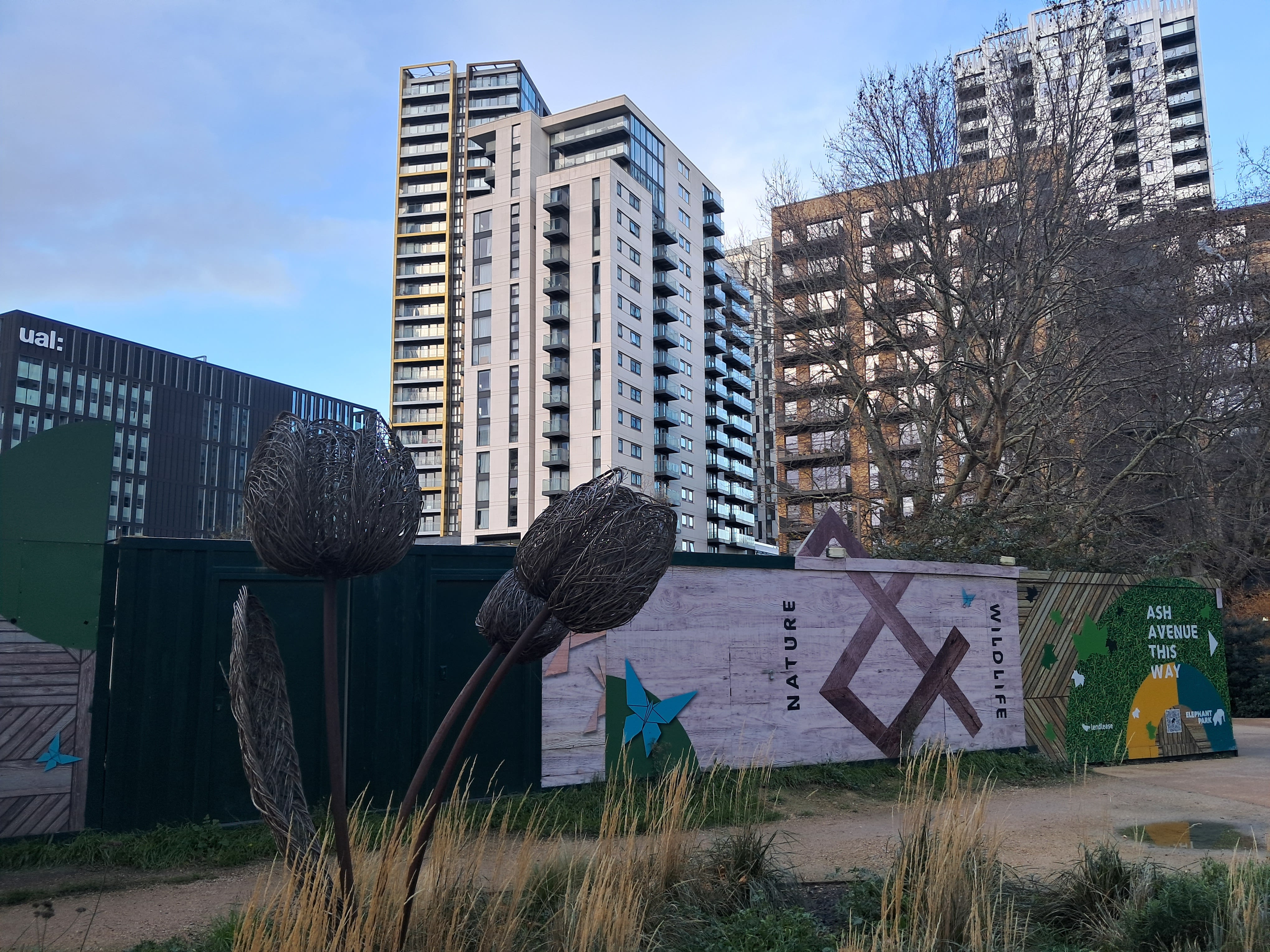
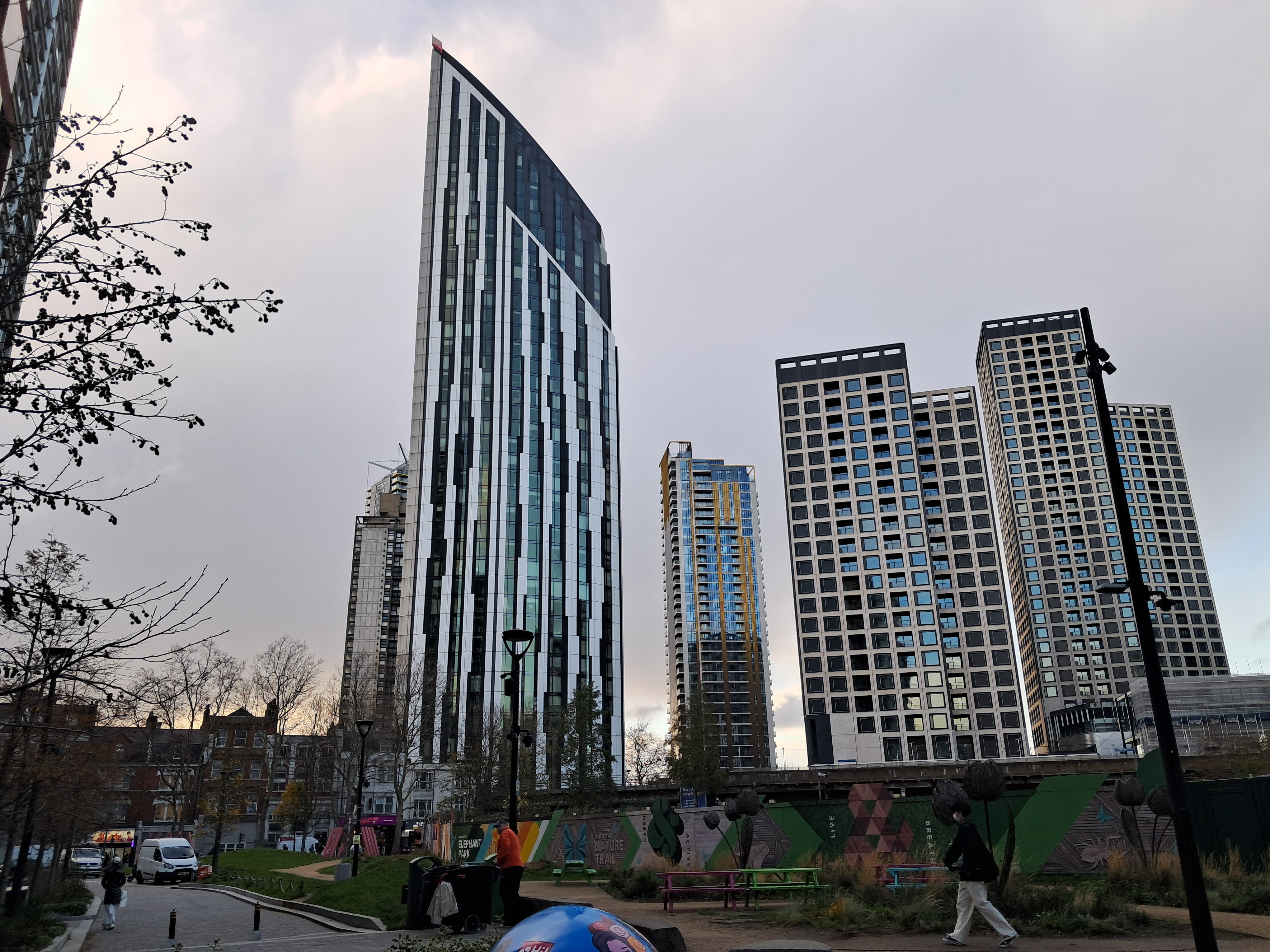
On the Elephant Park site alone, the final deliverables are projected as circa 3,000 homes, alongside approximately 50 shops, restaurants, cafés, and a major new central park.
The first tranche of completed housing, a scheme called Trafalgar Place, finished in 2015. It delivered 235 homes, 56 of which were designated “affordable,” in a so-called “tenure-blind” layout designed to avoid visible distinctions between private and social housing.
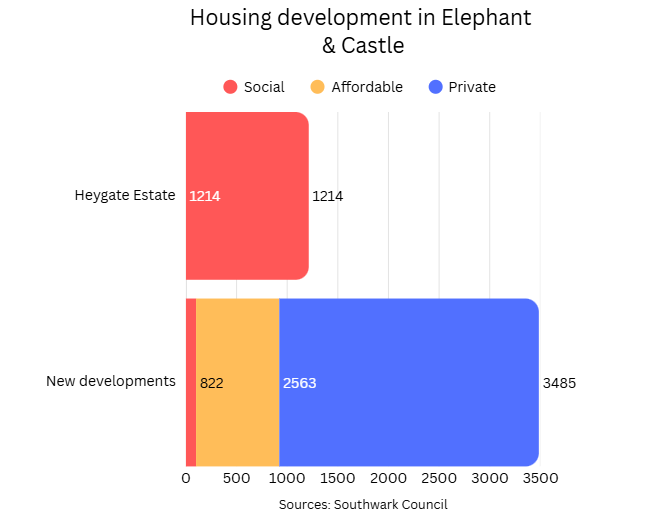
Despite the scale of delivery, much of the original social-housing capacity has vanished. The Heygate Estate once provided over 1,200 homes for council tenants; under the new plan, even at full build-out, the amount of genuinely social housing remains a fraction of that. Critics point out that early applications proposed as few as eight social-rented flats; final plans under 2013’s outline permission offered around 79 social-rented units, despite over 2,500 total homes envisaged.
That shortfall has fuelled accusations that redevelopment displaced long-standing residents, replacing working-class, social-housing families with market-rate renters and buyers. Independent watchdogs estimate that on Elephant Park, roughly only 25% of completed homes are “affordable,” and among those, only a small portion qualify as social rent.
The human costs have been real. Tens of thousands of residents were rehoused, many moved to outer-London boroughs; leaseholders were bought out or compensated, but for many former tenants, the sense of home, community and belonging was eroded. The character of the area has shifted, but fewer of the long-time neighbours who once made Elephant & Castle a vibrant, if imperfect, working-class and multicultural heart of South London.
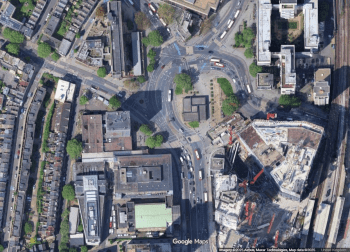

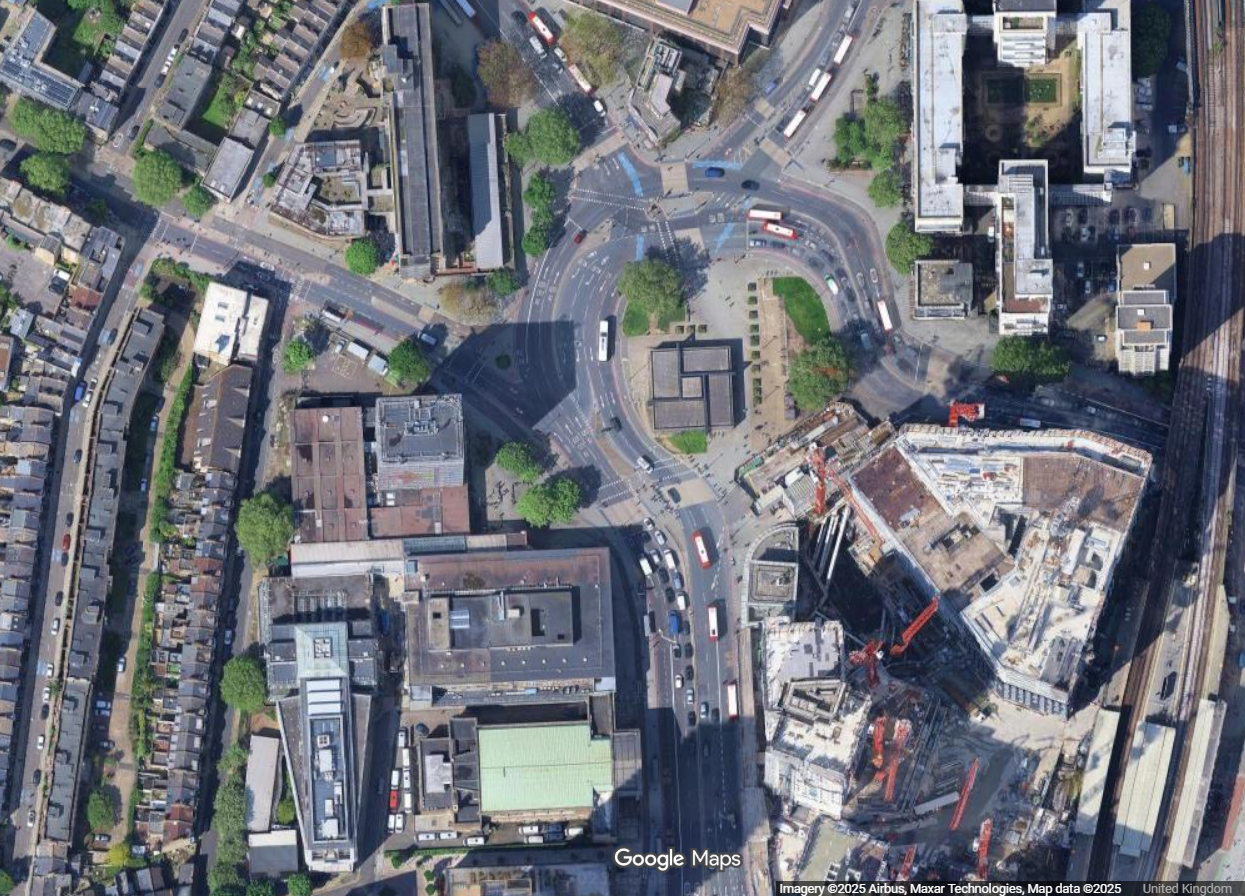
The story of Elephant & Castle underlines the scale and ambition of modern urban regeneration. Through its 15-plus-year masterplan, Southwark Council has overseen one of the largest transformations in inner London, trading out substandard post-war housing for new homes, parks, shops and—on paper—a revived, integrated town centre. The delivery of thousands of new homes, public realm, and renewed infrastructure is a tangible achievement.
But the project also dramatises the inherent tension between urban renewal and social equity. When “affordable” housing makes up a minority of units, when social-rent provision is drastically reduced, and when resettled communities are dispersed, regeneration risks becoming a vehicle for displacement rather than uplift.
Elephant & Castle is no longer the derelict junction of traffic and concrete it once was, but it is perhaps not quite the inclusive, mixed community it was promised to be. As the remaining pieces of the masterplan close in over the next years, the key question remains: will the final neighbourhood look like a vibrant, diverse urban quarter, or a polished, privatised enclave where the original residents no longer belong?

 Built with Shorthand