
Panorama:
The UK's biggest steel pan competition
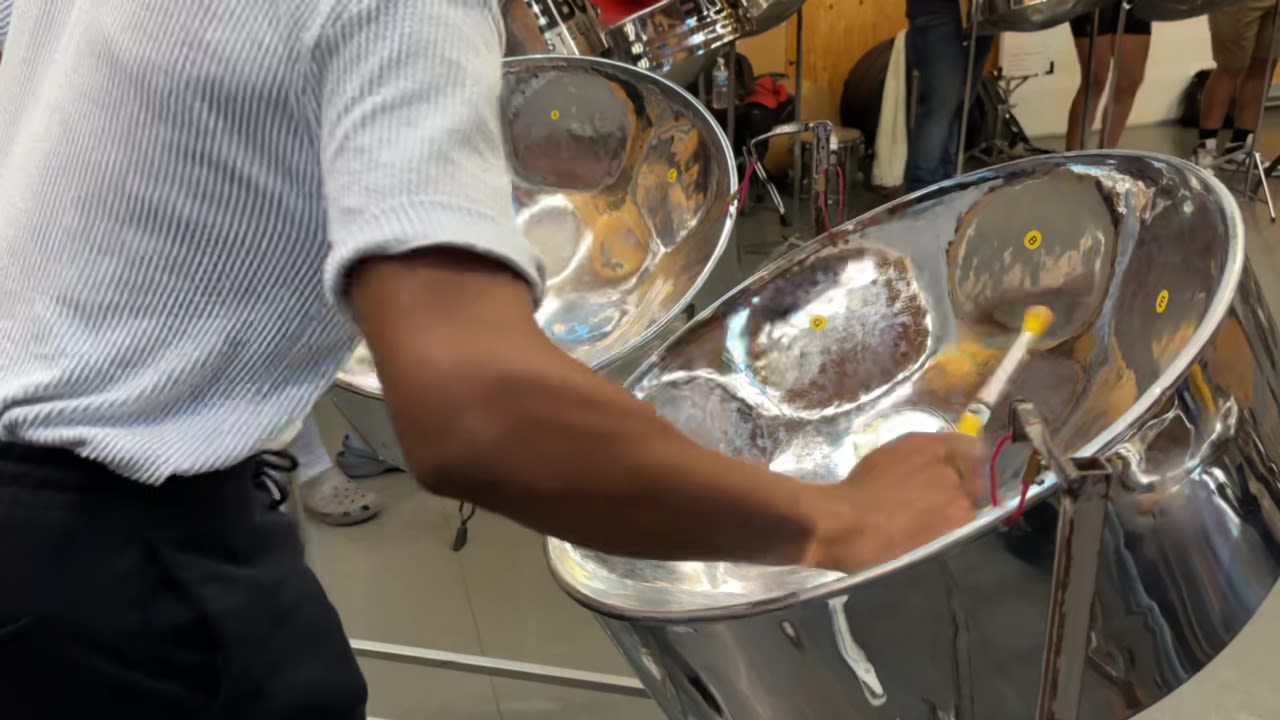
It’s summertime in the late noughties, we’re sat in West London, the bass from the nearby sound systems pumping, doubles in one hand, grape soda in the other. Me, my mum, dad, grandad, my little sister and her mum are all sat liming [chilling out] on Carnival Sunday. My greatest memories filled with images of feathers, sparkles, island flags, the strong scent of rum and smells from the nearby jerk drum along a soundtrack of steel pans.
The steel pan (also known as steel drums, or 'pan') was invented in the twin islands of Trinidad and Tobago in the 1930s. It was established in contexts of resistance; its history being traced back to the enslaved Africans who were brought to the Caribbean in the 1700s.
But the use of the instrument grew following the second World War. An American airbase in Trinidad discarded thousands of oil drums, and the innovative people of the island turned these into the steel pans we know today.
Panorama is London’s annual steel band competition and takes place on the first day of Notting Hill Carnival each year. Its home is Horniman Park, in Kensington and Chelsea, except when it wasn’t during the years 2007 to 2010, where it was held in Hyde Park. This competition takes inspiration from the original Panorama back in Trinidad – which owns the title of being the largest steel pan competition in the world.
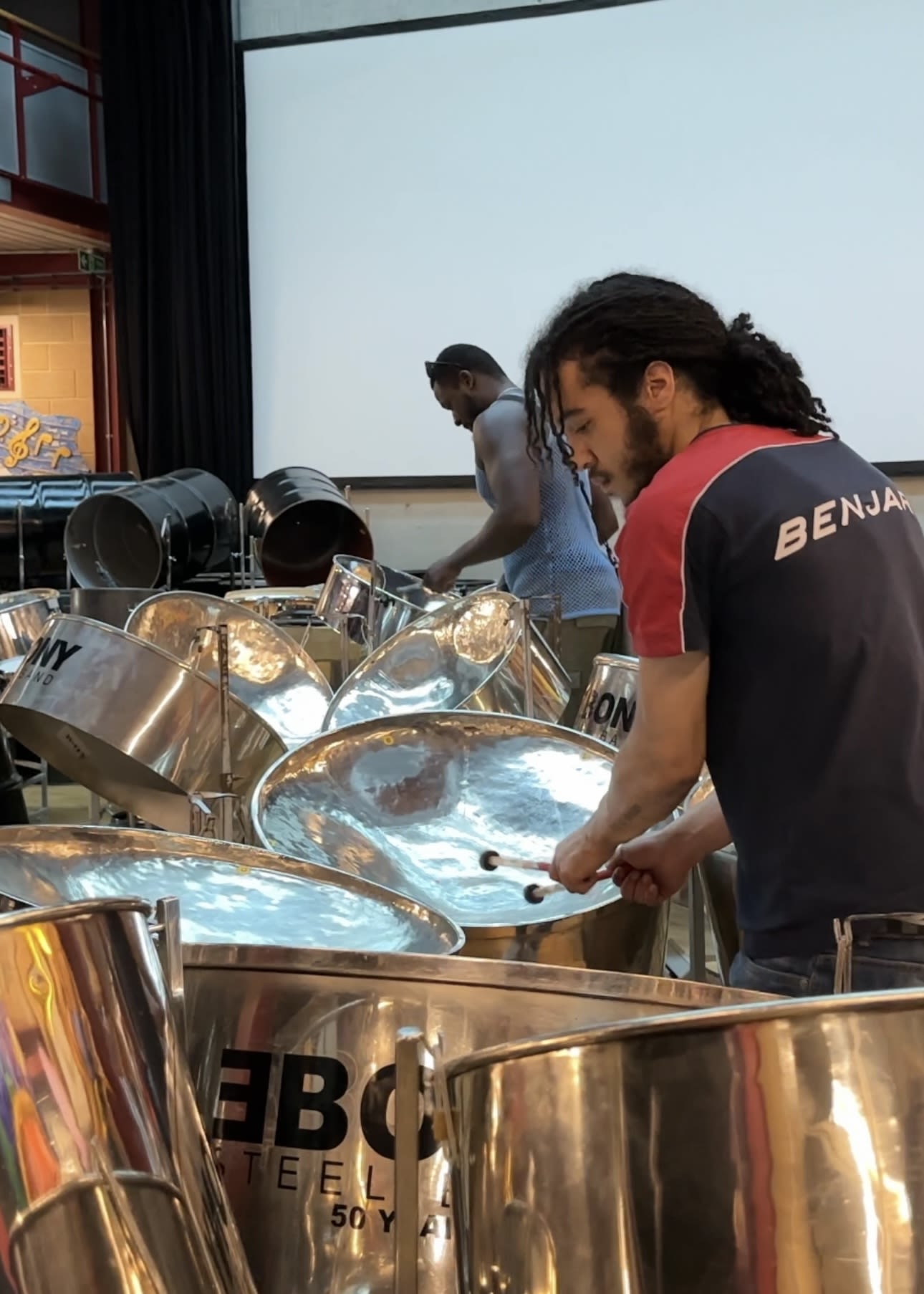
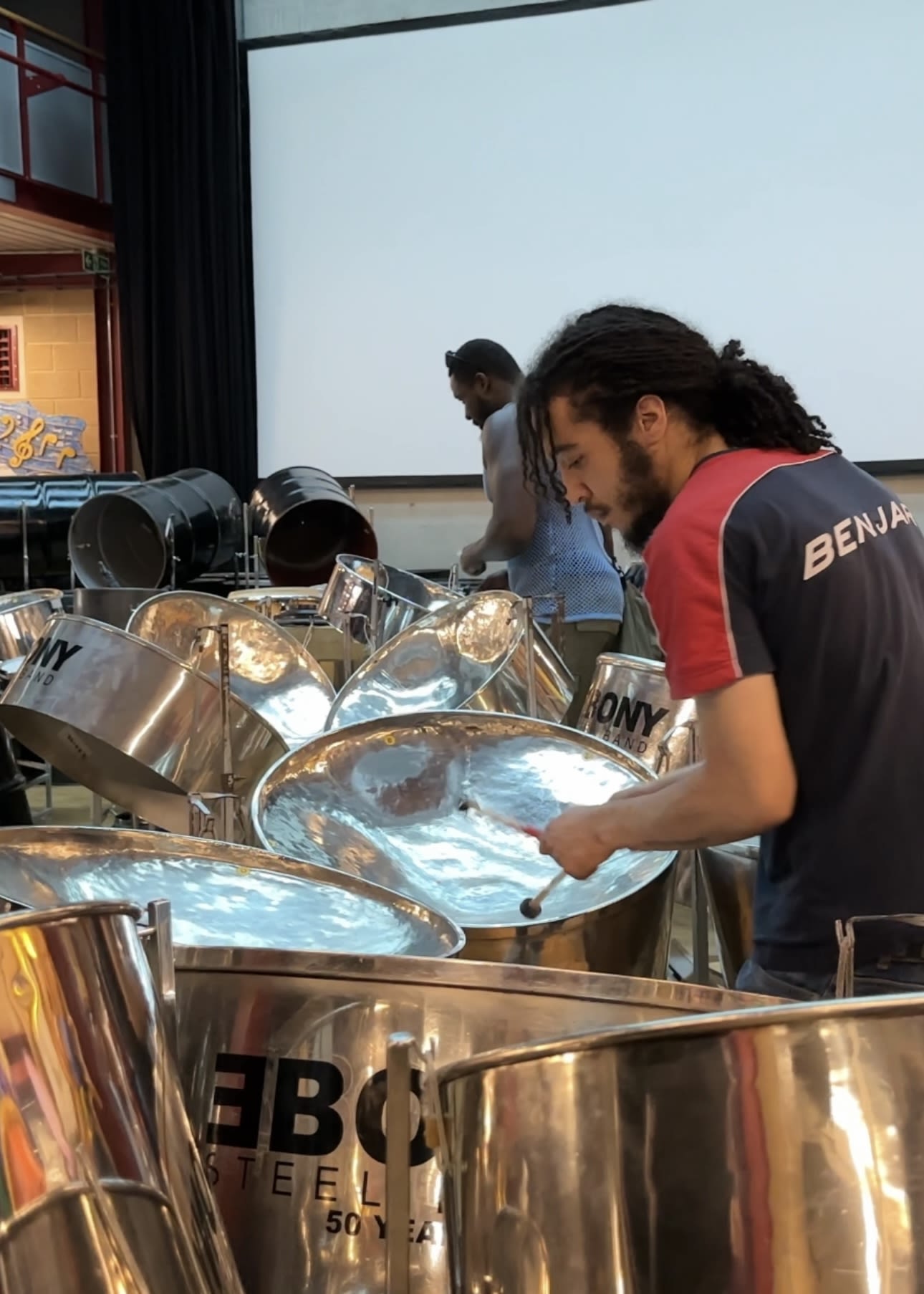
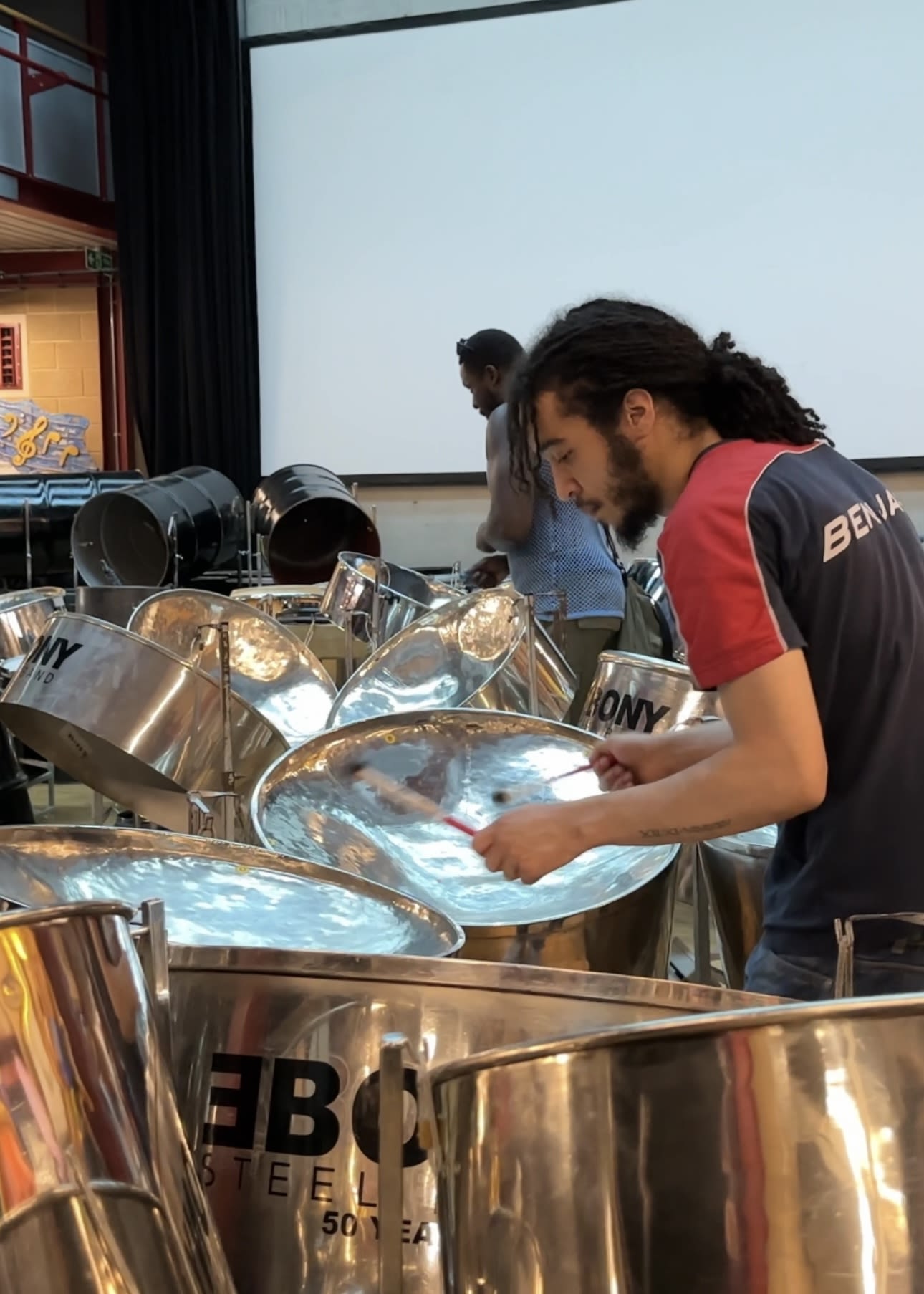
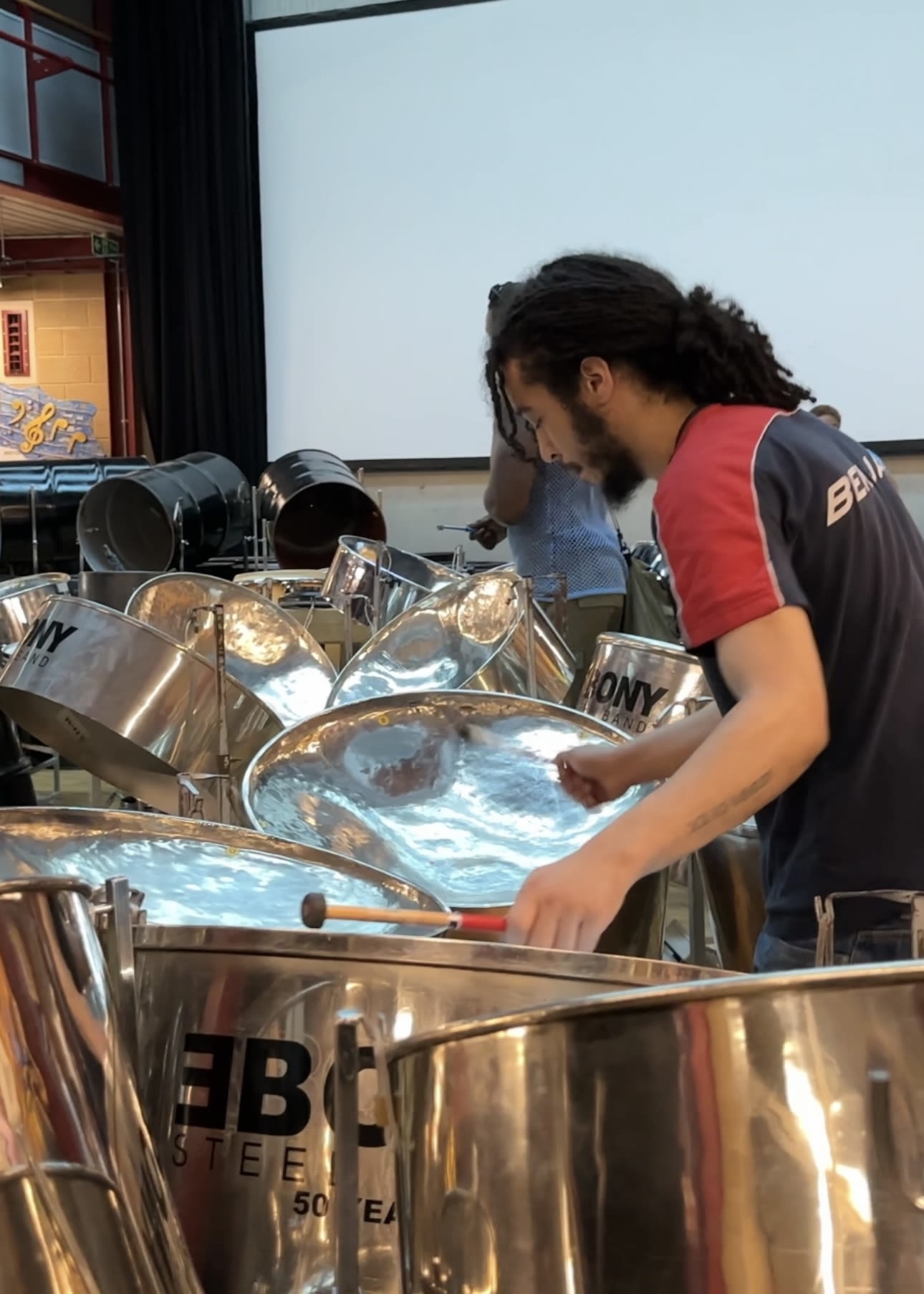
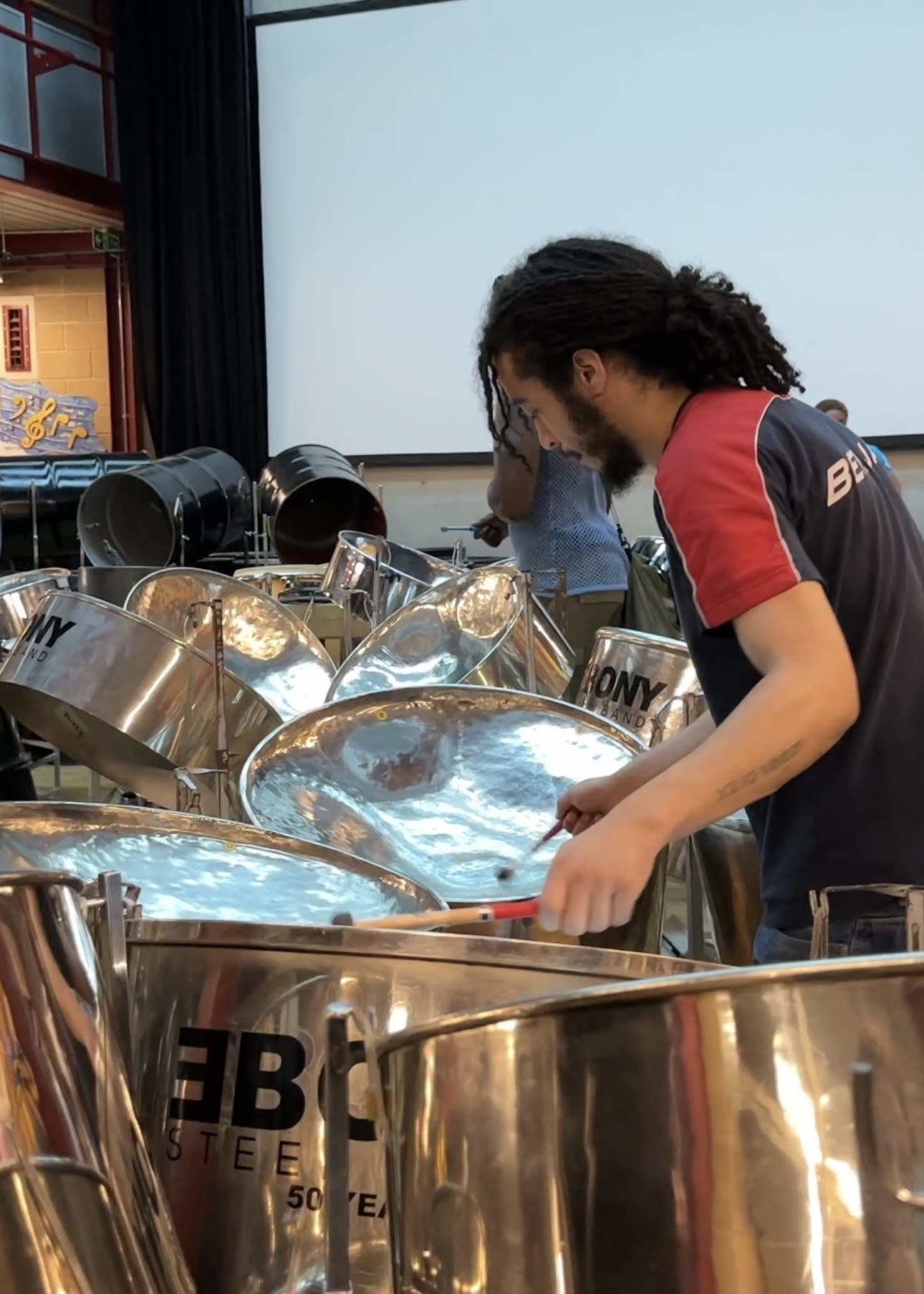
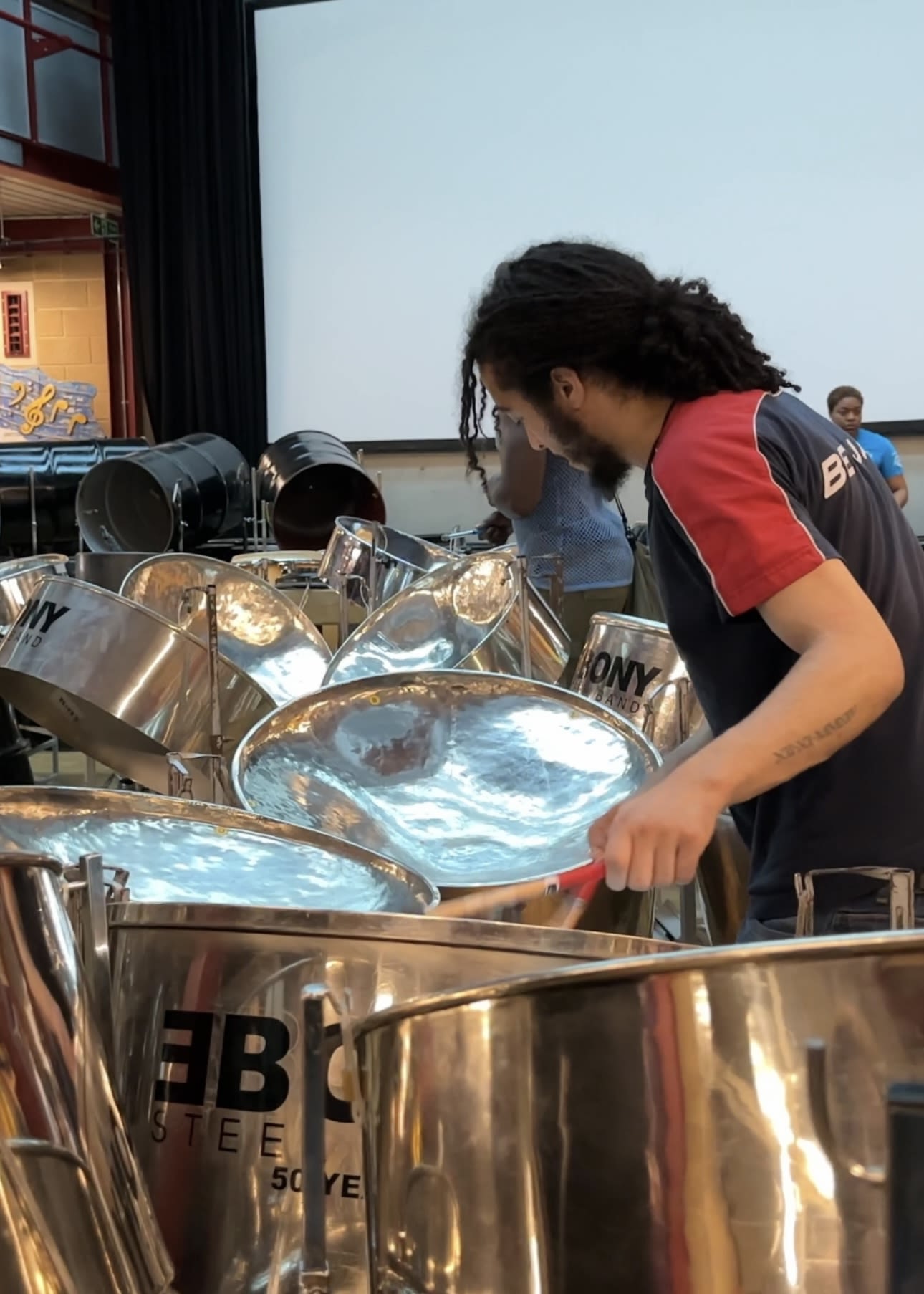
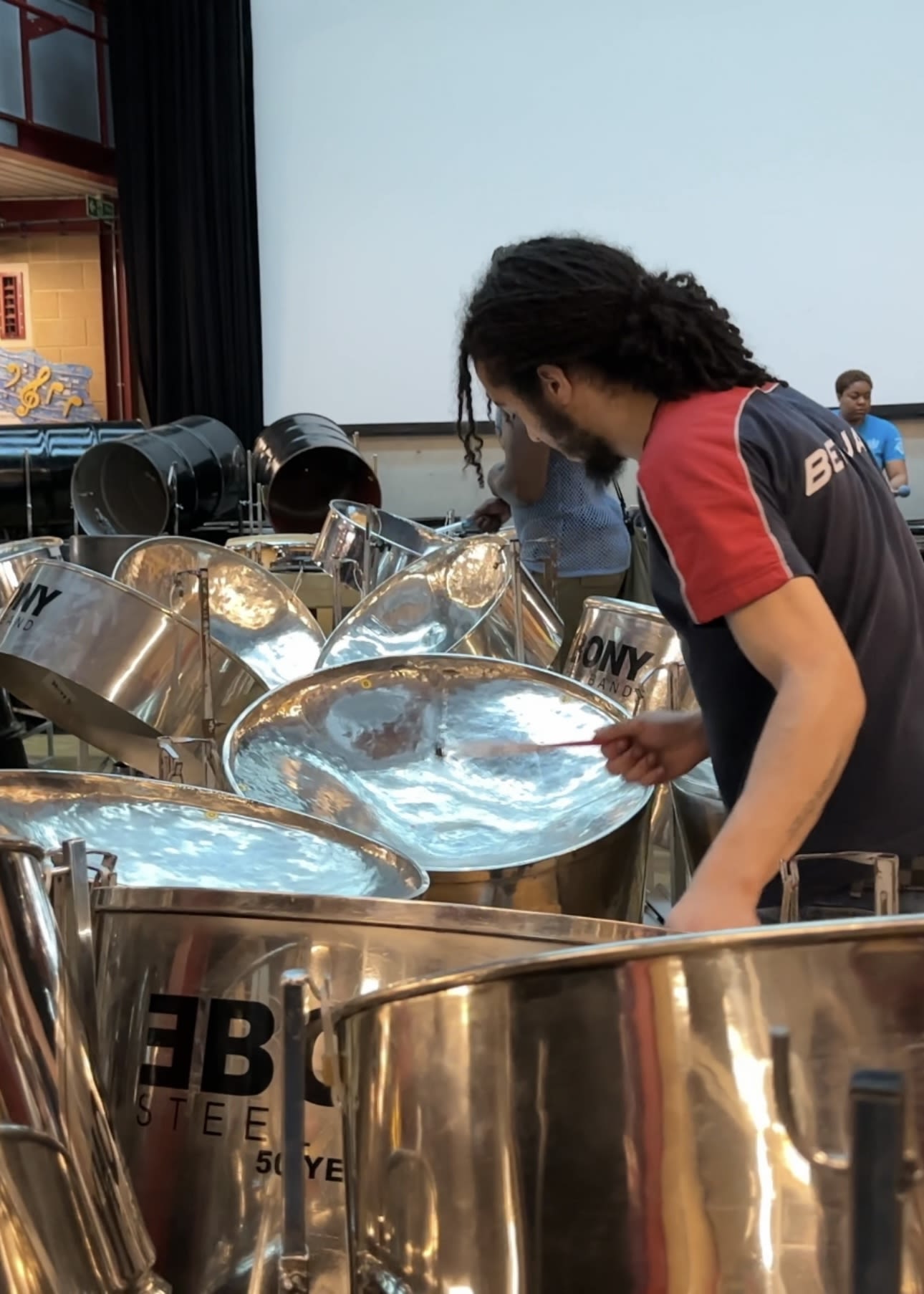
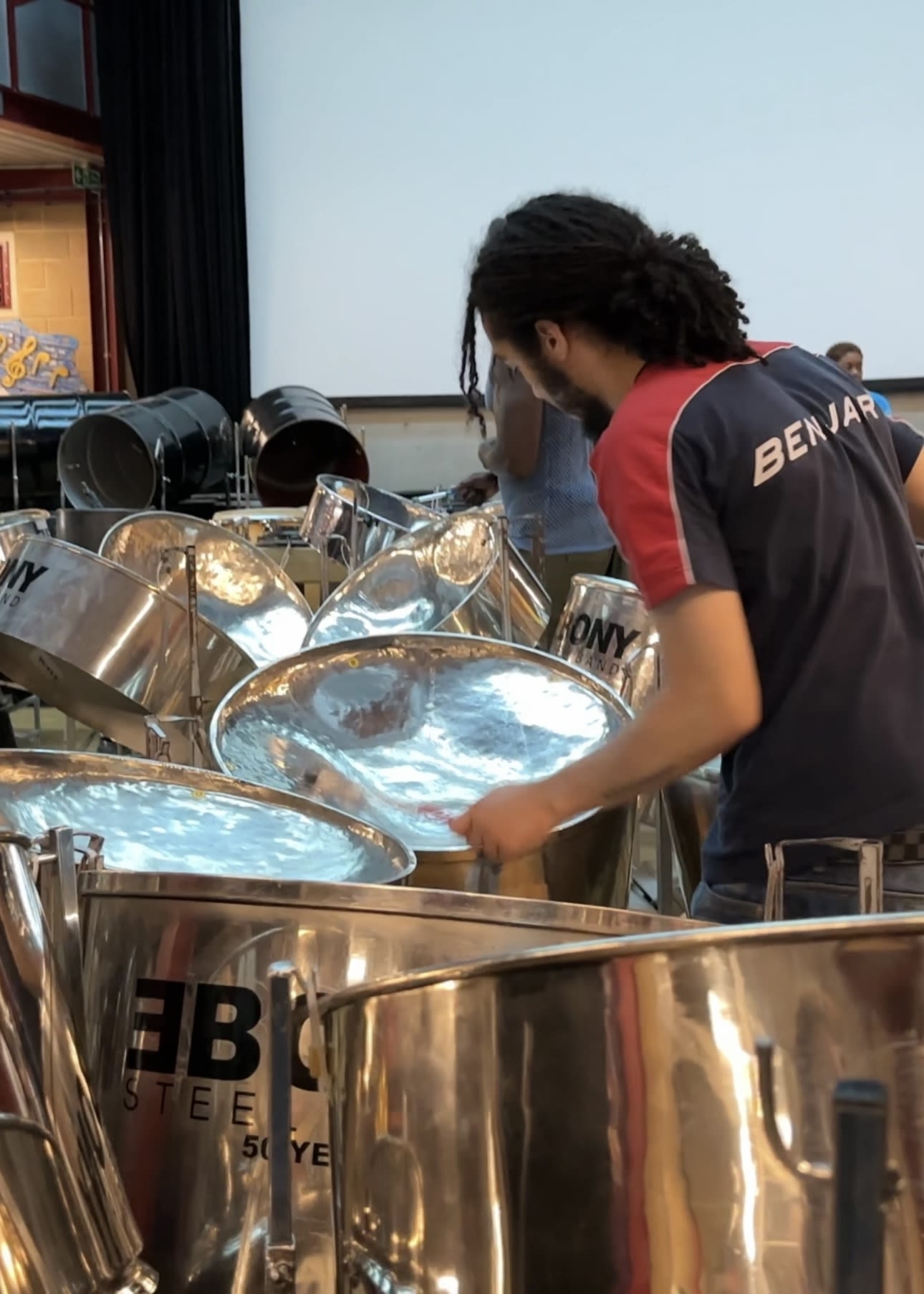
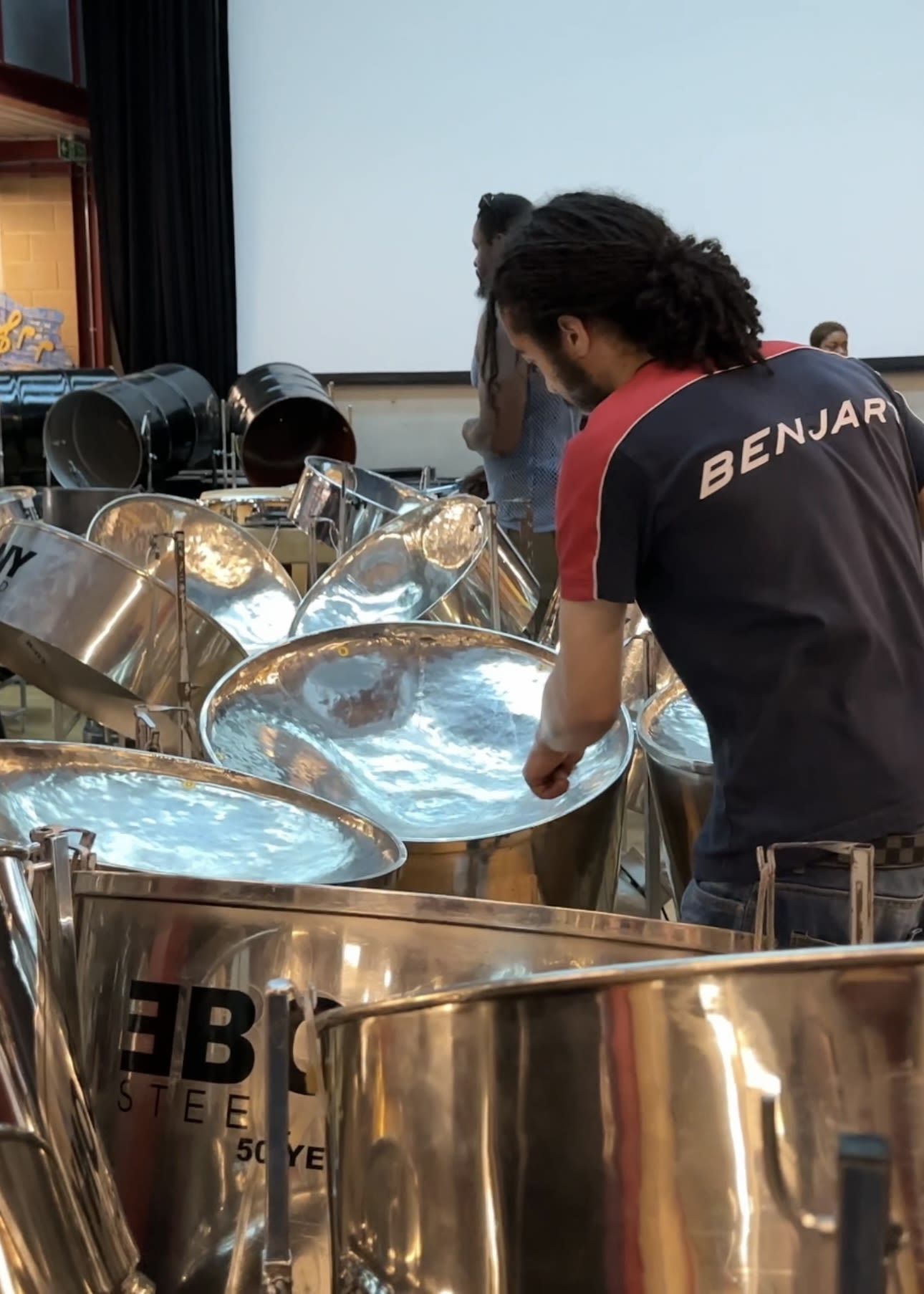
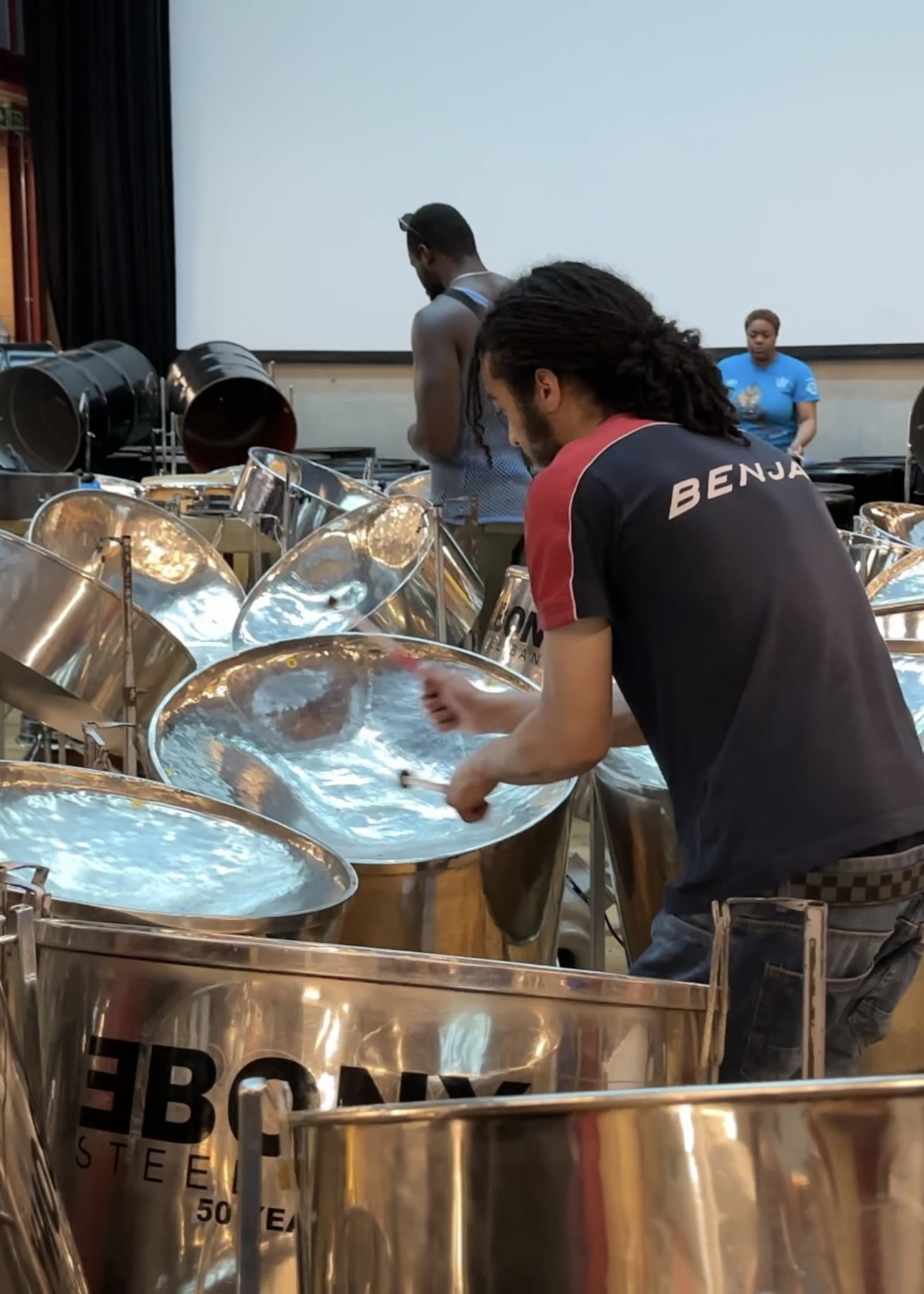
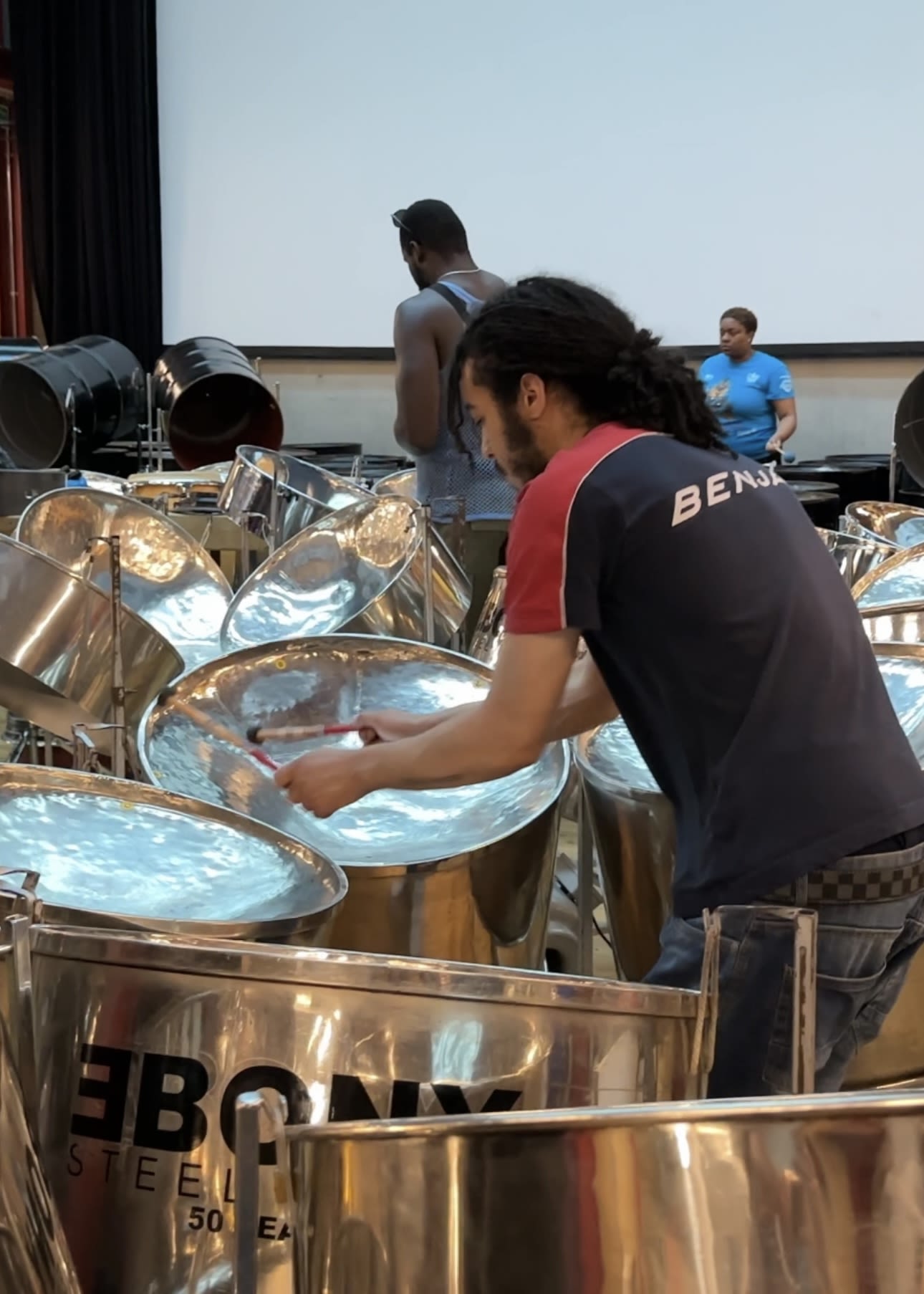
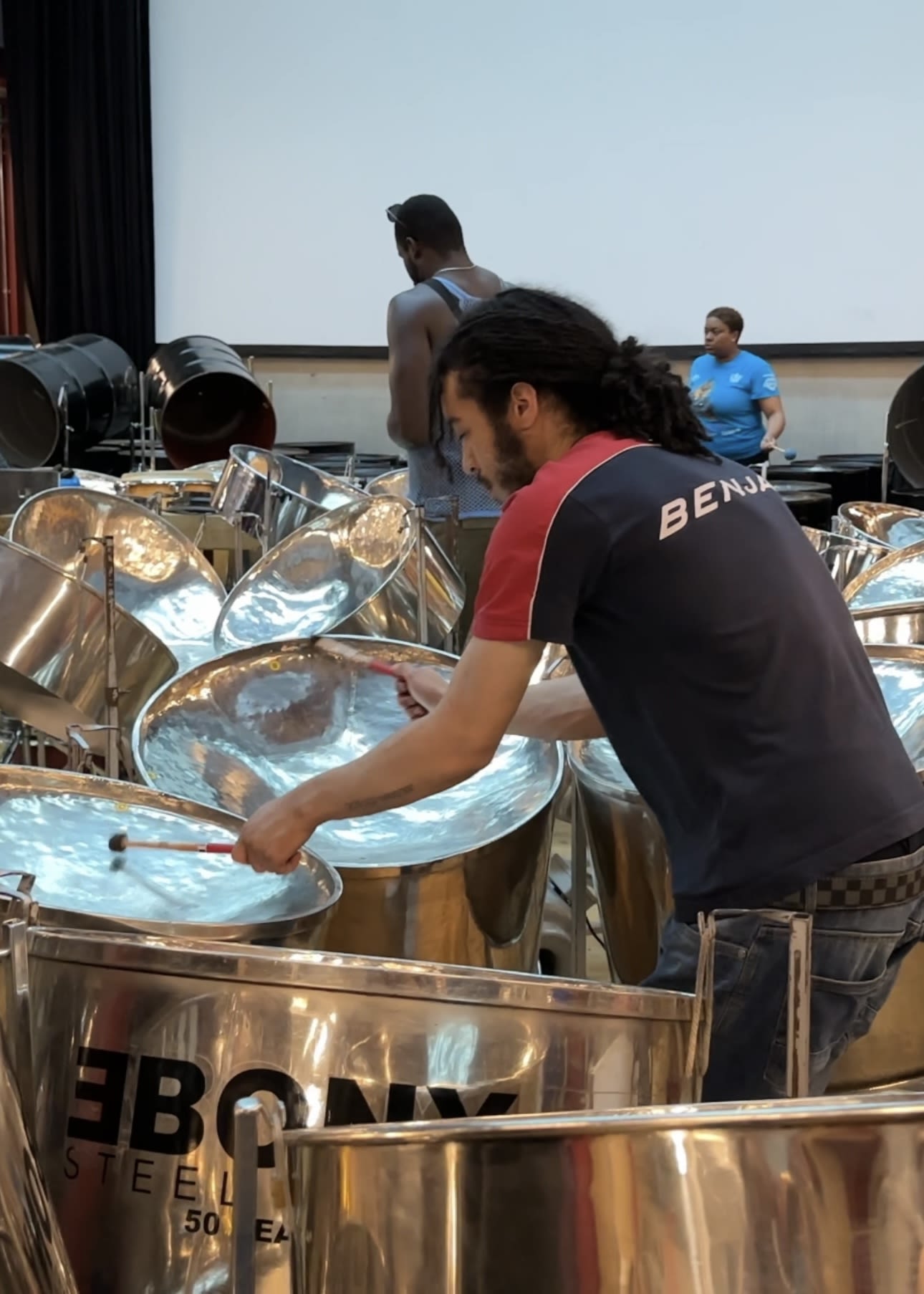
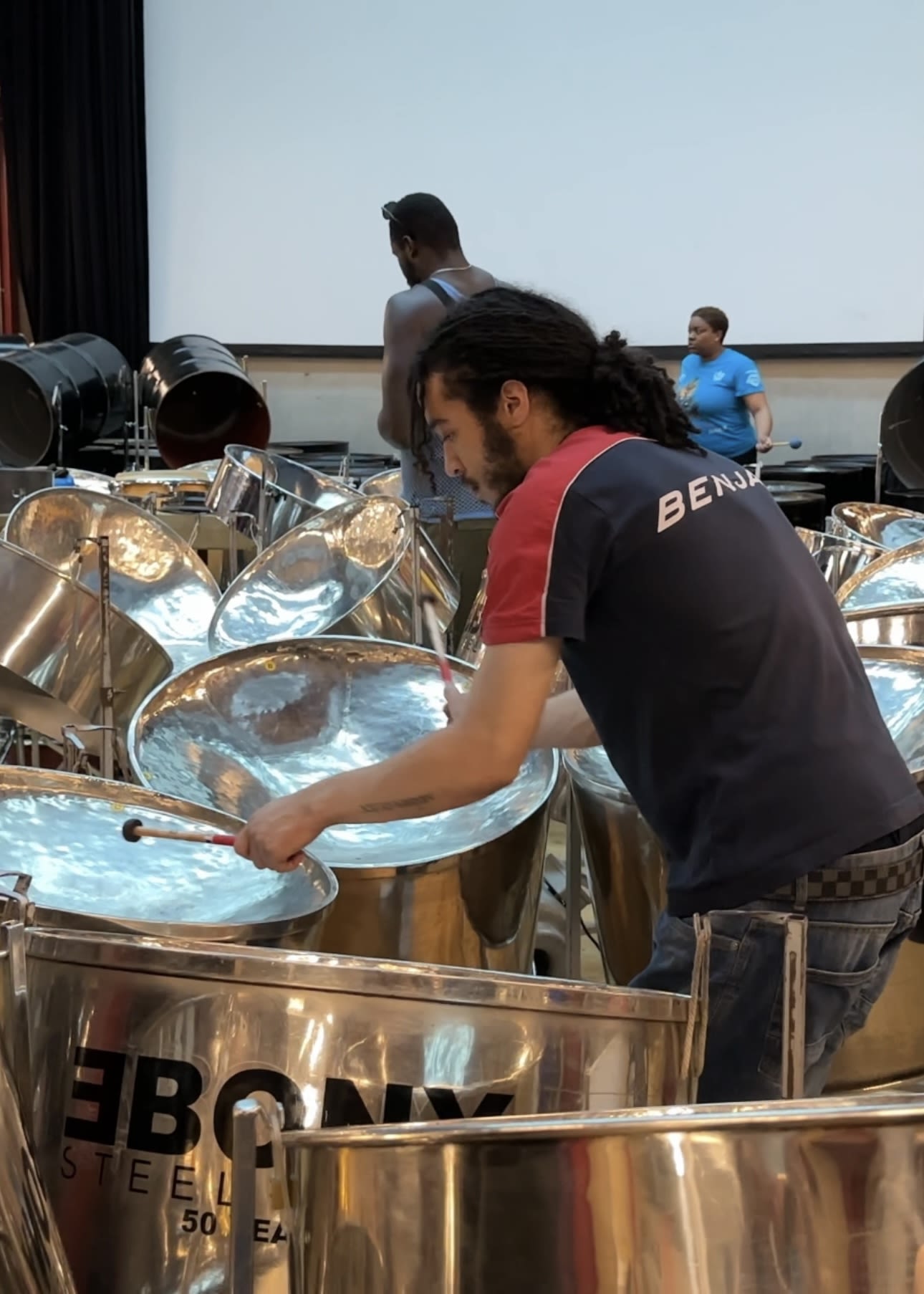
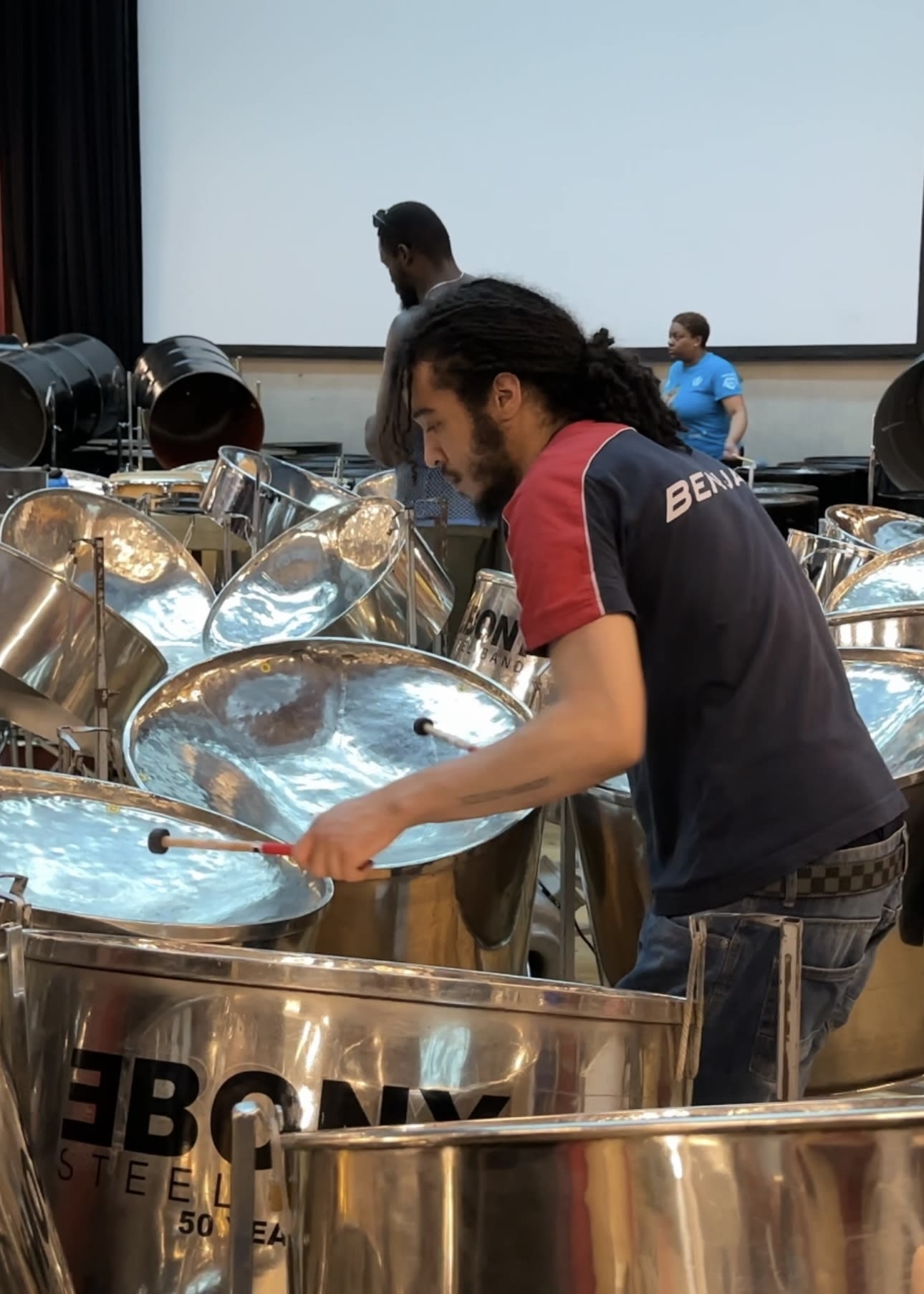
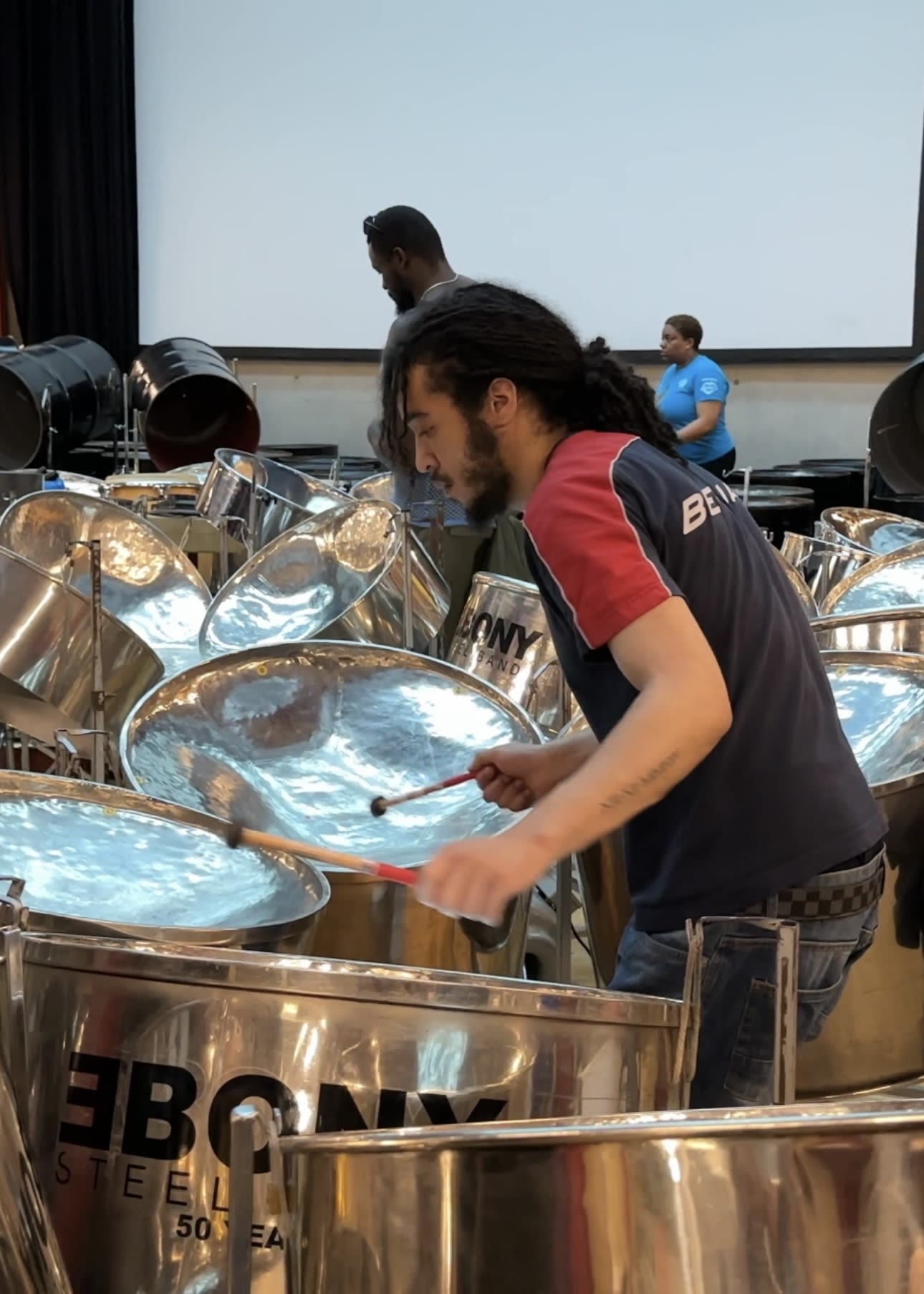
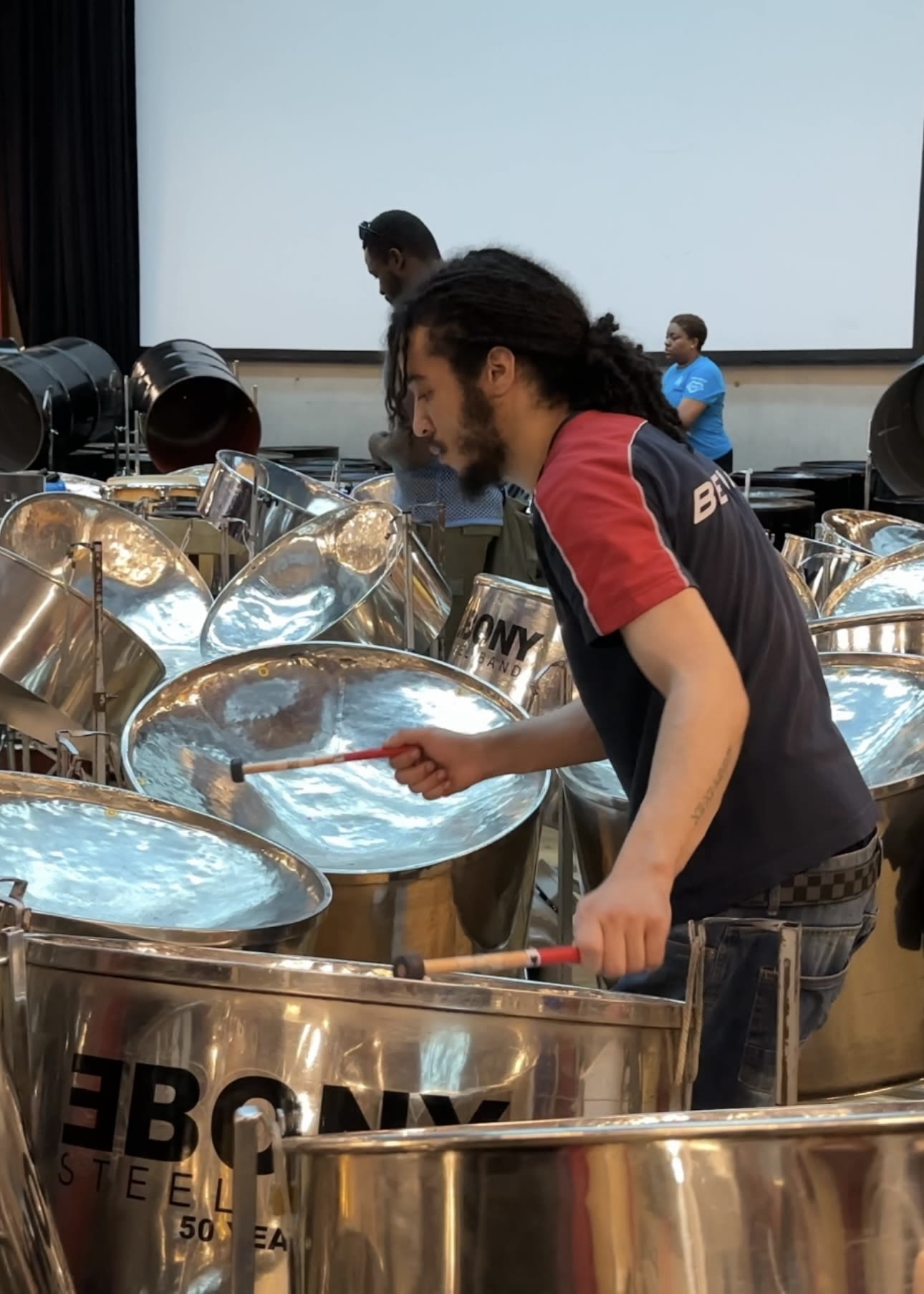
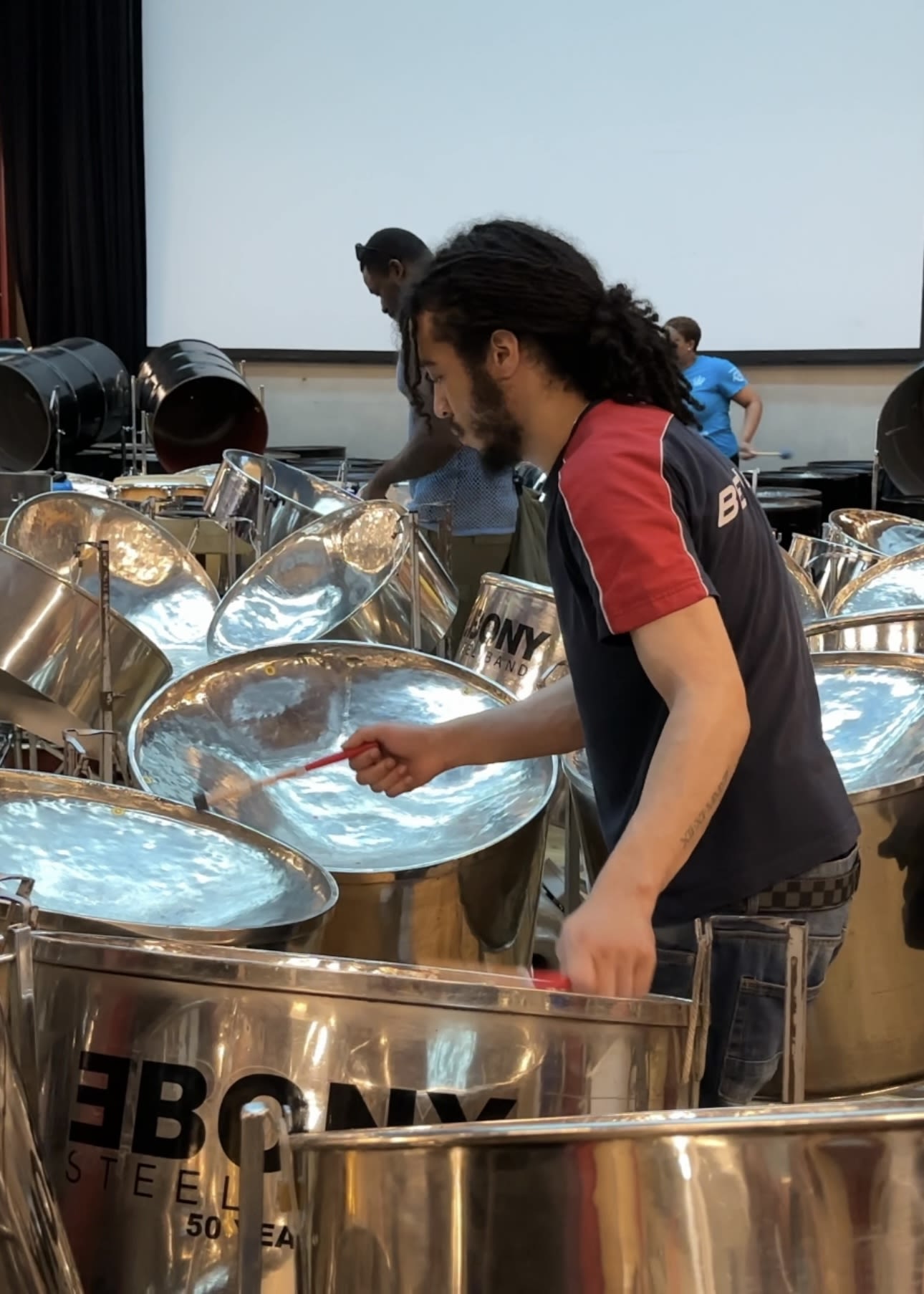
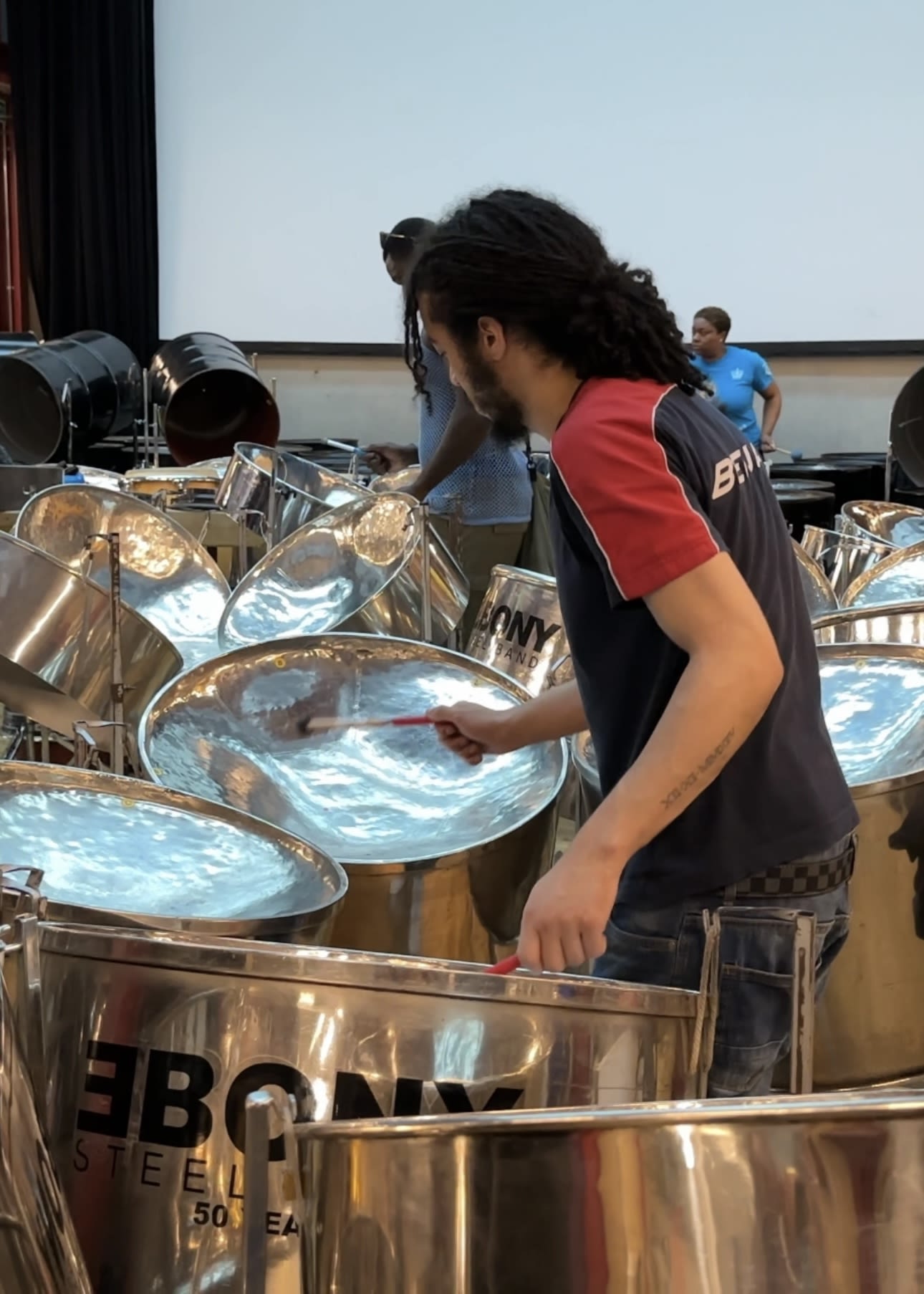
The main contenders in the contest include Mangrove, the Metronomes, and Ebony. Ebony Steel band have – now – won the competition twenty-four times. Band members practise all year-round and have small performances often, but the main event in their calendar is Panorama, for which they practise every night of summer, late into the night.
I went along to one of their final practises before the competition at their base, the Yaa Centre in West Kilburn, and spoke with some of the band members to understand why they play.


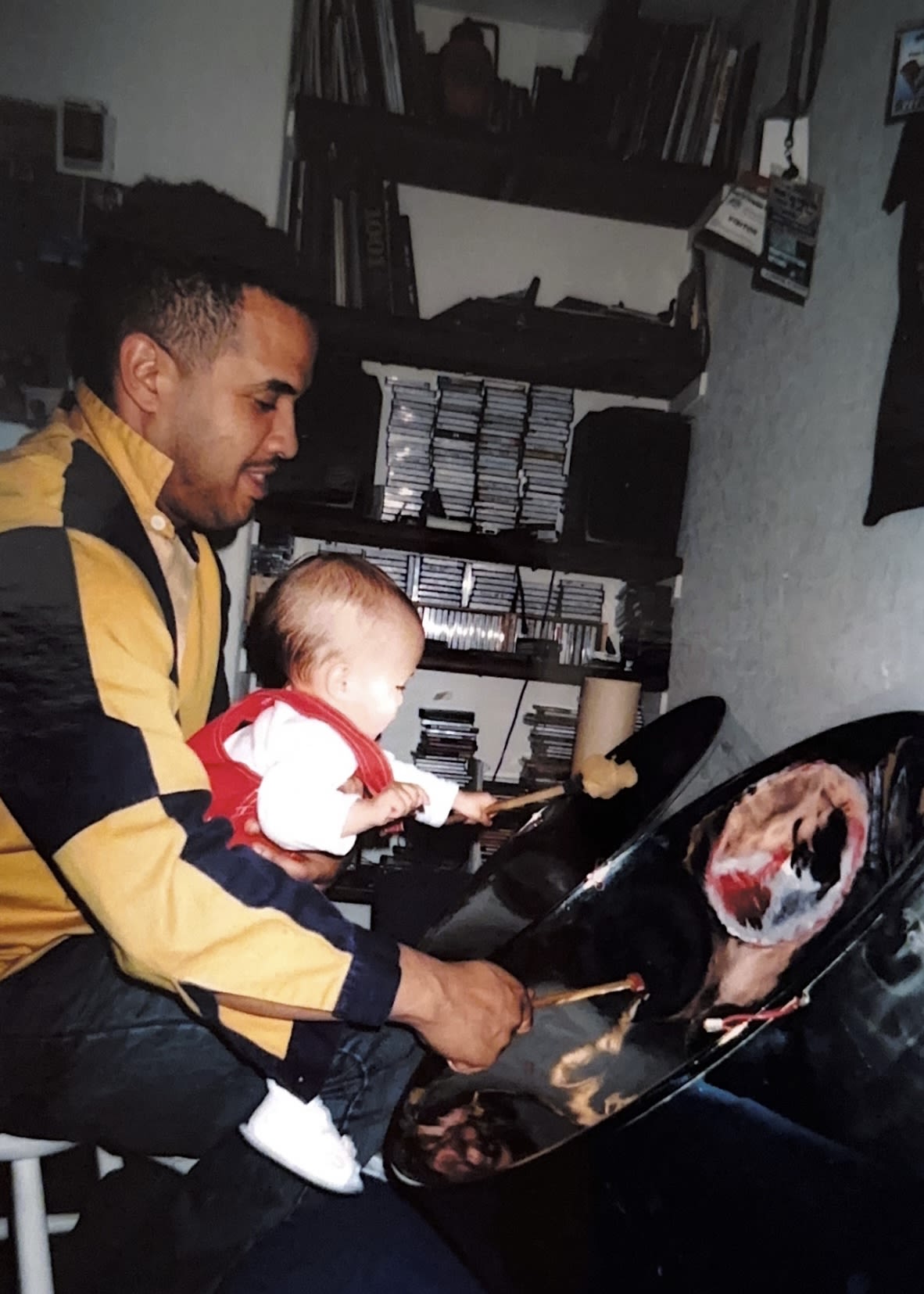
My dad and me, 2004.
My dad and me, 2004.
Amy has played pan since she was nine and says she has always loved music and playing it too, she says she loves pans ability to bring people together.

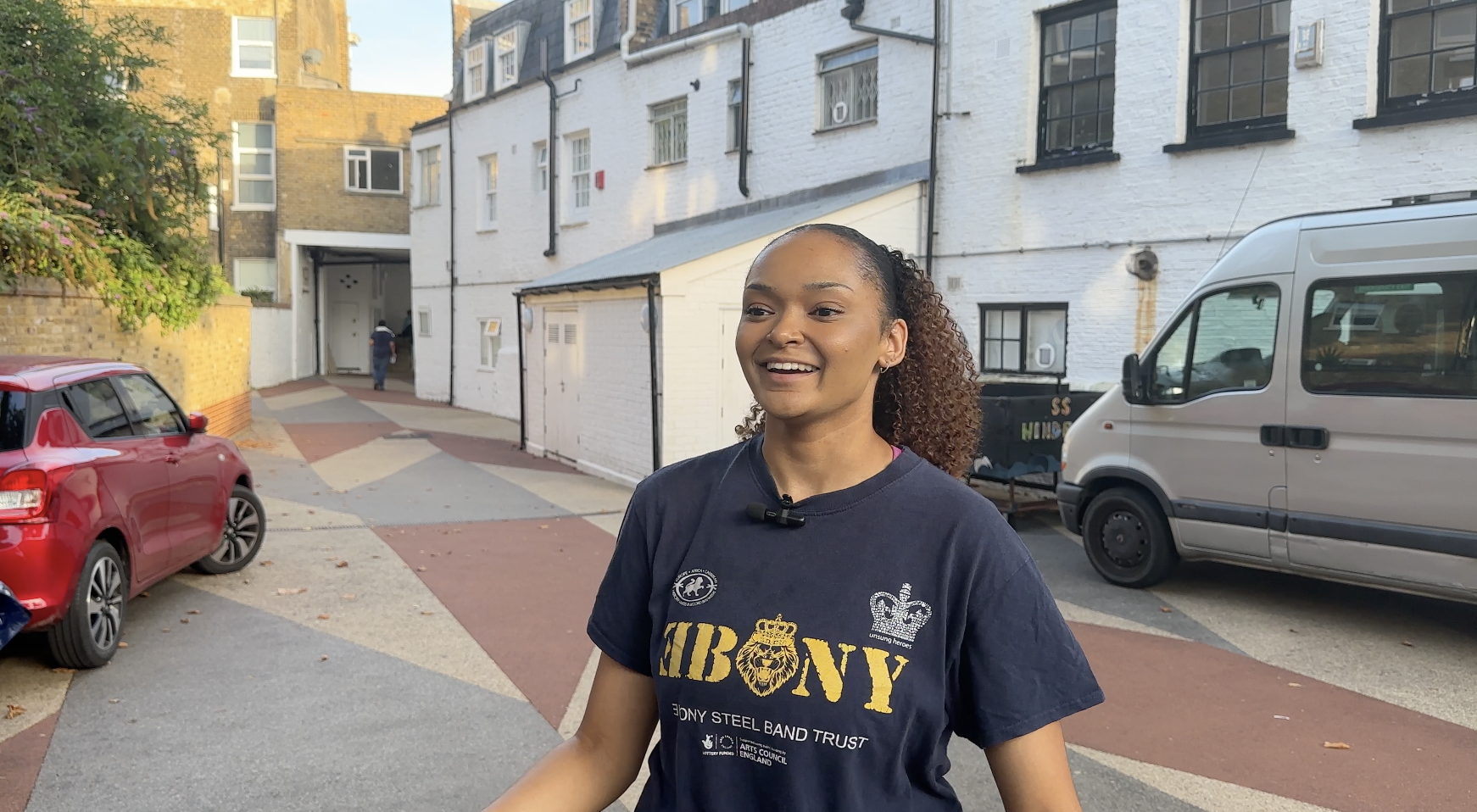
She has a Tanzanian background and says she recognises the cultural significance of pan saying: “I’m always trying to encourage other people to listen to it and embrace it, because I think it’s such a beautiful instrument. I think it’s an honour to carry that significance on today.”
"Steel pan was just so different from the
conventional instruments we’re taught
in school like guitar and piano"
Amy says she wants to continue playing pan throughout her life and even has aspirations of composing music one day.
Many started playing in their childhood, and members of the band do outreach programmes in the local schools, to encourage children to pursue steel pan.
Jerome joined Ebony 17 years ago, after being hand-picked by recruiters who had come and taught pan in his school.

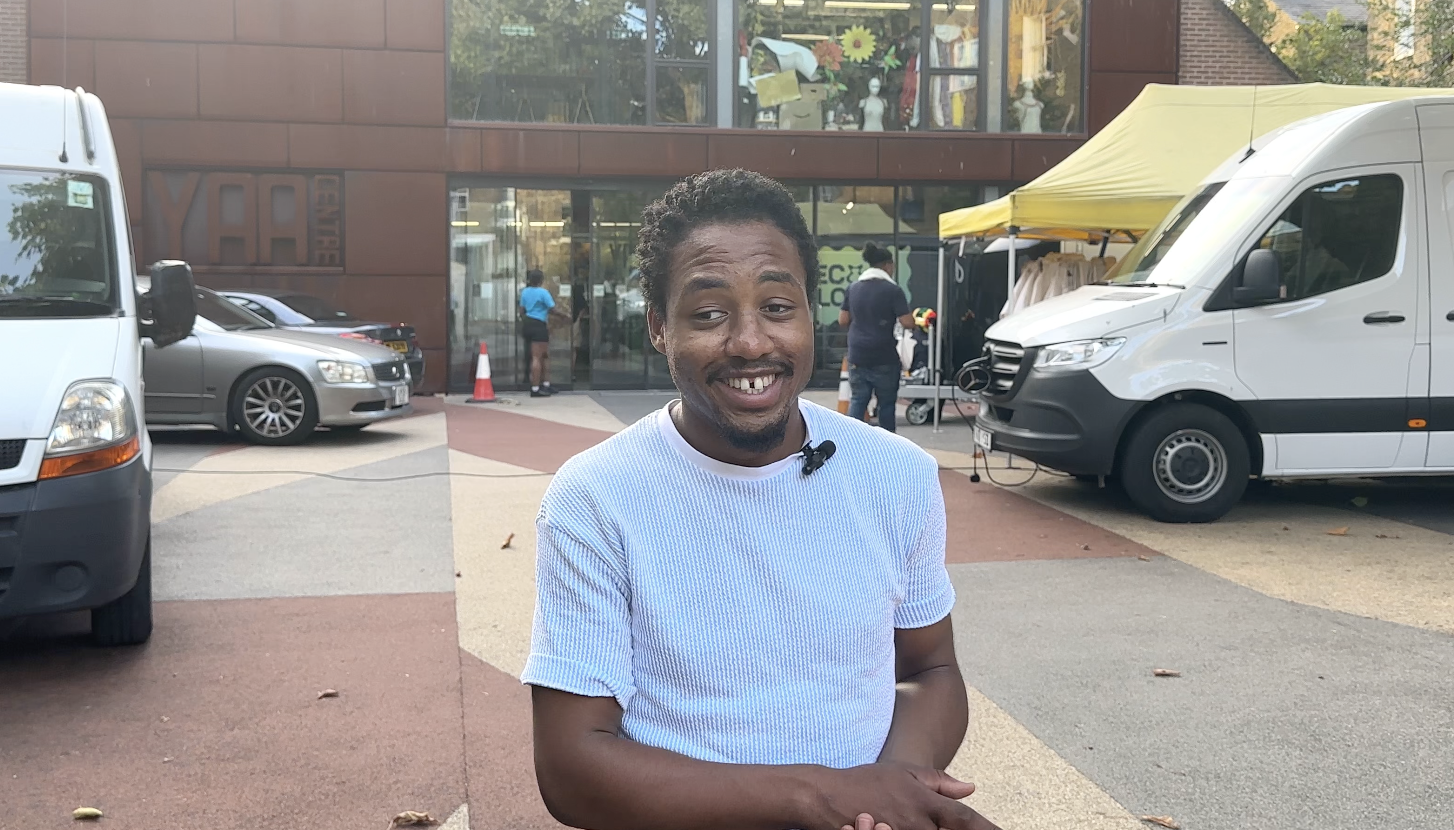
He says his Grenadian heritage encourages him to be involved in the band: “My family has been involved in costumes and sound systems for as long as I can remember, it’s important for me to carry that on.”
Jerome says that Carnival, and in turn Panorama, both have great significance to Caribbean culture in the UK.
“Notting Hill Carnival was at the epicentre of the Black Civil Rights movement in the UK so to be able to see generations come through it in the background, like, you know, the people that actually make it happen.
“The mas bands, the steel bands and the sound systems and all of that but also the people that come and them bringing their own generations into it too, it’s majorly significant to Black-Caribbean culture in the UK.”
“If you’re not familiar with the
culture this is where you see it all live”
Jerome told me his favourite memories at Ebony are when he first joined and had the opportunity to travel all around Europe with the band, and then would return back to school and do his GCSE’s like a ‘normal kid’ and talk about it with his peers.
He says he’s happy to have seen the growth of Panorama through the years but has higher hopes for the event.
“It would be nice to see more awareness on Panorama with more things in the press and media more coverage on Panorama itself.
“Where it comes from in Trinidad it’s a big deal, so to see it done in the same way over here would be great, because I’m sure if more people knew about it more people would come.”

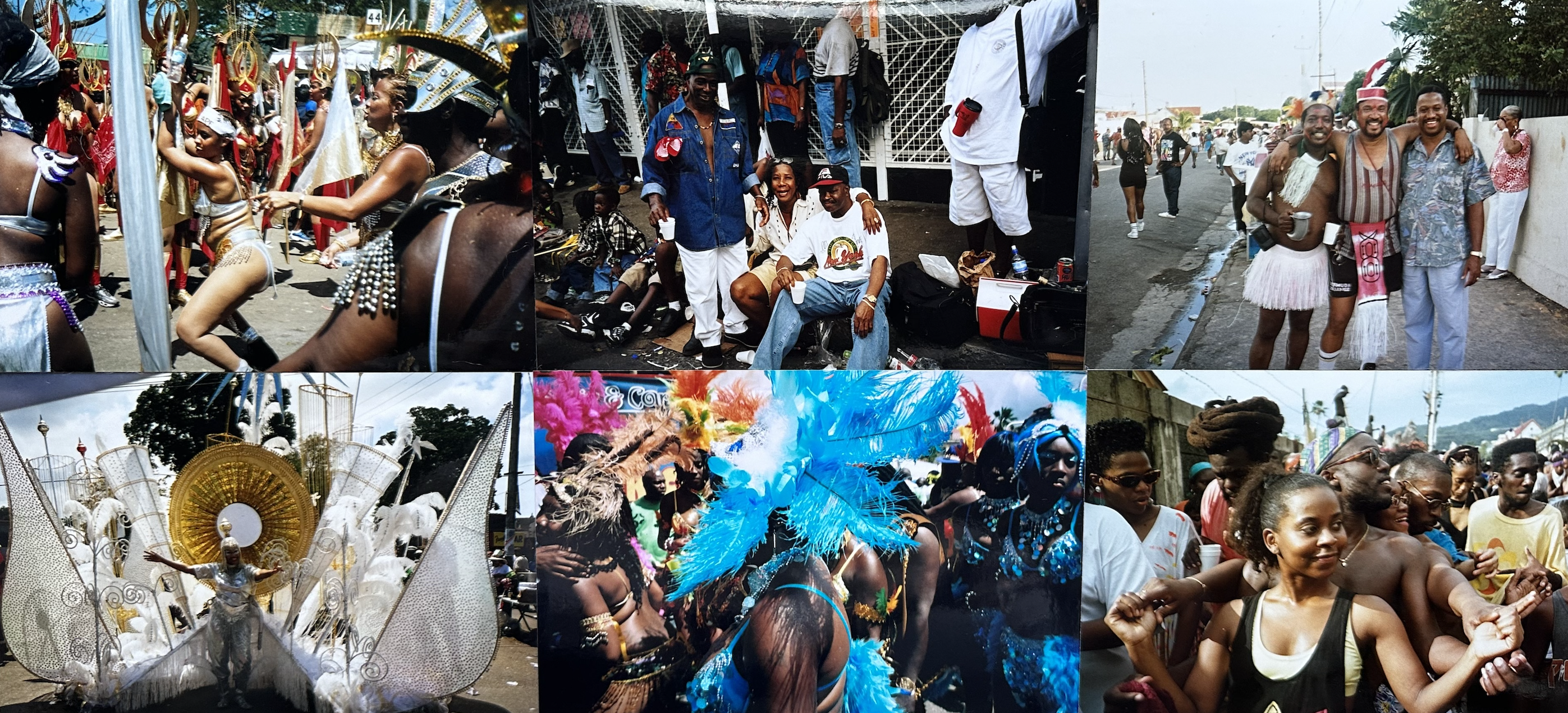
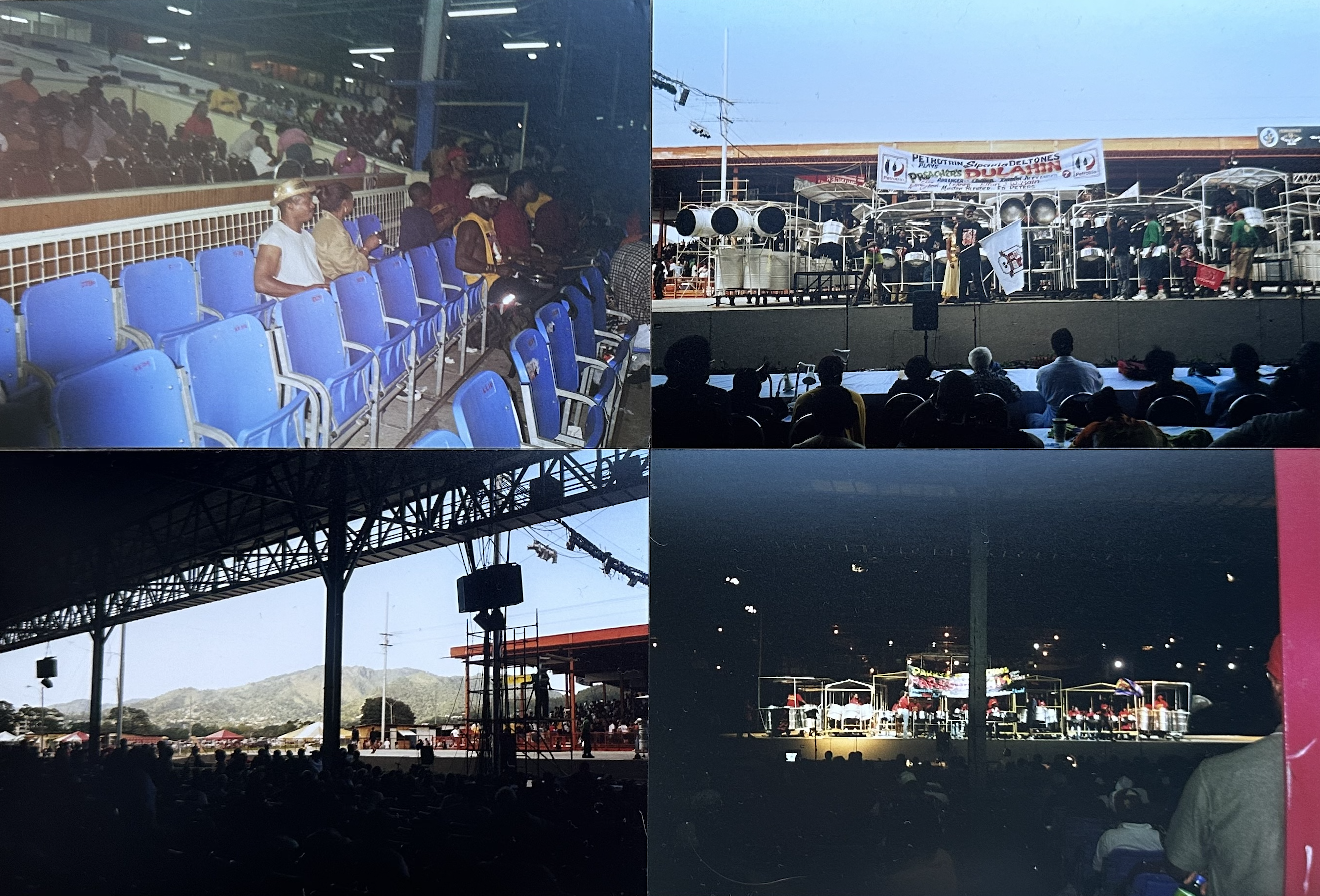
A collection of images of Carnival in Trinidad, taken by my grandad (top right with the red hat)
A collection of images of Carnival in Trinidad, taken by my grandad (top right with the red hat)
Speaking to some of the youth bands members, the girls told me they don’t wish to pursue pan as a career but hope to continue playing throughout their lives as important for them to carry on traditions which they can eventually pass onto their own children.
One clear drive for these young men and women is their want to share their culture with future generations and to continue the legacy of Caribbean-British culture that was built by their elders.
“My great aunts were some of the first
to play in the band, so its important
for me to continue these traditions”
I asked them what drew them to Ebony in the first place and why they keep coming back. It feels like a family, they tell me - and it would, I look around and see aunties, uncles, grand mothers and fathers, big brothers, and little sisters. All watching out for each other and linked by their shared passion for music and vibes.
Melody says “Not only are we playing in a band but this is my family” Laine added “We’ve made one big family I would class these people as my sisters, it’s all a big community.”

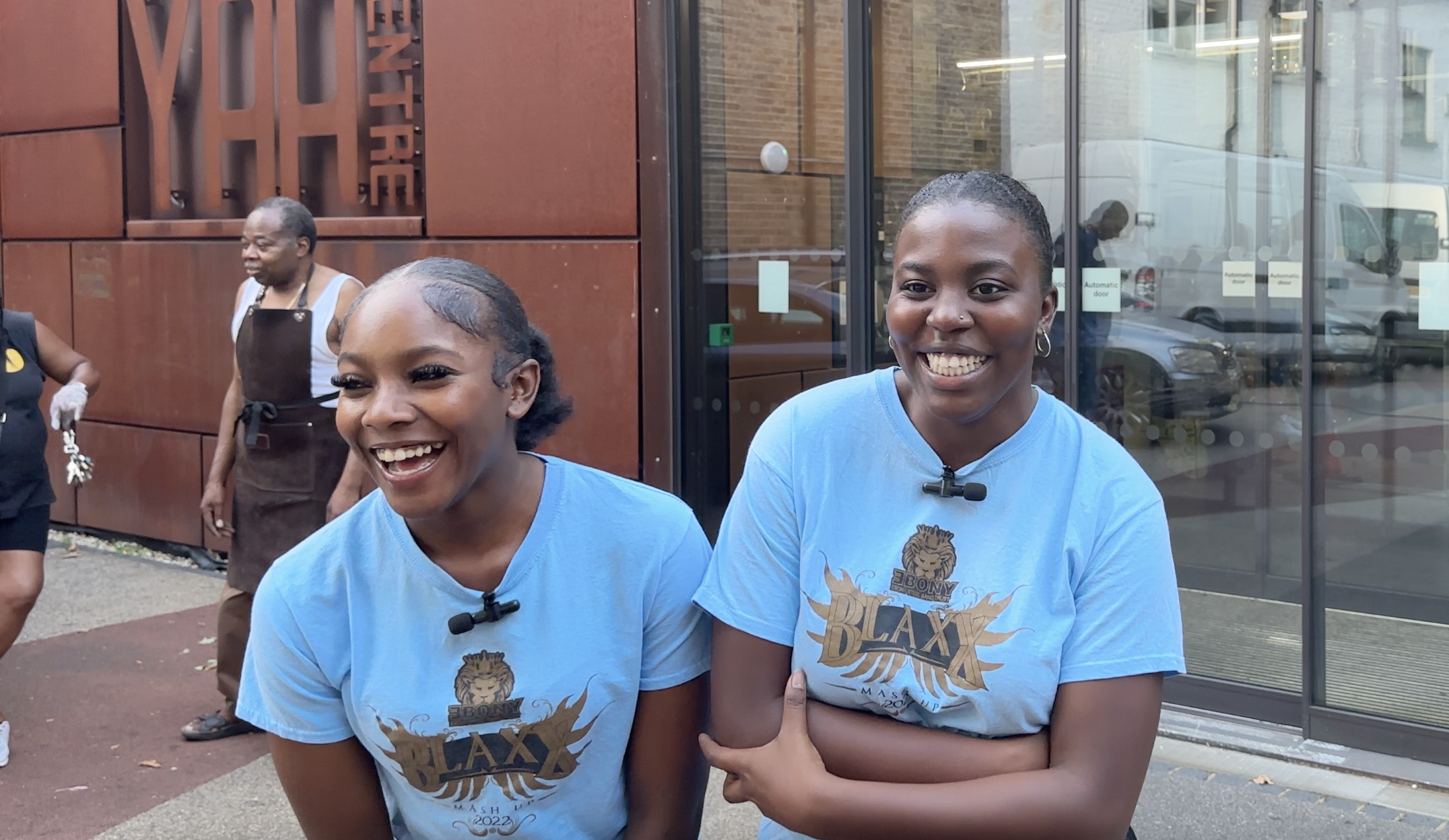
Melody & Laine
Melody & Laine
I asked them whether the winning is actually important or is it just the taking part that counts.
Melody, who’s from South London but travels to West to participate says this area celebrates her culture more and told me: “I can’t lie the feeling of winning is important to me” she smiles, and they all laugh; reminiscing on their win in the previous year.
“When I’m not playing pan I don’t
learn much about my roots"
“During the whole season of practising, sometimes you feel like: ‘Oh I don’t wanna do this anymore’ but as soon as you get on stage and you play and you hit that last note, I don’t regret coming practise every day, I don’t regret missing time with my friends to play.”
I wanted to know about the tension between the groups and asked if it is a problem when players switch between groups, the girls told me “It doesn’t matter if people switch between groups, we’re all connected and know each other. But if we lose and they move to the band that won, boy. That’s the biggest betrayal ever.”

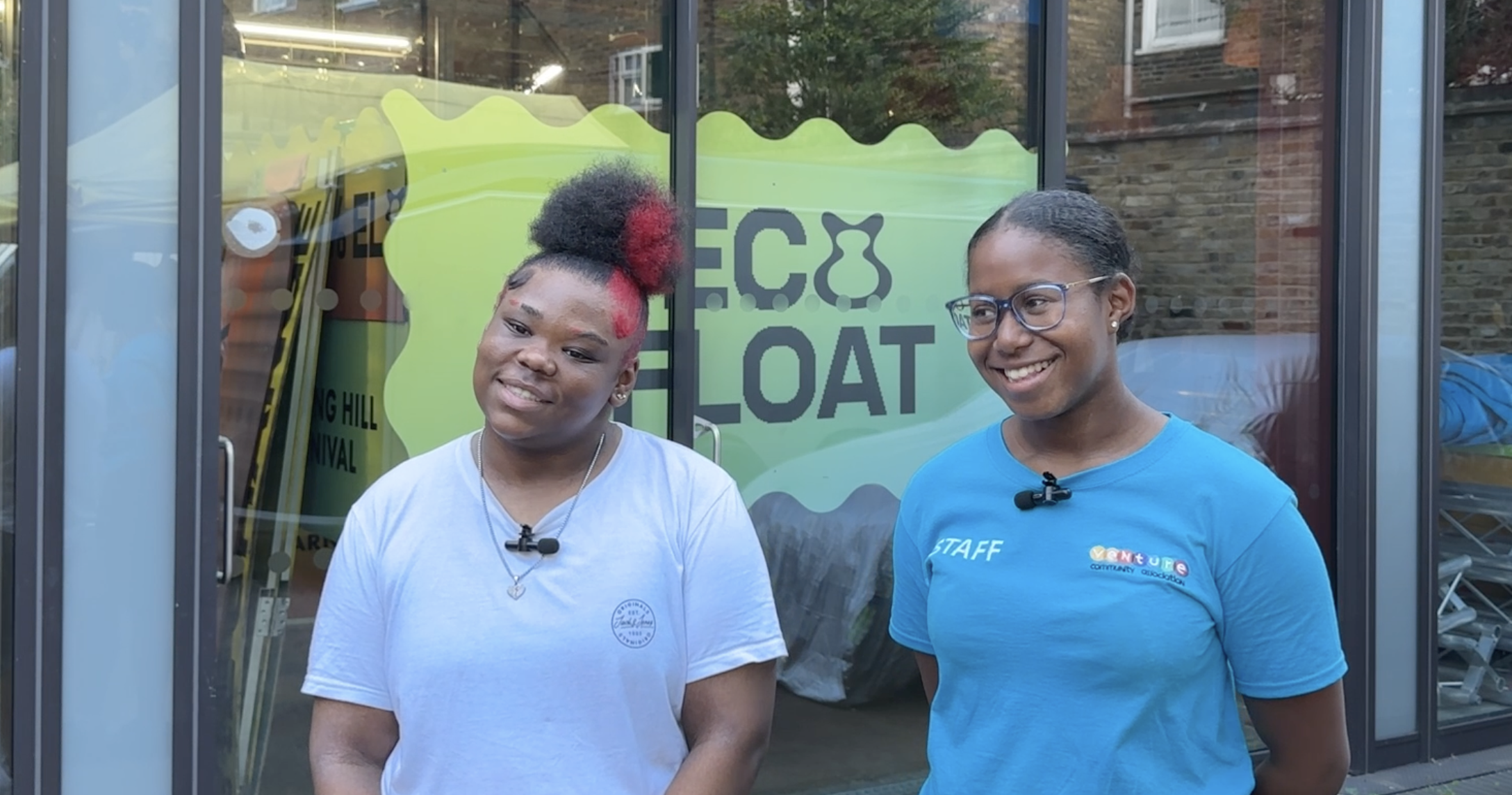
Gianna & Isis
Gianna & Isis
With a stripe of red through her hair, a nod to her Trinidadian heritage, Gianna said “A lot of the focus is on slavery, but our history is more than that, and pan is included in that” Isis agrees, mentioning the forbidden J-word: “Yes, everyone just forgets about the Caribbean, and all the other countries in the Caribbean besides Jamaica.”
Gianna said “A lot of our generation are oblivious to certain parts of our culture they think it's just carnival, it’s just a party, but there’s more to it.”
“Our history is more than that
and pan is included in that”
Isis said “People outside of our culture think carnival’s just a fete, everything’s just a fete, but it's not because it's a celebration of different cultures coming together”
Asking them what their vision is for steel pan and Panorama, everyone was clearly united in their hopes for the genre and event to grow, and they told me about their efforts in actively sharing it among their peers – even encouraging me to join. This is a part of their culture and themselves that they want to share.


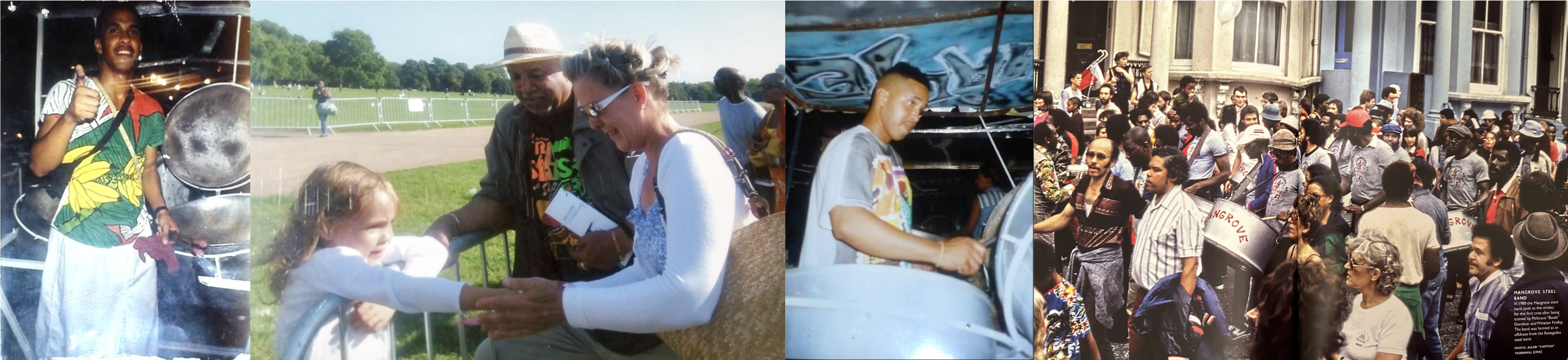
1. My dad winning Trinidad Panorama - the first win by an unsponsored team (1987) 2. Me, my grandad and my mum at Panorama in Hyde Park (2007) 3. My dad playing pan in Trinidad 4. Mangrove steel band at Notting Hill Carnival the first time after being trained by my uncle Winston Findlay (1980) - excerpt from Carnival: A Photographic and Testimonial History
1. My dad winning Trinidad Panorama - the first win by an unsponsored team (1987) 2. Me, my grandad and my mum at Panorama in Hyde Park (2007) 3. My dad playing pan in Trinidad 4. Mangrove steel band at Notting Hill Carnival the first time after being trained by my uncle Winston Findlay (1980) - excerpt from Carnival: A Photographic and Testimonial History
One of my best memories growing up was going to the carnival with my family – it was the one time we all got along. As I wrapped up my interviews the manager of Ebony, congratulated me on the work I had done and told me my grandad had passed away the day before.
Despite my world changing in that moment, my motive for creating this piece remained unchanged. My want to pay homage to the sound that I was brought up on, the theme tune of my life, my memories, my heritage, my country and the instrument that means so much to not only to West Indians but music lovers across the world.

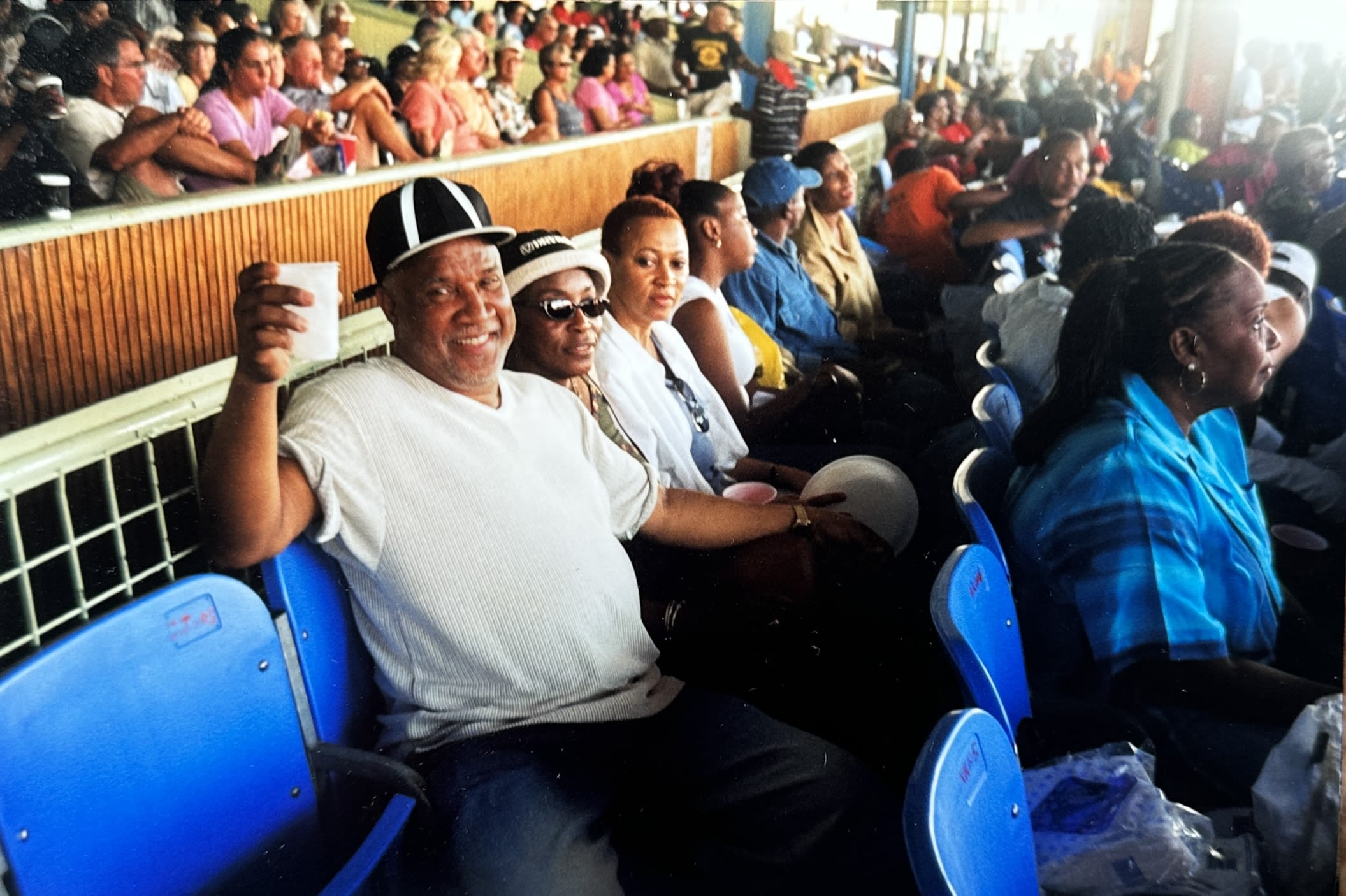
My Granddad, ‘Trinidad Eric’, at Panorama in Trinidad, 2000’s
My Granddad, ‘Trinidad Eric’, at Panorama in Trinidad, 2000’s
My grandfather was from the Seychelles, a collection of islands in the Indian Ocean; but he loved his England, the queen he served, and more than anything he loved Trinidad, his second home, he loved it like his own, and it loved him. Upon reflection I realise that he is the epitome of what Panorama is, and what Carnival is. It’s not divisive – it's uber-inclusive, and despite being from the other side of the world, he danced to the same tune.
 Built with Shorthand