
Myalgic Encephalomyelitis (M.E): Living with the invisible illness
How much have you heard about the illness that affects more than 250,000 people in the UK?


I was diagnosed with Myalgic Encephalomyelitis (M.E) when I was nine years old, triggered by a post viral infection after my tonsillectomy. I have spent the last ten years trying to explain the complexity and the extremity of the illness to people and have always struggled to express just how debilitating it really is.
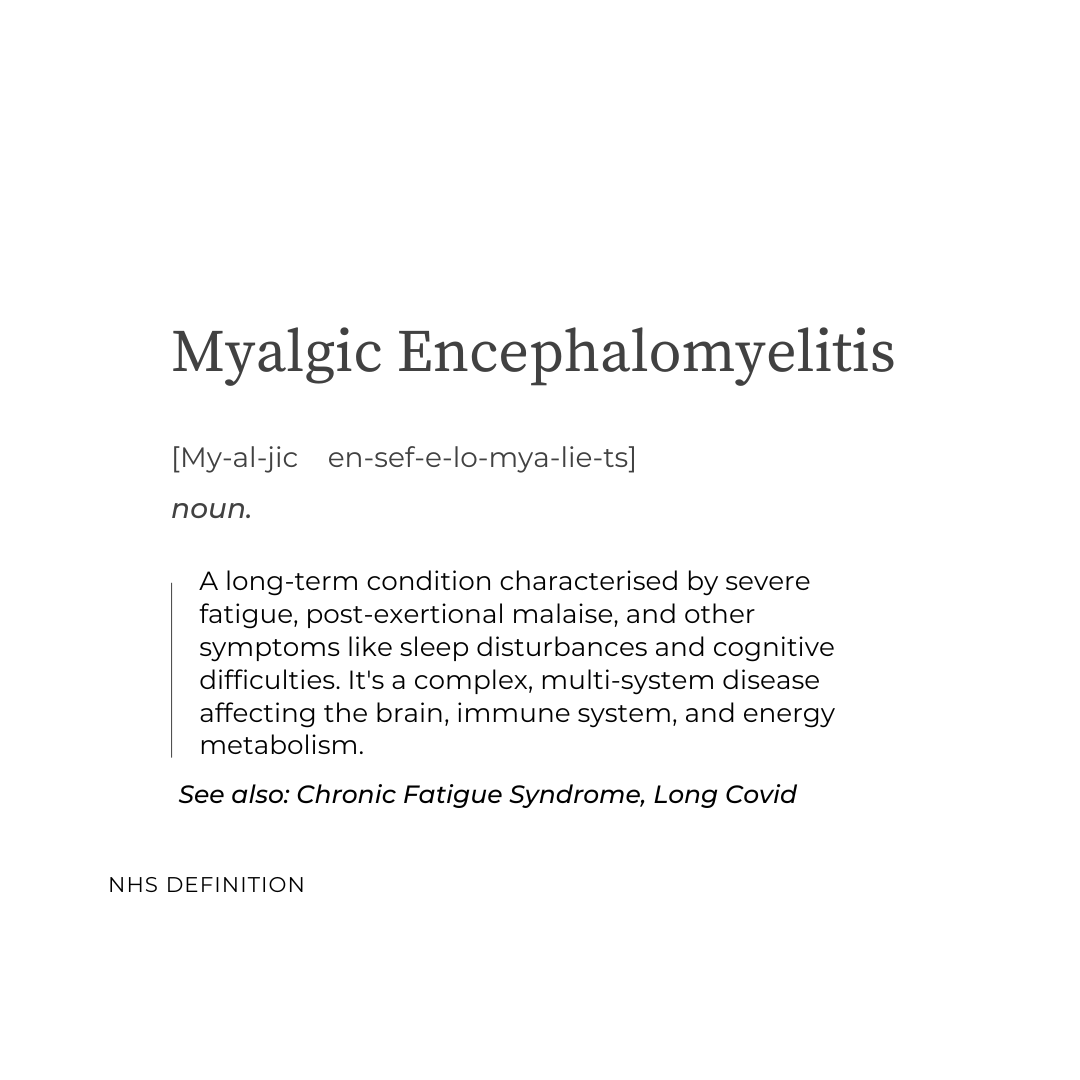
You might be more familiar with the term Chronic Fatigue Syndrome but it is so much more than just fatigue.
Have you heard of M.E before?
Before my tonsillectomy in 2015, I was repeatedly poorly with tonsillitis and my immune system was practically non-existent. It was clear that my body was incredibly weak, and looking back, the development of M.E was inevitable. But as a nine year old that didn’t know any better, I thought the operation would flip a switch and I would be healthy again.
I was in year 5 when I was initially poorly, so trying to explain to a group of nine year olds why I wasn't in school wasn't the most straightforward... especially as I didn't know the reason myself.
I remember really clearly one teacher saying to me: "I don't even know your name, you're just never here."
I was doing three hours of school a week, so she was right. But I wanted to be at school, my health just didn't allow me to be.
I was told that further down the line, I would still not be able to be in school for long enough to learn the content for my GCSEs or A Levels, which was really daunting for both me and my family.
(Although, I did actually manage to do both...)
Despite struggling to understand what was happening to me myself, I have spent a lot of time trying to explain it in a way people can understand. But the hardest part is trying to convince people that it is actually a real condition that I'm not making up.
If I was to try to describe it, it can be a little bit like walking through water with weighted boots on. The fatigue that you feel is so much greater than being sleep deprived. It feels like your whole body is fighting against you and it is completely out of your control.
After speaking to other M.E sufferers, it seems I am not alone when I say the cognitive disturbance is the most frustrating part, because no amount of resting, sleep or medicine will ever be able to fix it.



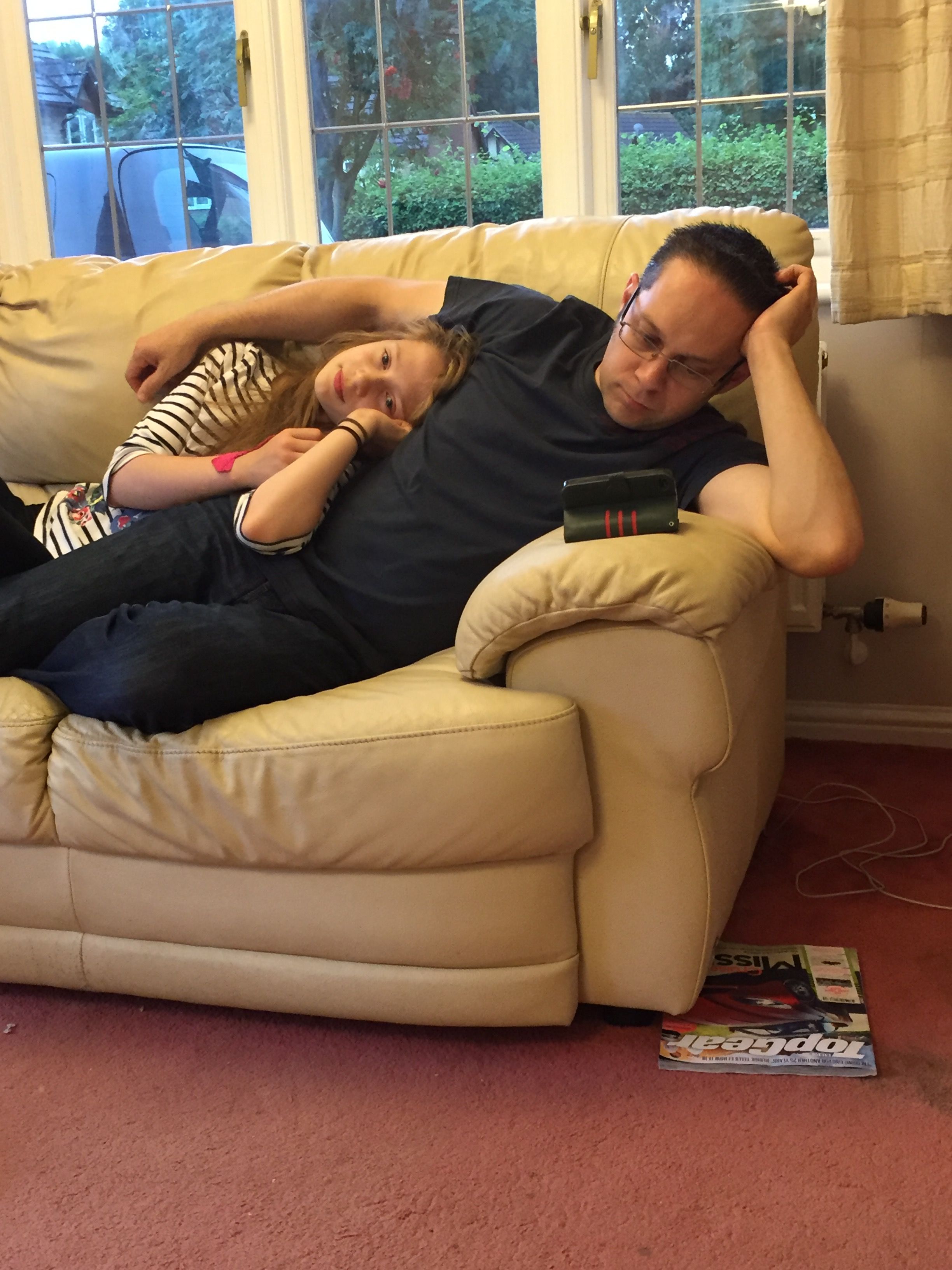

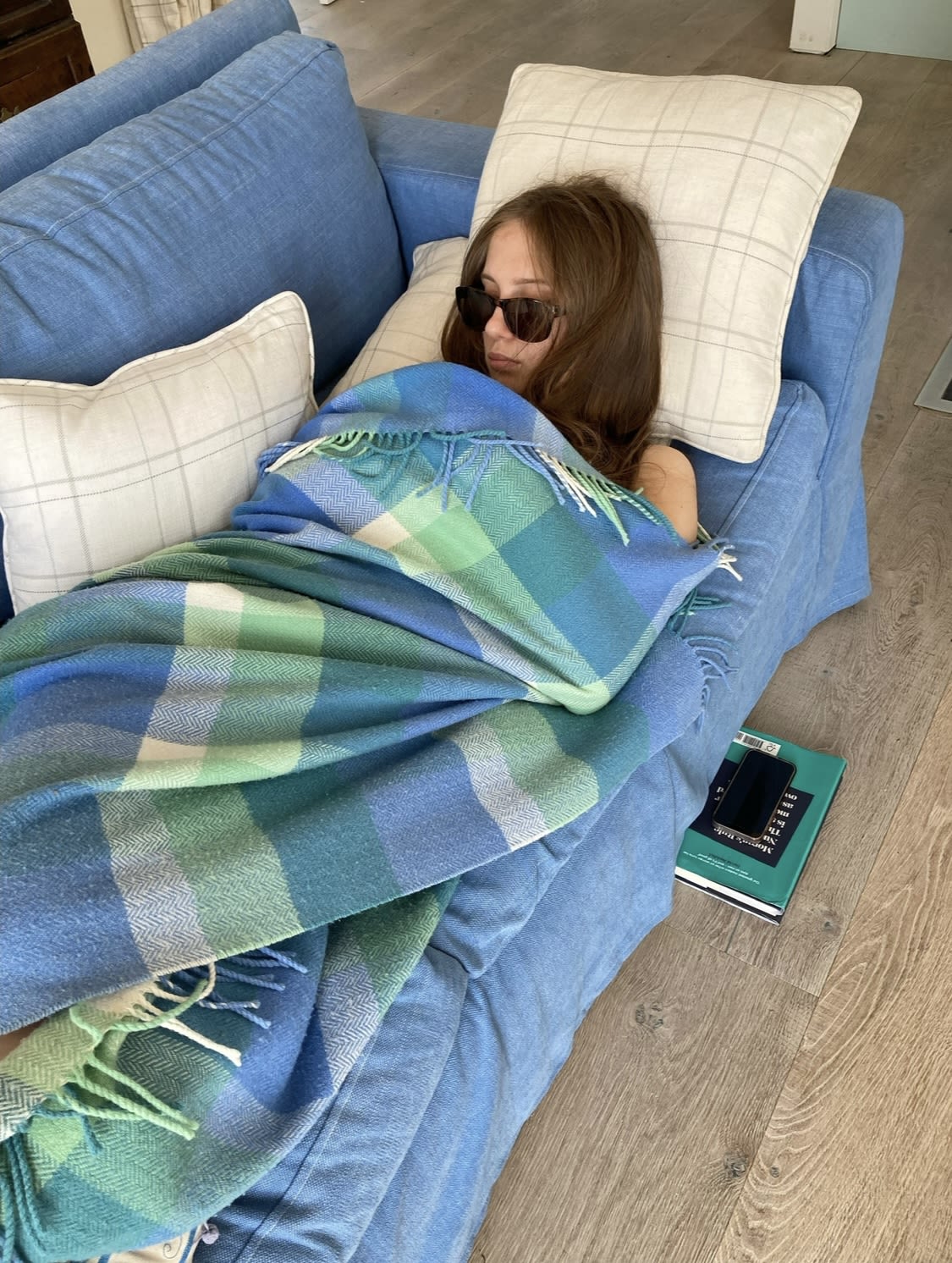
I am really lucky to have had such a solid support network from my family. My mother, Katy, gave up working to look after me throughout the uncertainty when I was first poorly. I was in and out of London going to hospital appointments with different doctors in the hope that one of them would have the answer.
This disease took the same years from my mother as it did from me, but she would never say that it did.
She was labelled an 'overprotective mother' by one of the first doctors we saw and was told that I would be fine if she just stopped worrying so much. He completely dismissed me, my family and my condition.
"It was isolating for all of us because we felt like we had to manage it on our own."
"I just wanted people to believe us, because why on earth would anybody make up a condition like that? It was an outrageous accusation."
Fortunately, there is a lot more awareness about M.E now, especially after Long Covid, which is so refreshing to see. It doesn’t, however, mean that M.E sufferers aren’t still met with prejudice and obstinance, despite the countless medical research proving its existence.
Despite the fact it is a decade later and my health has improved since then, my mother and I still found this interview difficult to do. Bringing up the emotional turmoil that my mother had to go through whilst fighting for my condition to be taken seriously was very moving for her. My parents noticed very quickly that there isn't enough support for parents of children with chronic illnesses within schools.
I asked her what she thought needed to be done about this.
Before we hear from a doctor about M.E, I am curious to see how much you know about the condition already. Please take part in this short 'true or false' myth-busting quiz to find out!
What does the public know about M.E?


Dr Charles Shepherd can explain this condition much better than I can. He has both professional and personal involvement with M.E. He works with the ME Association charity as a medical advisor and has also been part of the NICE (National institute for Health and Care Excellence) guideline committee fighting for research.
"It is not a condition you would want to make up."
Part of why Dr Shepherd has such a brilliantly acute understanding of M.E is because of his personal experiences with the condition. Whilst working in Cirencester Hospital as a resident medical officer, he developed chicken pox after treating a patient with the shingles. After being previously fit and healthy, his body was unexpectedly struck down by the chicken pox, leaving him depleted. He never fully recovered as he was working long hours whilst his body should have been recovering.
Image copyright: Dr Shepherd
"I went through a lot of yo-yo business going back to work and being off sick." He admitted.
The problem was that he had been managing the illness incorrectly, unaware of what was wrong, and had been inadvertently making his condition worse. It took two years for Dr Shepherd's diagnosis.
As somebody that has experienced doctors not understanding the illness and being dismissive about it as a whole, I was curious as to how doctors were taught to approach the condition.
"There were very few doctors that were interested, they were pretty exceptional doctors if they wanted to look into it clinically or do any research."
In the early 70s when Dr Shepherd left medical school, psychiatrists still believed that it was a form of hysteria.
He said things have progressed "very very slowly" since then. There was a period of time where psychiatrists in the UK and US adopted the illness as their own and tried to treat it with cognitive behavioural therapy and graded exercise therapy. This dramatically undermined the people suffering from M.E and reiterated the inaccurate consensus that it was "all in the mind."
After this, however, there was a growing amount of research that showed there was a muscular problem and a problem with the way energy was being produced, as well as issues with the immune system and abnormalities in the brain and central nervous system.
"This is a very serious and disabling disease and it does have a biomedical basis to it."
The World Health Organisation (WHO) has recognised M.E as a neurological disease since 1969.
How is M.E diagnosed?
There is no single diagnostic test for people with M.E. It is done through a process of evaluation, as there are multiple conditions that can cause extreme fatigue and muscle problems, making the diagnosis process difficult. Unfortunately, it means getting an accurate diagnosis can be a long, grueling process and getting a misdiagnosis is very common.


Who does M.E affect?
This disease does not discriminate. It affects men, women and children of all ages. Interestingly, research from DecodeME in 2023 indicates that women make up 83.5% of M.E patients. It is unclear as to why it is more common in women but there is speculation that hormone levels (in estrogen and testosterone) could have some impact.
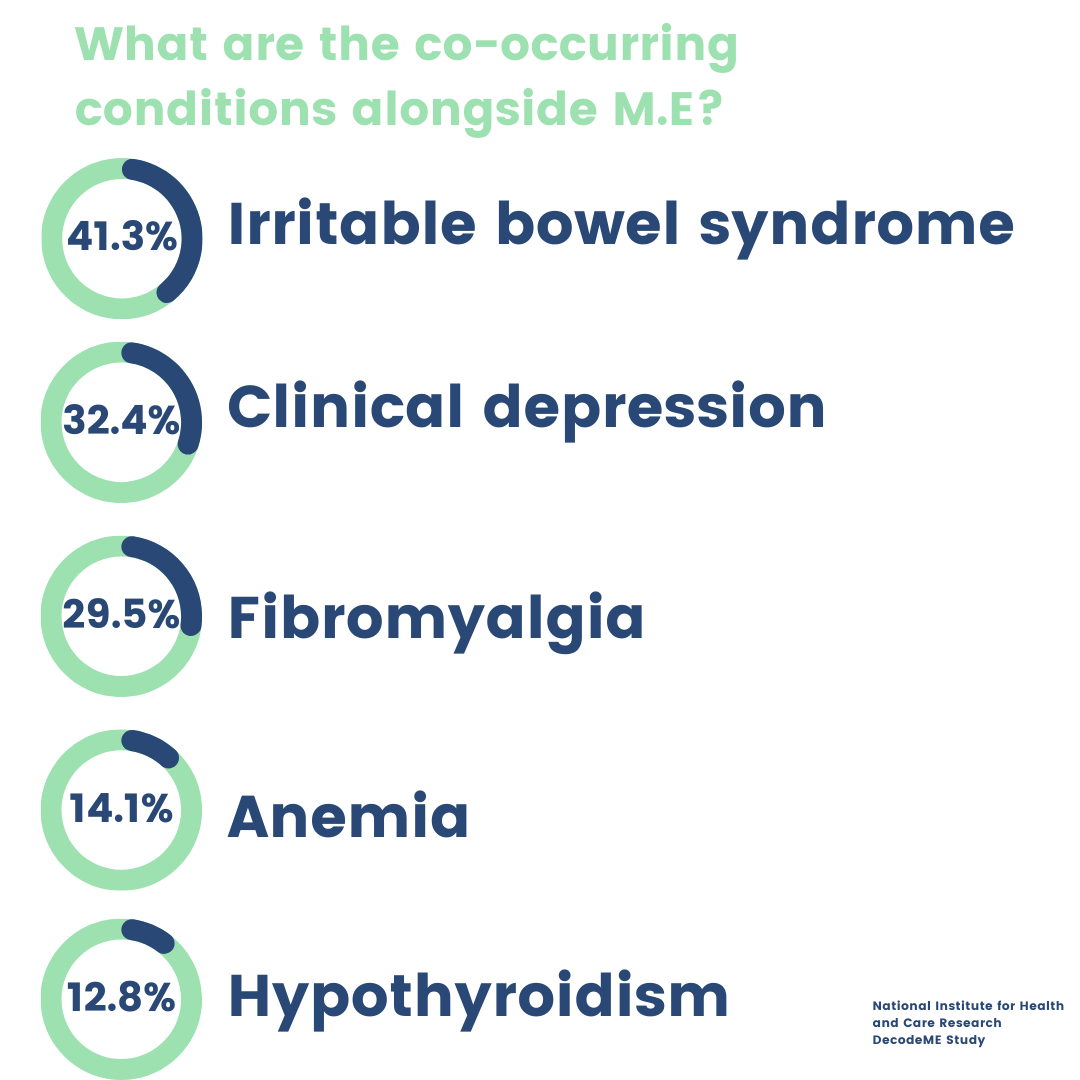
DecodeME has carried out one of the largest studies of the condition. It took data from 17,000 patients who filled out an anonymous questionnaire. It shows women generally experience more symptoms than men and have more co-occurring conditions.

I was fortunate enough to speak to two M.E patients remotely, who generously gave up their energy to speak to me in order to help raise awareness about the condition. Although this disease affects everybody differently, they share an unwavering sense of perseverance and resilience.
"People need to know about the energy expenditure required for simply existing, never mind actually living."
Tracy has moderate to severe M.E. She was diagnosed in 2018 but first became ill with the viral infection that triggered her condition four years previously. When Tracy noticed she didn’t fully recover from her infection, she consulted the GP who diagnosed her with post viral fatigue syndrome.
As a mother of a child with complex needs and severe autism, she put her son’s health first and forgot about her own health needs. It was only when she attempted to take on a greater workload that her health took a serious decline. It led her to take medical redundancy, as an intelligent woman who enjoyed her job, this was an incredibly difficult decision to make.
“I have to pace myself really well because if I end up in a crash, it doesn’t just affect me, it affects my son's care as well”
I asked Tracy to briefly summarise some of her symptoms day to day which also coincide with her description of a "crash". Crashing occurs after doing even the most simple tasks, things that would be completely mindless and insignificant to somebody without this condition, yet truly depleting for those with it.
From just listing the symptoms, I noticed that this was a draining activity, and Tracy agreed with me. This gives you an idea of the relentlessness of the cognitive disturbance Tracy suffers from. This audio clip is only a small segment of what Tracy has to endure each day.
"It feels like I have taken something that has poisoned all the cells in my body"
Tracy
I was really moved by Tracy's response to my question asking how she was treated by the healthcare system after she was diagnosed.
“I avoided mentioning having M.E. You can see a change in their attitude when it’s brought up. When I said I had M.E, I never heard from the physiotherapist again.”
Tracy had the same experience with the neurologist: his care was faultless until she told him she was suffering with M.E. It is clear that, amongst the increased awareness, funding and research, there is still bigoted behaviour from some medical professionals. However, Dr Shepherd is proof that there are brilliant doctors out there that will support you.
What Tracy thinks needs to change
When I asked what needs to change, Tracy replied with: "The issue is that the media coverage is inaccurate. It only covers things that say 'Oh they're a bit tired, they don't get enough sleep.'"
"I think it would help if people understood that every molecular thing taking place inside the body is using up energy, everything else on top of that is using more energy."
This links to the common "I will believe it when I see it mentality". So many people wouldn't consider the energy they use to get out of bed, brush their teeth or go and make a cup of tea as a significant amount energy, because they have no reason to.
For this very reason, Tracy said there needs to be a wider understanding about it in schools, whereby children with M.E should be given the option to attend school remotely and recorded lessons should be accessible to those who need it.
I also spoke to another M.E patient, Maddie, living in Bedfordshire. Before 2021, she was healthy and active, however, she became unwell with appendicitis and never fully recovered. Now, Maddie has carers visit her in her flat multiple times a week and is unable to go outside without a wheelchair.
"It might get better. It probably won't. But I accept that."
Maddie was initially diagnosed with fibromyalgia, a condition causing muscular pain all over the body. It can be treated with lifestyle changes, such as increasing your strength with exercise. This is exactly what Maddie did, she began working with a personal trainer, unbeknownst to her that this high level activity was worsening her undiagnosed M.E beyond repair. Because of the crossover in symptoms, Maddie’s M.E wasn’t recognised initially, leading her to be recommended treatment that wasn’t tailored to both conditions.
"I felt absolutely great for the first few weeks with the PT, until I didn't."
Maddie began to well up when talking about hindsight being a powerful thing in relation to the unknowing pressure she put on her body, not knowing she had M.E on top of fibromyalgia. Maddie exudes a sense of stoicism that you either have or you don't. Her pragmatic approach to dealing with her constant mental battle of 'what could've been' was deeply moving.

Maddie before she became poorly in 2021
Maddie before she became poorly in 2021
Image copyright: Maddie Walker
Why is the correct diagnosis so critical?
How has not being able to work affected you?
"It's mind-numbing and I feel so despondent."
Maddie
Another example of Maddie's remarkable pragmatism is that she fought for a second diagnosis because she knew that something was wrong. She persevered with work for three years, trying to find the perfect balance of work hours and fortunately, her employers were flexible when working around her condition. She got down to 21 hours a week but it was still too much for her body, meaning she was forced to sacrifice work for the sake of her health.
As somebody that adored her job and, much like Tracy, is very career driven, ambitious and intelligent, being robbed of that freedom to work was devastating for Maddie.
Before having to leave her job, Maddie sought out Bedford Chronic Fatigue Service and had an assessment with a pyschologist and occupational therapist. She could do about 20 minutes of cognitive work without it fatiguing her so she was directed to increase the amount by 10% every two weeks.
"It was a huge shock to me because I suddenly realised how long it would take me to be able to do, say, two hours of work a day."
“I didn’t really appreciate how much the cognitive function is an activity that will drain me. It is so hard to equate the two. How can thinking make your legs weak?”
If you have M.E or Long Covid and are struggling to find support, please look into these links below:
ME Association charity: Provides a wealth of information, updates on the latest research.
M.E Helpline 0808 801 0484
Action for ME: The M.E charity that provides healthcare as well as support for all ages.
NHS advice for M.E sufferers.
NHS referral service for people with M.E.
The Brain Charity provides support with all neurological conditions and offers post-diagnosis guidance and support.
Evenbreak is a jobs board designed for people with lived experience of a disability.
DecodeME is the world's largest study for ME/CFS.
If you have been affected by any of the information, please look into these links below:
Mind provides support if you are struggling with mental health.
Samaritans helpline is open 24/7 for free, anonymous support, anytime.
 Built with Shorthand