
Gig theatre: Breaking through the UK scene
The hybrid form of gig theatre, a cross between a live music show and a stage play, is on the cusp of mainstream interest - and both young actor-musicians and a new RSC production are riding the wave.
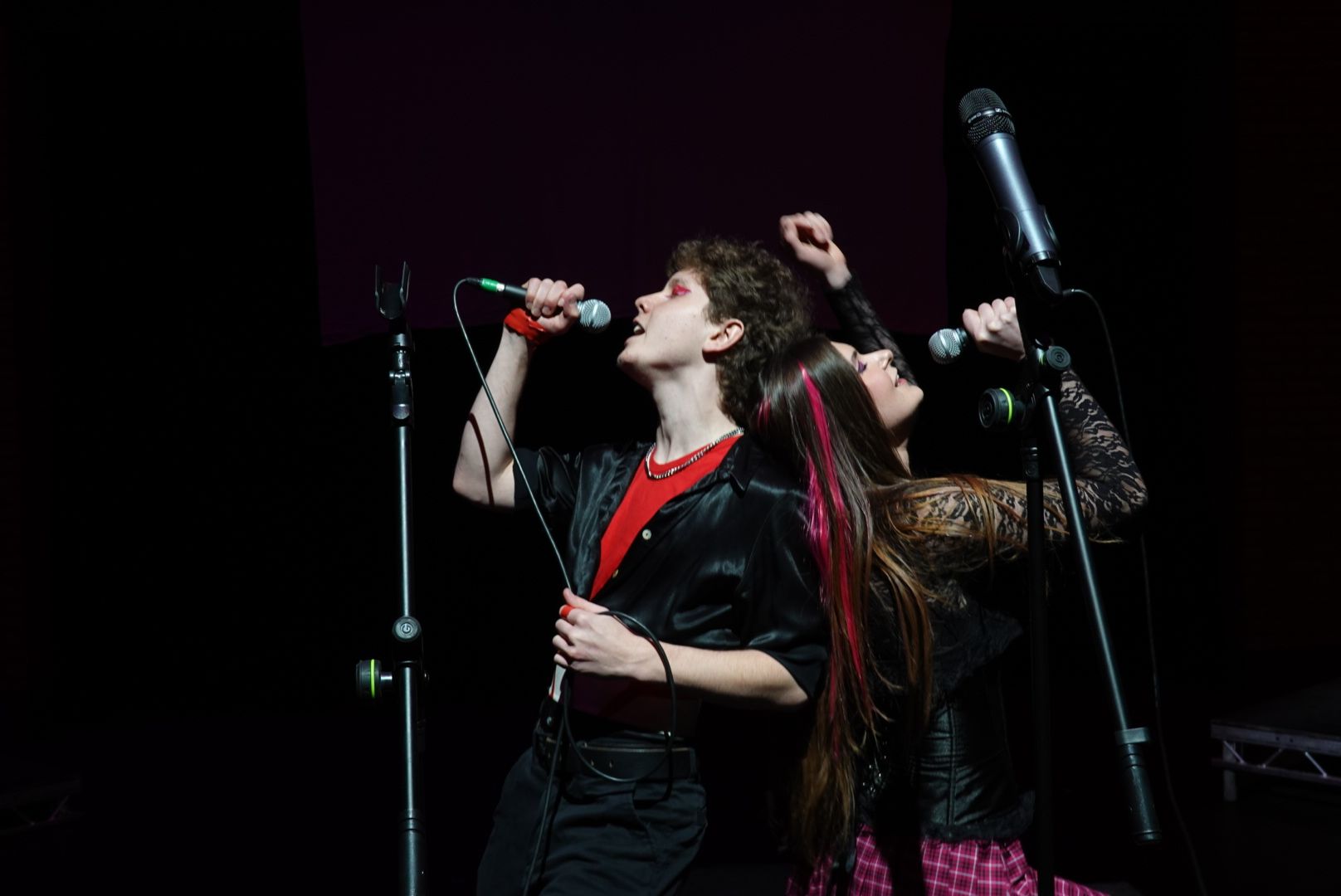

‘Gig theatre’ - the fusion style of a music gig and dramatic storytelling - is breaking the mainstream after a decade spent in the UK’s underground scene.
Although it garnered some attention in the 2010s, gig theatre productions have typically been associated with the more experimental ‘fringe’ theatrical scene - until now. With the Royal Shakespeare Company (RSC) promoting their new gig theatre production All Is But Fantasy, set to debut in early 2026, the hybrid form may finally be hitting mainstream audiences.

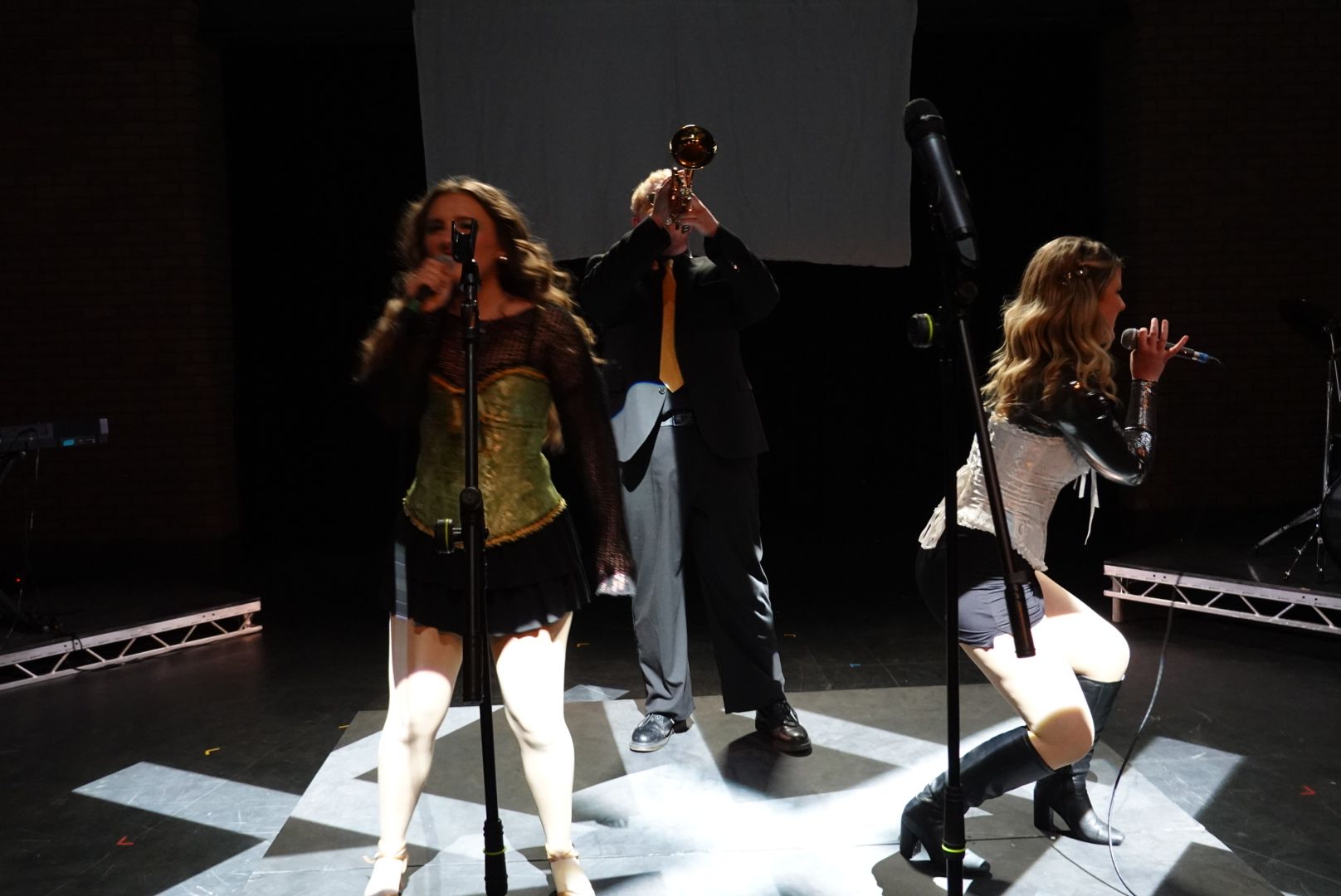
Mid-song: Actors delivering a concert. Credit: Annalise Best
Mid-song: Actors delivering a concert. Credit: Annalise Best
Written and composed by Whitney White, All Is But Fantasy is a modern exploration of four of Shakespeare’s most famous characters through two gig theatre performances “catalysed by a red-hot soundtrack”.
But it is not only the well-established companies recognising the hybrid style’s potential to grow.
The Now Playing… Theatre Company are a collective of young actors and musicians who debuted their original gig theatre production, 2035, in April. Although the company was officially purpose built to create this original piece as their final performance for a drama degree, the 12 members had collaborated before on a mix of musical and theatrical projects throughout their student careers.
Harry Snasdell, 21, who plays Sam in the play, shared the group’s excitement of combining their passions of music and drama through the modern and malleable form of gig theatre. “The exciting thing for us when developing our play was that - because gig theatre is so new - we could mould it to how we wanted our version of gig theatre to be,” he said, “we could put our own spin on it.”

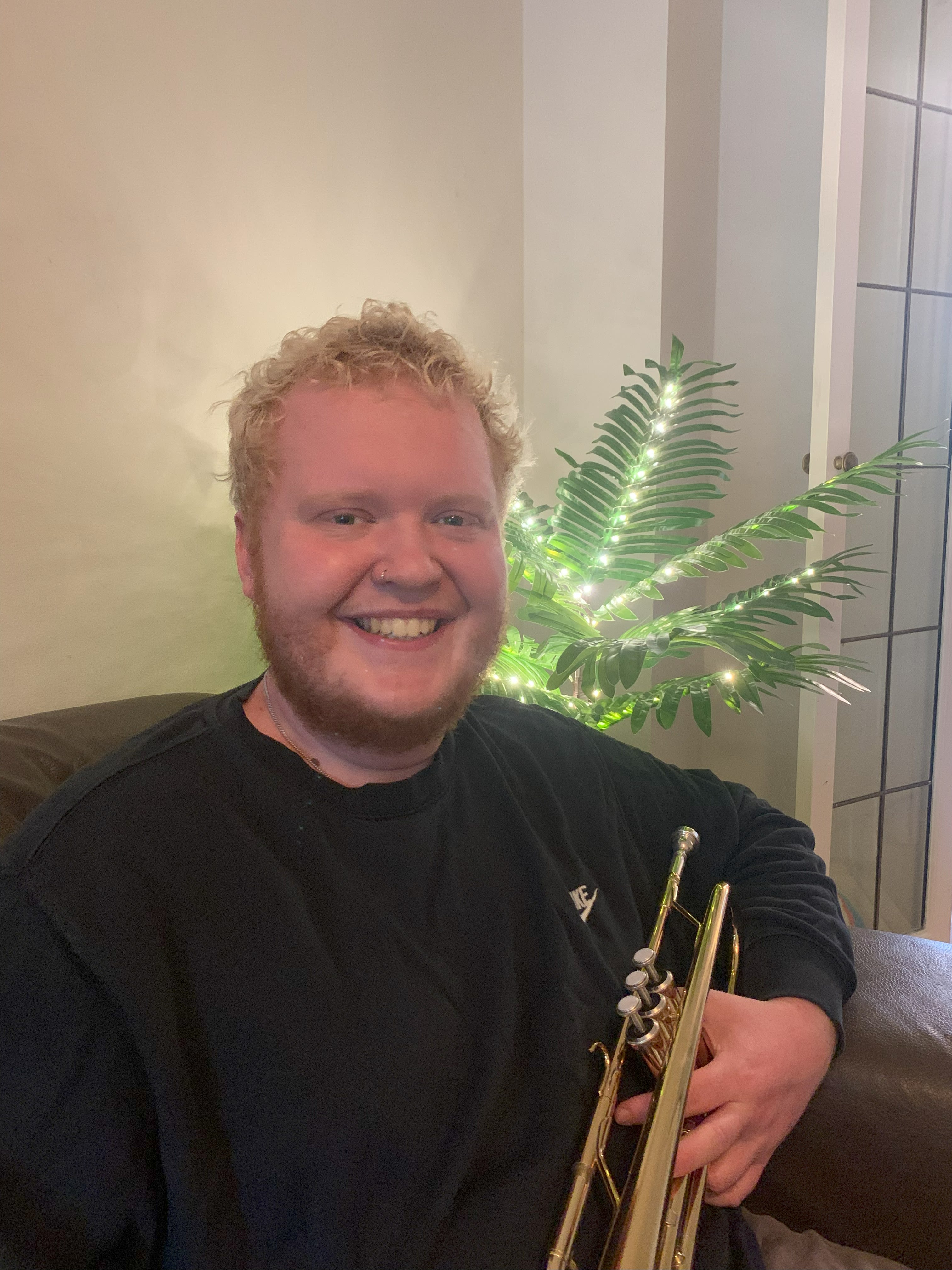
Trumpeter's smile: Harry is primarily a brass player, but also plays the saxophone in 2035! Credit: Laura Kee
Trumpeter's smile: Harry is primarily a brass player, but also plays the saxophone in 2035! Credit: Laura Kee
So, 2035 was born: the story of an underground band performing songs of rebellion in an uncanny dystopian future only 10 years away. Censorship and protest are the quintessential themes of the play and something the actor-musicians were keen to tackle.
“When we first started, I remember the TikTok ban that Trump was imposing was all over the news, and it just kind of fit perfectly with what we were trying to talk about,” Harry explained. During the course of his music and drama degree, Harry has cultivated a particular interest in the “political messaging” behind performances of both music and theatre.
Tom Parkinson, an academic specialist in the relationship between music and theatre, similarly commented on the current political trend of using popular music to support and soundtrack a campaign. He noted that the “strange intersection” of music and performance with propaganda inevitably pushes politics into a theatrical context.
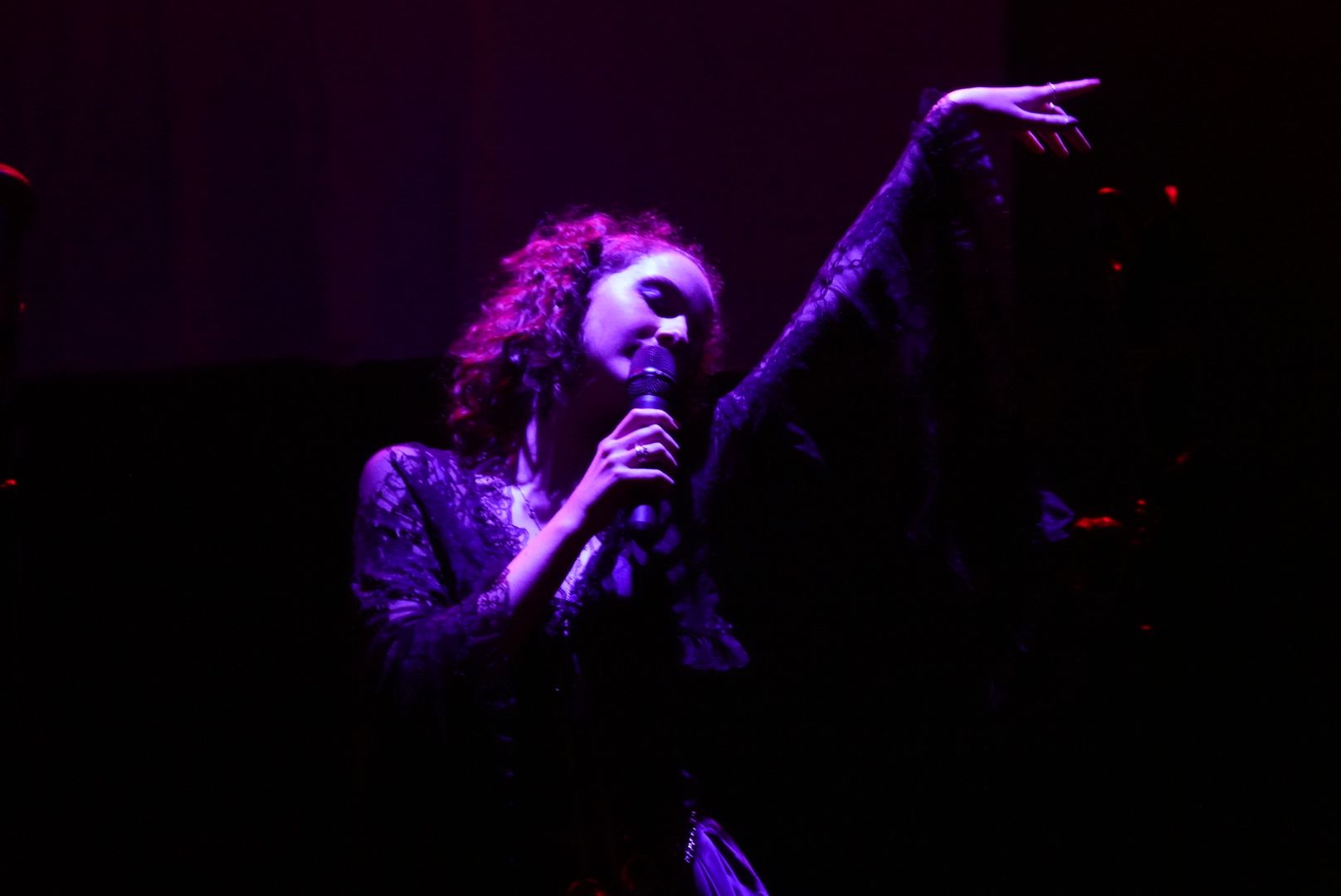
Showtime: Singing star on stage. Credit: Annalise Best
Showtime: Singing star on stage. Credit: Annalise Best
Now Playing’s production definitely reflects this political theme as it invites the audience into their dystopian future. “We’re an underground band,” Harry explained. “We perform protest songs to the audience - the play is immersive.” With seating all round the stage and space for a standing audience, the stage set up also mimicked the appearance of a live music gig.
“They weren't viewing it. They were a part of it. The audience themselves are a character in the play.”
Musical immersion in theatre has always existed: Parkinson noted since “Shakespeare’s time, there were musicians on stage”. However, this trend of musical immersion that gig theatre epitomises is more present than ever today.
“Musicians look cool - so it’s nice to see them on stage,” Parkinson laughed, then mused how the performing arts industry today has recognised the value of multi-faceted performers, those who are both actors and musicians, especially.
“They weren't viewing it. They were a part of it."
Harry remarked on recent examples of musicians playing a more active role in stage shows: “Waitress, what they did was really interesting - it’s set in a diner - so when they're in the diner, the band are wheeled onto stage in a booth.” Another show he saw recently, Hadestown, featured the band on stage for the show’s entirety. “There's one [song] where the trombone has this big solo, and he's literally up in the middle dancing, and all the characters are dancing around him.”
Regardless of these performances, Harry explained how he views playing an instrument itself, no matter the context, as a form of visual performance. “When you watch an orchestra, although you’re there to listen to the music, it is very visually beautiful to watch - the string’s are all in sync, it’s so beautiful.”
“And musicians move in different ways as well when they play,” he said, adding: “I think playing an instrument is performative anyway, regardless of the music.”
What's the difference between gig theatre and musicals?
A key challenge the actor-musicians in the Now Playing company faced when creating their original gig theatre production was how to define it as distinctly as such. Parkinson confirmed the label of ‘gig theatre’ has only been in use for about a decade and is “relatively new as a self-conscious practice”.
Harry said: “We had to really make it clear that the piece was, in fact, gig theatre and not musical theatre.
“We eventually came up with our own definition that worked for us: Gig theatre fuses music and theatre into a theatrical production where music is used to diegetically enhance the narrative. Emphasis is placed on immersion and interaction with the audience.”
Simplified, he explained the music is “real time, real life” catalysing the story - and not a performative enhancement of characterisation and emotion.
The company’s script writers and composers worked side by side to build the story of 2035. It is not only an original script, but features original songs, choreography and costume designs. Harry fondly recollected the group’s synchronicity when developing the play, and asserted that while the students would soon be graduating and going their separate ways, this is not the end of Now Playing.
“Definitely in the future, we'd happily consider redoing it or writing another piece.”
So, as their tagline says - stay tuned.

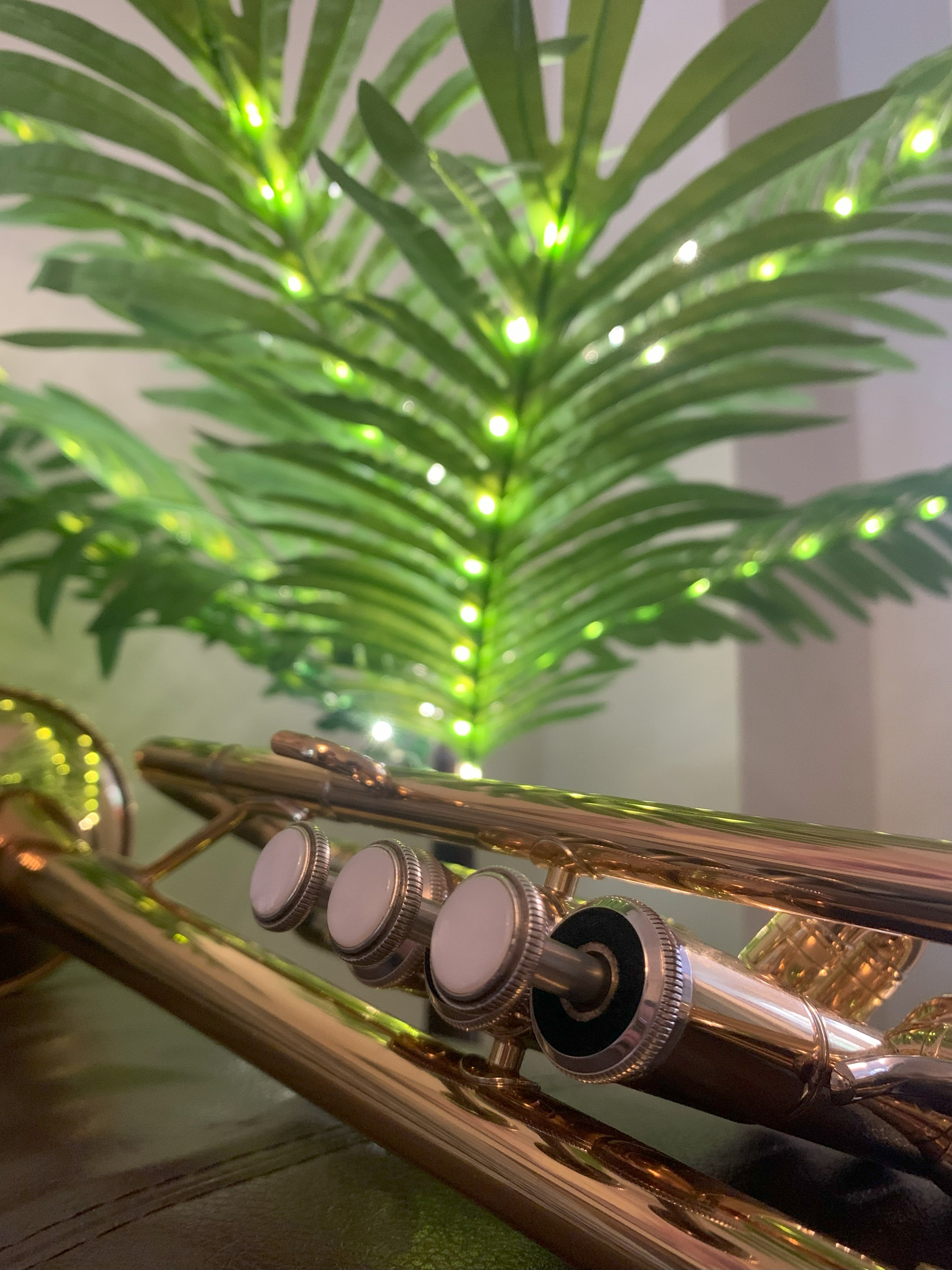
Shimmering brass. Credit: Laura Kee
Shimmering brass. Credit: Laura Kee
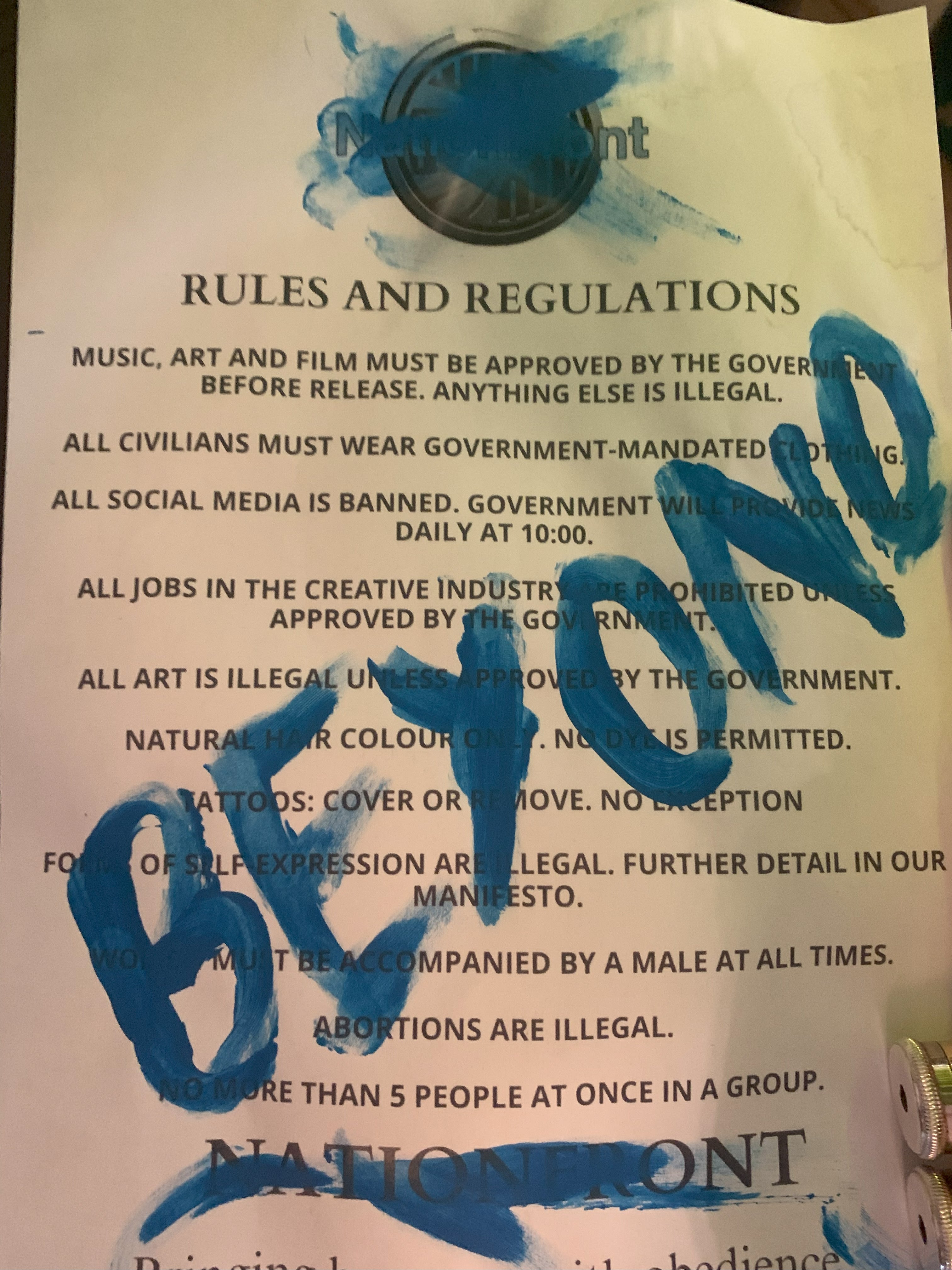
Posters and protest: Harry's poster souvenir from the show. Credit: Laura Kee
Posters and protest: Harry's poster souvenir from the show. Credit: Laura Kee
 Built with Shorthand