
Dyspraxia: the neurodiversity you haven't heard of
Why don't we know more about Dyslexia's ugly step-sister?


"It's not sexy to have Dyspraxia and be bad at sports and bang into things"
Janet Taylor, the author of Dyspraxia: Dyspraxic Adults Surviving in a Non-Dyspraxic World
Last month, the Dyspraxia Foundation said they would be closing after forty years, ‘in light of enormous long-standing financial challenges’.
It was the only national charity that provided support and advocacy exclusively for people with Dyspraxia, and its closure has been deemed a 'massive loss' by prominent figures within the Dyspraxia community.
Their website has closed and been replaced with an open letter from Jonathan Levy, the Chair of the Board of Trustees.
Dyspraxia, also known as Developmental Coordination Disorder (DCD), is a condition that affects movement and motor skills. It can make people more likely to trip, fall or bump into things, and might affect fine motor skills such as typing or drawing. It can also affect short term memory, planning and organisational skills.
I was diagnosed with Dyspraxia in 2018, aged 21. I had just failed my first year of university, and was struggling with deadlines and managing my workload, as well as finding the social demands of being a fresher overwhelming. My Mum’s colleague, a Learning Support teacher, suggested I was assessed for Dyspraxia after I had failed yet another essay because I misread the word count.
After my assessment, I was called into a meeting room with an Educational Psychologist and an Occupational Therapist. The psychologist reached over the desk and gave me a reassuring squeeze on my forearm.
She asked: ‘So, no-one has ever suggested that you might have Dyspraxia?’
‘No’, I replied.
The two people on the other side of the desk gave each other a knowing look, then turned back to me.
‘Well’, she said, ‘Well done for getting it sorted now. And well done for turning up on time!’
I had heard of the condition, but I was not really sure what it meant, and when I began to tell people about my new diagnosis, it seemed this confusion was widespread. People asked if I meant I had Dyslexia or Autism, and although the conditions are closely linked, I have spent the past five years insisting that what I have is real.
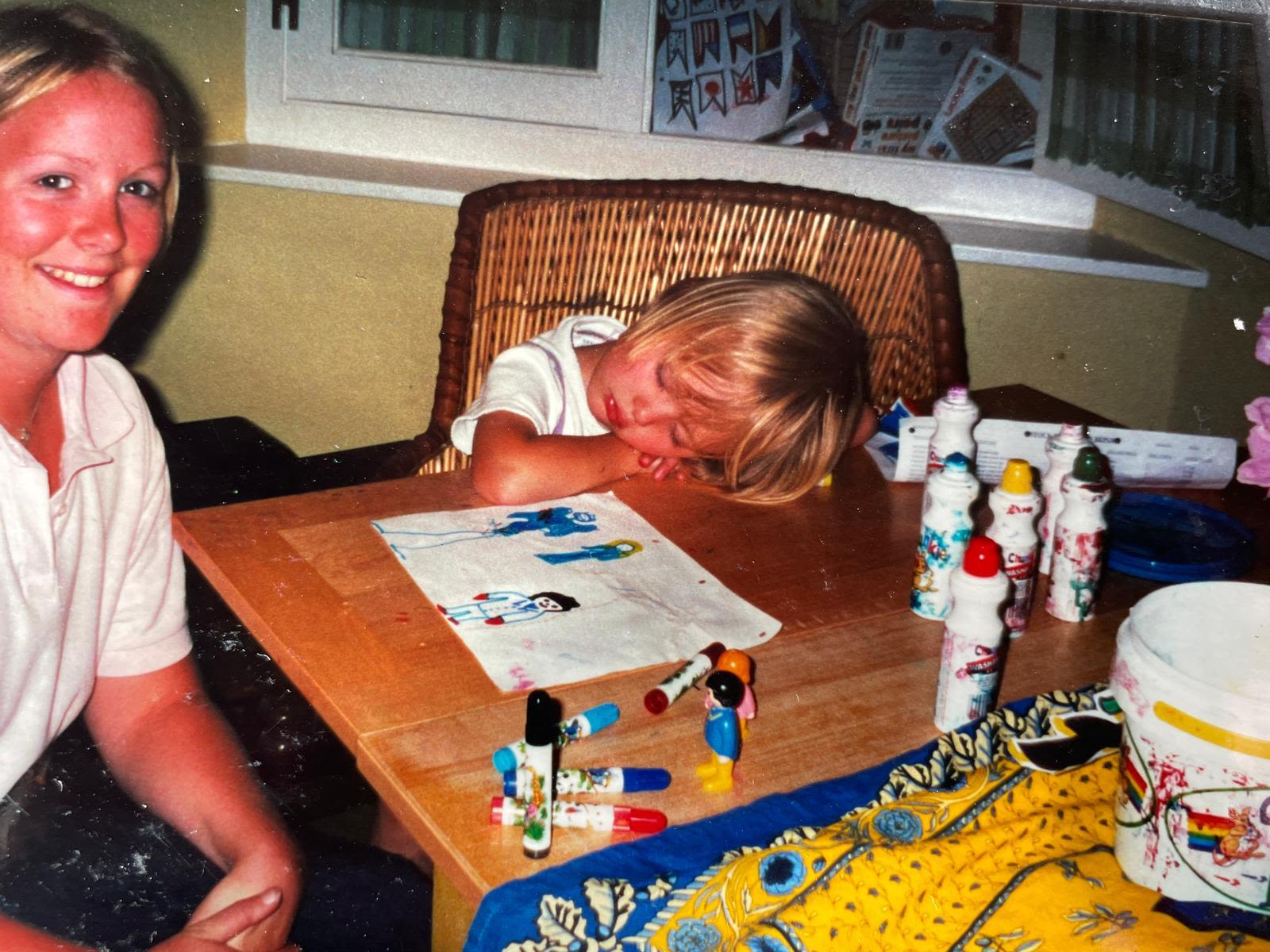
On reflection, it was obvious that I was dyspraxic through my childhood and adolescence: I always struggled with physical activity. I was always falling over, it had taken me years to ride a bike and learn to drive, I would fall asleep in strange places and positions, forget my homework and become easily overwhelmed by crowds and loud noises. Yet, as I did not struggle academically, no teacher or adult ever thought these things could be linked to a neurological condition.







So why is Dyspraxia so widely unknown, especially in comparison to other neurodiversities such as ADHD, Autism and Dyslexia? Dyspraxia is more prevalent than ADHD, Tourette Syndrome and Autism, according to research by Birkbeck University, yet it seems that it is the least commonly known.

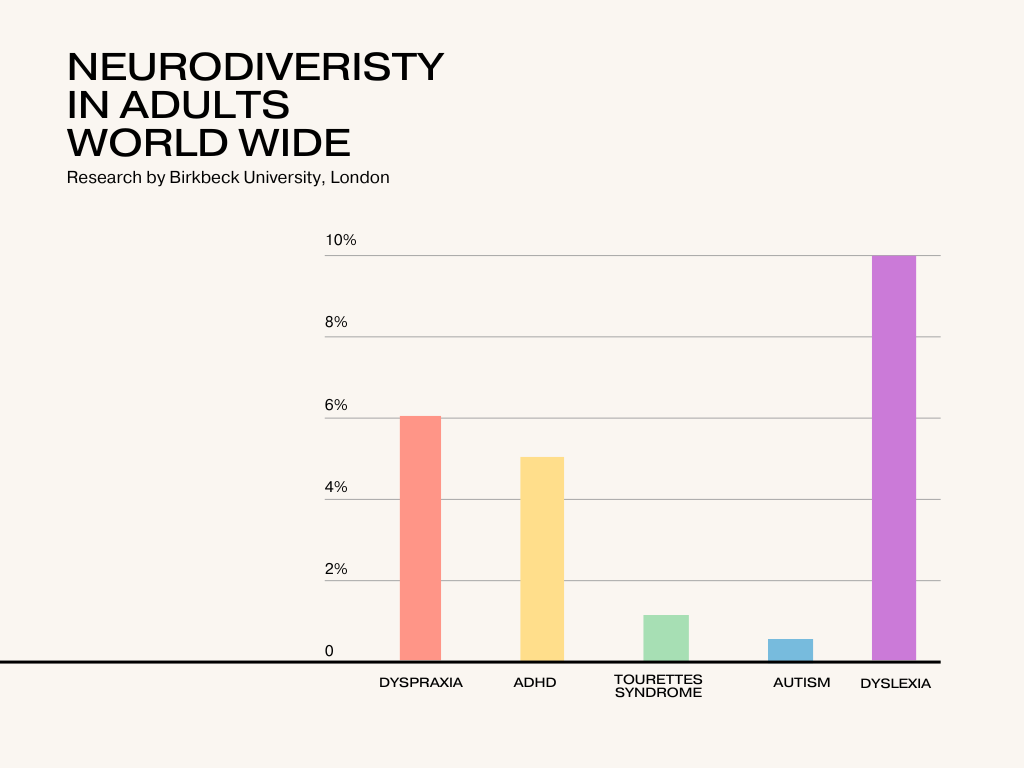
Before you carry on reading, we want to know what you don't know - please fill out the form below about neurodiversity.
Tumi Sotire is a neurodiversity speaker, advocate, and researcher who is known online as ‘The Black Dyspraxic’, and creates content on TikTok, Instagram and Twitter about Dyspraxia. He began his work because, as a Black man with Dyspraxia, he felt misunderstood by both communities.
He said: ‘For me, it felt like there wasn't a place that I could be myself, I felt like I really wanted to create content about that intersection.’
When we spoke, I wanted to know why he thought that more people did not know about Dyspraxia.
He cited two main reasons: a lack of advocacy and a lack of a consensus on the exact definition of Dyspraxia.
‘It’s like Dyslexia’s ugly step-sister that no-one takes notice of'
‘It’s like Dyslexia’s ugly step-sister that no-one takes notice of’, he laughed.
Janet Taylor, the author of Dyspraxia: Dyspraxic Adults Surviving in a Non-Dyspraxic World, echoed this.
She said: ‘It was sexy to have Dyslexia, and the media thinks that, but it’s not sexy to have Dyspraxia and be bad at sports and bang into things.'
Unlike other neurological conditions, Dyspraxia only ever had one national charity that provided resources and led on advocacy, which was the Dyspraxia Foundation, and now that charity has closed.
There was a certain amount of controversy surrounding the effectiveness of the charity in comparison to organisations like the National Autistic Society or the British Dyslexia Association.
Tumi did, however, describe the charity as a ‘trailblazer for Dyspraxia’, and said the closure was a ‘massive loss’ for the community.
Charis Hawkley was a Youth Ambassador for the Dyspraxia Foundation before its closure, and expressed concerns about where advocacy will come from going forward.
She said: ‘There’s a hole there now.
‘Considering nobody had ever heard of Dyspraxia when the foundation existed for 35 years, nobody's definitely going to have heard of it now there's not a foundation to advocate for it.’
Tumi spoke about how we need to ‘plug the gap’ where the foundation was in terms of advocacy, and ‘fill the space with something that is even more effective than the Dyspraxia Foundation.’
How much do you know about Dyspraxia? Take the quiz below to find out!
What does the general public know about Dyspraxia? I spoke to Londoners to find out.
Charis Hawkley
What do you wish people knew about Dyspraxia?
There are incredible campaigners out there, and Charis is one of them; she runs a local group for young dyspraxic adults and writes a blog, as well as appearing as a guest on panels and podcasts.
However, she is only too aware that what she can achieve by herself is limited without the backing of a wider organisation now the Dyspraxia Foundation is closed.
She said: ‘Some of us, like myself, are gonna try and fill that gap, but we're individuals, we're not a charity.
‘So what can we do?’
Janet Taylor became involved with the Dyspraxia Foundation 24 years ago when they helped her while she was facing discrimination at work.
She went on to volunteer for the foundation, running a support group in Manchester, organising panels of dyspraxic adults, and, most prominently, writing the book, Dyspraxia: Dyspraxic Adults Surviving in a Non-Dyspraxic World, as a fundraiser for the charity.
She was writing a second book, but was relying on the foundation for funding, and said: ‘Now the Dyspraxia Foundation folded, we don't know what's going to happen’.
However, like Charis, she has turned to the Dyspraxic community.
She said: ‘That's where we're taking collective action. Trying to empower ourselves, rather than moaning that there's no one to represent us.’

Janet Taylor
Author of Dyspraxia: Dyspraxic Adults Surviving in a Non-Dyspraxic World
I have always struggled to define Dyspraxia. It is hard to identify the parts of you that are defined by a ‘condition’ when that is all you have known and is so intertwined with who you are.
I was surprisingly moved, then, when Tumi told me: ‘There isn’t a medical consensus of what Dyspraxia is’.
This, he argued, is one of the key reasons that Dyspraxia has such a low profile.
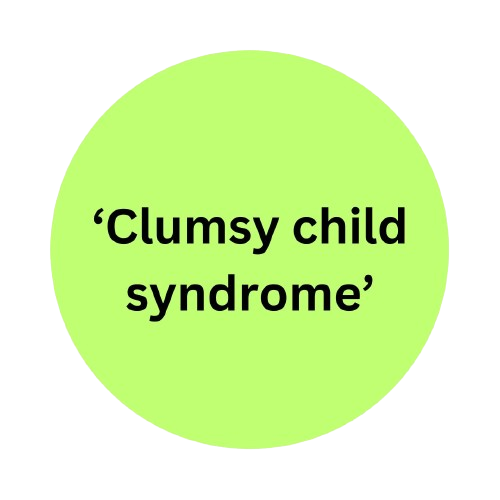
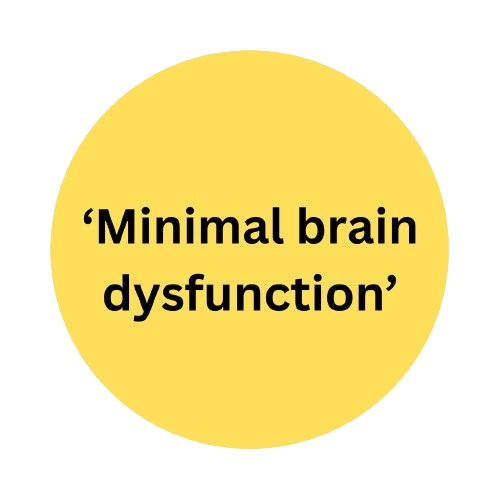
He said: ‘We can't even establish what to call ourselves, whether it’s Dyspraxia or DCD. That kind of convoluted thing just makes things a bit more complicated.
‘I think the biggest issue is that we haven't agreed what the name is, which makes things a bit fragmented.’


Although he accepts the term ‘Developmental Coordination Disorder’ as a convenient way to summarise a broad spectrum of the dyspraxic experience, he rejects its connotations.
For him, the word ‘developmental’ implies that Dyspraxia is something that can be grown out of, the word ‘coordination’ puts too much emphasis on Dyspraxia’s physical implications, and the word ‘Disorder’ suggests that it is something that needs to be cured.
He said: ‘The word disorder reinforces the medical model, i.e. a disease or pathological problem that needs to be fixed.
‘Because, if something is “disordered”, it’s not a positive thing is it?
‘The word “dis” implies something is out of order'.
This lack of ‘medical consensus’, however, is not wholly negative, Tumi believes. Whilst it might be a barrier to advocacy, it means that not one person’s experience of Dyspraxia is the same.
He said: 'I like the fact that there is no universal description to what Dyspraxia is, because it means that every individual that is dyspraxic gets to define what it means to them.
‘And no one can tell you, you're wrong, because there's no consensus.
‘Dyspraxia breeds strength.’
Despite having a Dyspraxia diagnosis for over six years, I had never spoken to a dyspraxic person about Dyspraxia before.
I set out to find out why the condition seems to have a PR problem in comparison to other neurological disorders, and it feels like people such as Tumi, Janet and Charis are making headway in changing this.
While people outside of the world of Dyspraxia might not know exactly what it means, there is a community that is striving to make lives better for those within it.
From these brief conversations, I already feel better equipped to go out and talk about Dyspraxia, so I look forward to seeing the wider effect that these campaigners are going to have on the world and its understanding of Dyslexia’s ugly step-sister.


 Built with Shorthand