
Cutting ties:
Nearly half of queer youth cut off from homophobic family.
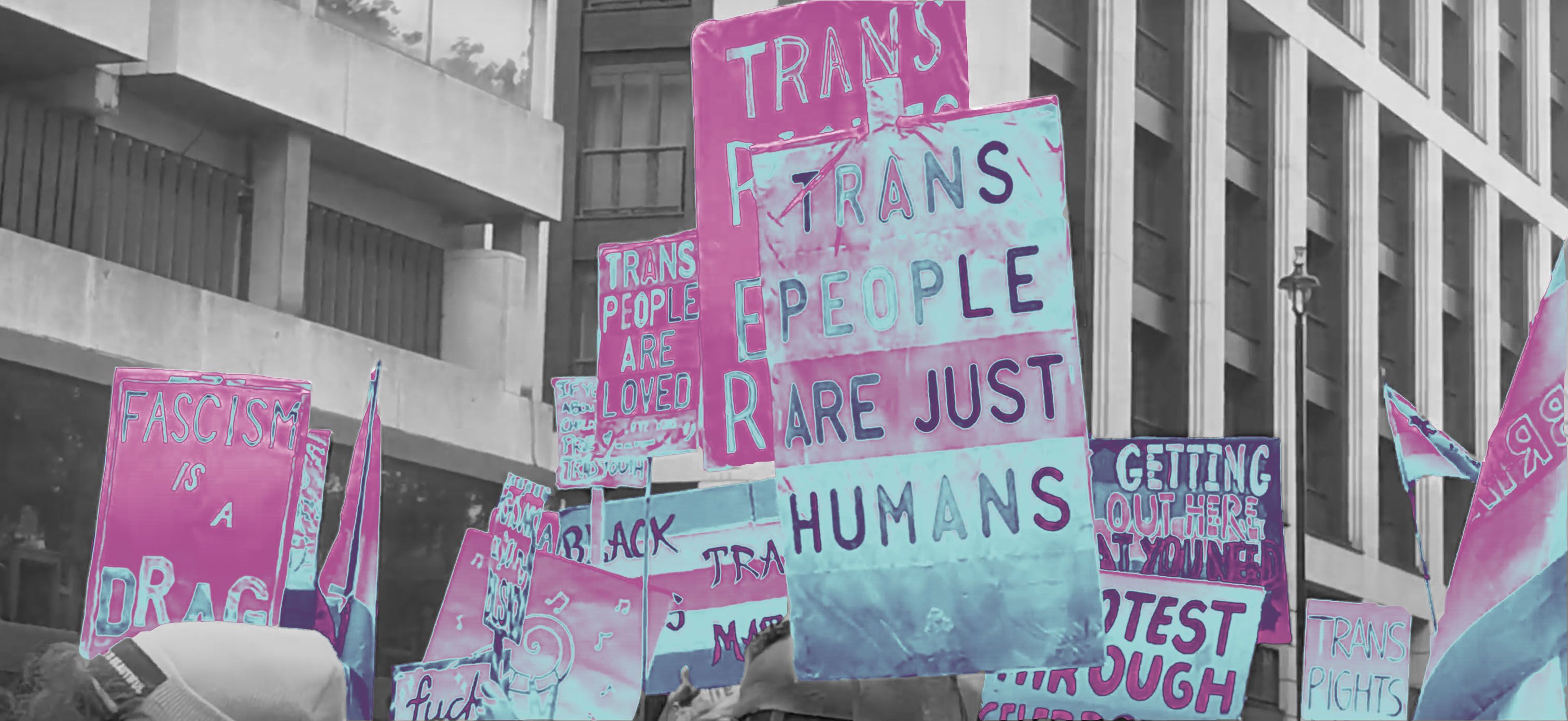

"Every insult or bad joke all feel like they add up to make me less and less comfortable being honest to my family members."
Almost half of LGBTQ+ youth in the UK are estranged from at least one family member (46%), with many expressing fears they won't be accepted if they come out, research has shown.
Carried out in April this year, the study from charity Just Like Us surveyed 3,695 people aged between 18 and 25 and also found that a third of those surveyed (31%) said they, 'weren't confident their parent or guardian would accept them.'
Furthermore, it was reported that 14% of queer people said they are not close with their immediate family, compared with 6% for straight people.
But for trans and non-binary people, the statistics are higher, with 19% of trans people and 23% of non-binary people struggling with being close to their family.
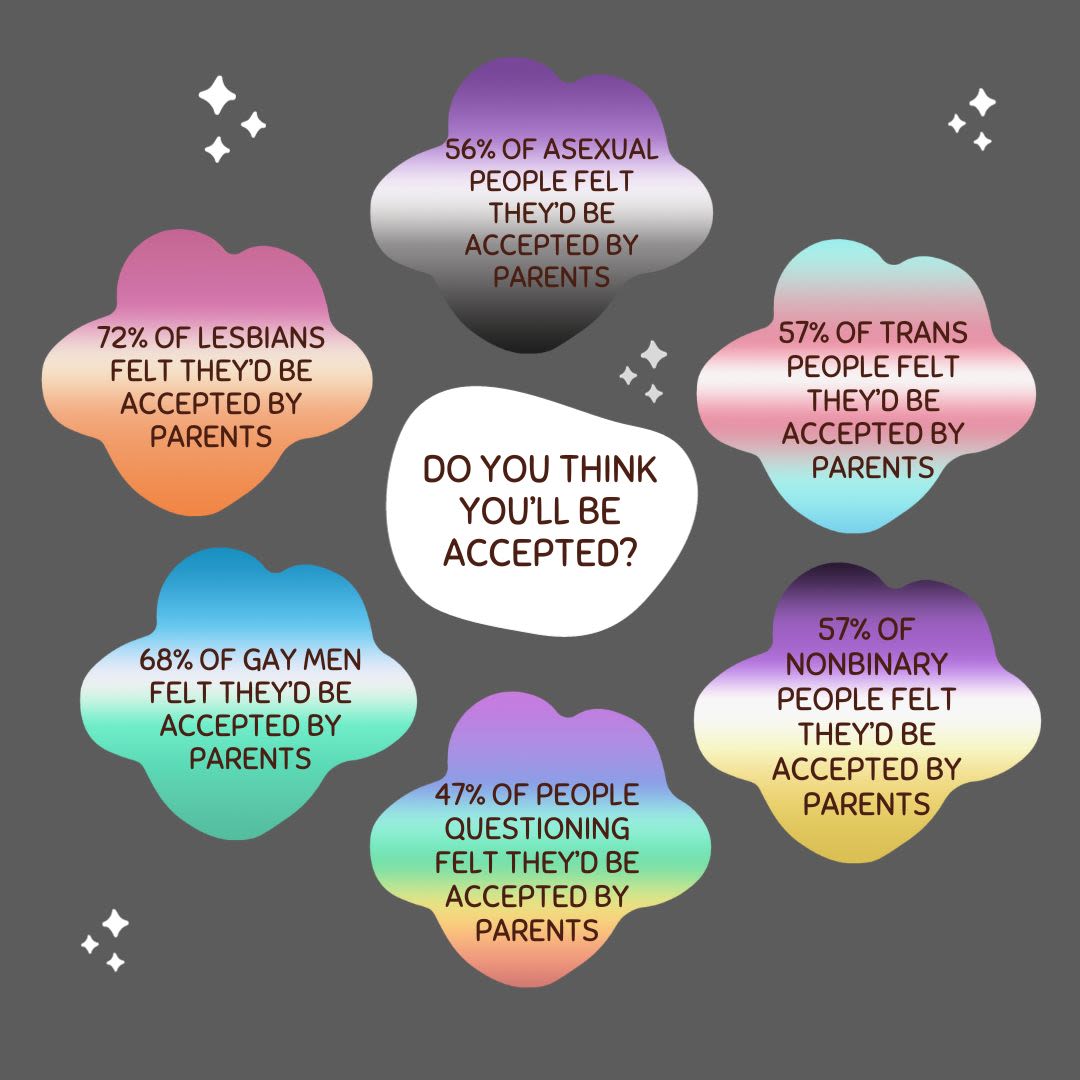
Just Like Us also asked their participants how confident they were their parents or carers would accept them if they came out:


"As LGBT+ people, many of us know the anguish that the breakdown of family relationships causes us when we’re not accepted for who we are. "
Speaking about the report, Amy Ashenden, said:
“It’s sadly a common myth that being LGBT+ is easier today, when in fact many LGBT+ young adults remain fearful of their parents not accepting them, with almost half estranged from at least one family member.
“It is heartbreaking to see that so many LGBT+ young adults spending their formative years in fear that their parents won’t love them because they're lesbian, gay, bisexual or trans," she added.
She said that LGBT young people should know "that their identities are valid and deserve to be celebrated." She also hopes that parents and carers will "show them that is the case."
“When there is silence, there is shame, so we must talk about these topics in school and at home to ensure LGBT+ young people no longer live in fear of rejection.”

I spoke to 19 year old, Kieran Donoghue (he/they), about how his identity has affected family relationships:
Has homophobia or transphobia affected you coming out to your family?
Kieran: Yes, I tend to do everything possible to avoid coming out to people that aren't within my close friend group. I feel more comfortable leaving it in the air and casually referencing my gender or sexuality to avoid putting myself on a platform to be judged.
I feel like to be openly trans or LGBT is a lot more dangerous than straight people make it out to be. As a trans person, it feels like I'm in a constant challenge with people who don't think my gender is valid and it surprises me what extremes everyday people around us will go through to gate-keep gender to the people assigned at birth.
Because I don't know all of my family's opinions on gender and sexuality, it's difficult to deduce if I'm honest about my gender or sexuality, whether or not i'll be safe visiting family. You're constantly thinking about something your relatives might have said years ago that might be proof they won't accept you.
Even if parents or family take coming out 'well', it's a fear of not wanting your family dynamic to change. I've seen it happen a lot with friends where if I tell them my gender or sexuality, they treat me worse afterwards or don't take me seriously anymore.
How did your mum react when you came out to her?
Kieran: So I have an older sibling that went through the same process, so we skipped a lot of the questions on gender and it took a little while for my mum to understand it.
With my sexuality, my mum still treat me the same and didn't create a big deal out of it.
Sometimes I appreciate that it was never dramatised but again, I have a feeling she could be ignoring my gender or sexuality.
Have you ever experienced homophobia or transphobia from family?
Kieran: Indirectly, I've had family members be part of organisations or groups that were homophobic.
I've had extended family say some pretty nasty things on Facebook that make me want to avoid them entirely.
Every insult or bad joke all feel like they add up to make me less and less comfortable being honest to my family members.
Do you ever feel isolated from your family because of your identity?
Kieran: Yeah, I feel like I don't say my piece or stand my ground with my opinions on gender and sexuality with my family because usually i'm the only one out of a group who has these opinions.
Being the only one can feel quite isolating at times. It's not the greatest feeling, I only particularly get defensive if they say something about somebody very close to me.
Otherwise, I just don't mention anything or I avoid family events, trips out and activities with them.
I spoke to 19 year old, Kieran Donoghue (he/they), about how his identity has affected family relationships:
Has homophobia or transphobia affected you coming out to your family?
Kieran: Yes, I tend to do everything possible to avoid coming out to people that aren't within my close friend group. I feel more comfortable leaving it in the air and casually referencing my gender or sexuality to avoid putting myself on a platform to be judged.
I feel like to be openly trans or LGBT is a lot more dangerous than straight people make it out to be. As a trans person, it feels like I'm in a constant challenge with people who don't think my gender is valid and it surprises me what extremes everyday people around us will go through to gate-keep gender to the people assigned at birth.
Because I don't know all of my family's opinions on gender and sexuality, it's difficult to deduce if I'm honest about my gender or sexuality, whether or not i'll be safe visiting family. You're constantly thinking about something your relatives might have said years ago that might be proof they won't accept you.
Even if parents or family take coming out 'well', it's a fear of not wanting your family dynamic to change. I've seen it happen a lot with friends where if I tell them my gender or sexuality, they treat me worse afterwards or don't take me seriously anymore.
How did your mum react when you came out to her?
Kieran: So I have an older sibling that went through the same process, so we skipped a lot of the questions on gender and it took a little while for my mum to understand it.
With my sexuality, my mum still treat me the same and didn't create a big deal out of it.
Sometimes I appreciate that it was never dramatised but again, I have a feeling she could be ignoring my gender or sexuality.
Have you ever experienced homophobia or transphobia from family?
Kieran: Indirectly, I've had family members be part of organisations or groups that were homophobic.
I've had extended family say some pretty nasty things on Facebook that make me want to avoid them entirely.
Every insult or bad joke all feel like they add up to make me less and less comfortable being honest to my family members.
Do you ever feel isolated from your family because of your identity?
Kieran: Yeah, I feel like I don't say my piece or stand my ground with my opinions on gender and sexuality with my family because usually i'm the only one out of a group who has these opinions.
Being the only one can feel quite isolating at times. It's not the greatest feeling, I only particularly get defensive if they say something about somebody very close to me.
Otherwise, I just don't mention anything or I avoid family events, trips out and activities with them.
I also spoke to 19 year old Maddie, about their identity and fears of being rejected by family.
Maddie was voiced by me to protect their identity.
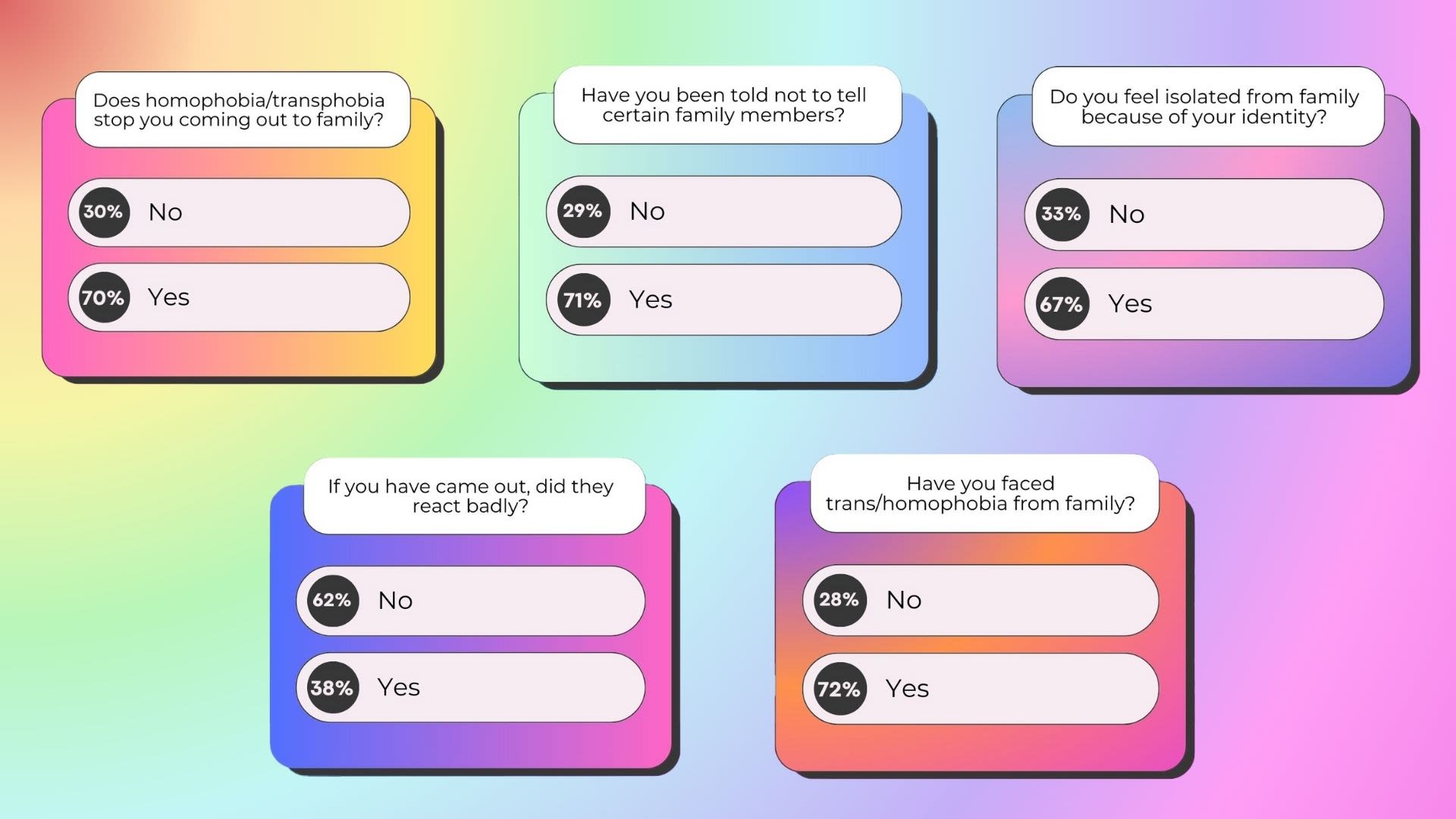
I also conducted a poll of 15 people to find out if they had experienced similar things to Kieran and Maddie.


My own personal experiences with my sexuality echo very similar themes to both Kieran and Maddie.
From hiding posts about going to pride parades in my camera roll, to anxiety whenever the topic of LGBT rights gets brought up at Sunday lunch, I know firsthand how isolating being queer can feel sometimes.
However, at the same time, I've never felt community more strongly than at a pride march, or a gay bar, or with my friends, where I can be unapologetically and wholly, myself, surrounded by love and people who are just like me, before we go back to families and homes that may reject us.
I hope the statistics from this report paint a clearer picture and show LGBTQ+ people currently feeling cut-off from their family, that they are not the only ones.

 Built with Shorthand