
Cosy crafts: Why are textile hobbies still so popular?
By Caleb Ching
Millie’s favourite place to crochet is her nan’s graveside, sitting on one of her blankets. Her backpack is usually crammed with a picnic, several colours of yarn and more crochet hooks than she needs. When she needs a break, Millie doesn’t scroll on her phone. She talks to her nan.
“People think I'm mental because not only am I sat there till all hours, but I'm just talking,” she said. “It brings me peace. That is my true definition of comfort. That is like meditating to me.”
Millie Stewart crochets bags and accessories which she sells online. She posts videos of her making and modelling outfits on TikTok. But for the 21 year-old, it wasn’t a screen that introduced her to yarnwork. It was watching her grandmother knit.
Every Christmas, she and her brothers would receive knitted blankets. “They’d fall apart if we blew at it too hard, but they were fabulous,” Millie said. “She carried on making them forever, even up until she was sick.”
After her nan died, Millie wanted to keep up the tradition. Setting herself the goal of making a blanket, she opted for crochet: using a single hook to build fabric one stitch at a time.
“I'd be trying to picture her and channel her,” Millie said. “It almost felt like I was spending time with my nan and I think that helped me grieve.”
Alongside the connection to her grandmother, Millie was surprised to find the process of crochet helped her manage her ADHD.
“If you are neurodivergent and don't have any sort of creative outlet, your brain's going to find one,” she said. “It's just going to come out and appear in different ways that aren't healthy for you.”
"I think that helped me grieve."
CRAFTY: Millie Stewart shows off one of her crochet bags Photo: Caleb Ching
CRAFTY: Millie Stewart shows off one of her crochet bags Photo: Caleb Ching
“There's a chicken called Beth wearing a little jumper.”
PROCESS KNITTER: Bethan Hammond enjoys the ritual of crafting more than the finished product Photo: Caleb Ching
PROCESS KNITTER: Bethan Hammond enjoys the ritual of crafting more than the finished product Photo: Caleb Ching
POULTRY FASHION: One of the jumpers Bethan knitted for the rescued chickens Photo: Bethan Hammond
POULTRY FASHION: One of the jumpers Bethan knitted for the rescued chickens Photo: Bethan Hammond
Bethan Hammond learned to knit using YouTube videos to keep herself mentally stimulated during the Covid-19 pandemic. Six years later, the 31 year-old is combining knitting with her passion for crafting replica film props.
“My family sort of joke and always say that if I'm sitting, I'm knitting,” Bethan said. Whether at home or at a cafe with friends, Bethan usually has something on her needles.
“It's a meditative thing,” she said. “If your hands are busy, you can work through some of the things going on in your brain. It's the same reason people play with a fidget toy.”
For Bethan, it's as much about the practice as the product. “Within knitting there's product knitters and process knitters. You're either knitting because you want something finished, or you're knitting because you enjoy the actual work,” she said. “I'm a process knitter.”
While the result may be less important than the ritual, her creations have found grateful owners. “The very first thing I ever made was a dog scarf,” she said. “It was a really tiny little scarf, especially considering my dogs are chihuahuas.”
Despite graduating to human-sized scarves and jumpers, canine neckwear wasn’t her only venture into animal fashion after a wool shop owner asked for help.
“One of her close friends rescued some chickens and asked if any of her customers could knit jumpers for them because they were underweight- they didn't have enough feathers and were cold,” Bethan said. She knitted some jumpers and in gratitude, one of the birds was named after her. “Out there somewhere, there's a chicken called Beth wearing a little jumper.”
Bethan has also donated cardigans to maternity and neonatal wards. The few hours she spent making the tiny garments were worth it. “It's really rewarding to know it's going to be used by somebody.”
After completing her master's degree and moving home, 29 year-old Emily Kilkelly struggled to find work. It was a dismaying time but crochet presented a respite.
“Instead of sitting around doom scrolling and feeling sorry for myself, I thought: I’m going to learn a craft,” she said.
Trips to buy materials gave her a reason to leave the house, the low cost of yarn and abundance of online tutorials made the hobby accessible when her only source of income was selling her possessions through Vinted.
Emily eventually found work and crocheted a baby blanket as a gift for the woman whose maternity leave she was covering.
“It was kind of like coming full circle,” she said. “I've now offered it to someone at this new job I've probably only got because crocheting kept me sane.”
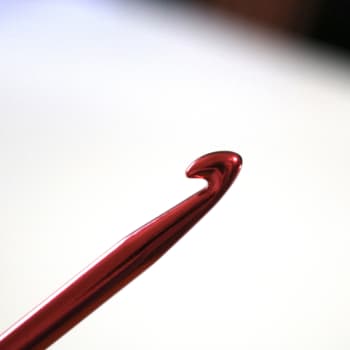
Millie, Bethan and Emily picked up their hooks and needles for different reasons but the experience they describe is shared: yarnwork offered them something beyond the finished product. So what is behind the resurgence of cosy crafts?
MINDFULNESS: Cosy crafts offer a moment of calm in a busy world Photo: Caleb Ching
MINDFULNESS: Cosy crafts offer a moment of calm in a busy world Photo: Caleb Ching
Bethan attributes the renewed interest to a focus on slow fashion. “A lot of people now are understanding the reward and the value of clothing manufactured with intention rather than it just being mass produced,” she said.
Millie echoed her words, explaining how crochet can’t be machine-replicated- forming the knots requires complex movement and intuition. “People like the fact that crochet is always handmade,” she said. “It gives you a bit of individuality.”
At a glance, the yearning for originality may seem at odds with an online trend but Emily disagrees. “Independence and ownership is what a lot of people are like trying to find now,” she said. “This hobby is a way of people reclaiming that.
“These crafts are very personal. No one has done it the exact way you've done it, interpreted the tutorial the way that you have, or put those colors together.”
While handmade clothing may offer individuality, Millie believes the appeal of yarnwork is also more universal. “Everyone's on the go constantly. There's always something else, something to do or a new trend or something to follow on your phone,” she said. “I think everyone really enjoys it because they do just get to sit there in peace for a minute and have that little sense of quietness.”
 Built with Shorthand