
A New Bridge for Sunderland
After opening for the Women's Rugby World Cup, the Keel Crossing bridges the gap on the Riverside Sunderland development.
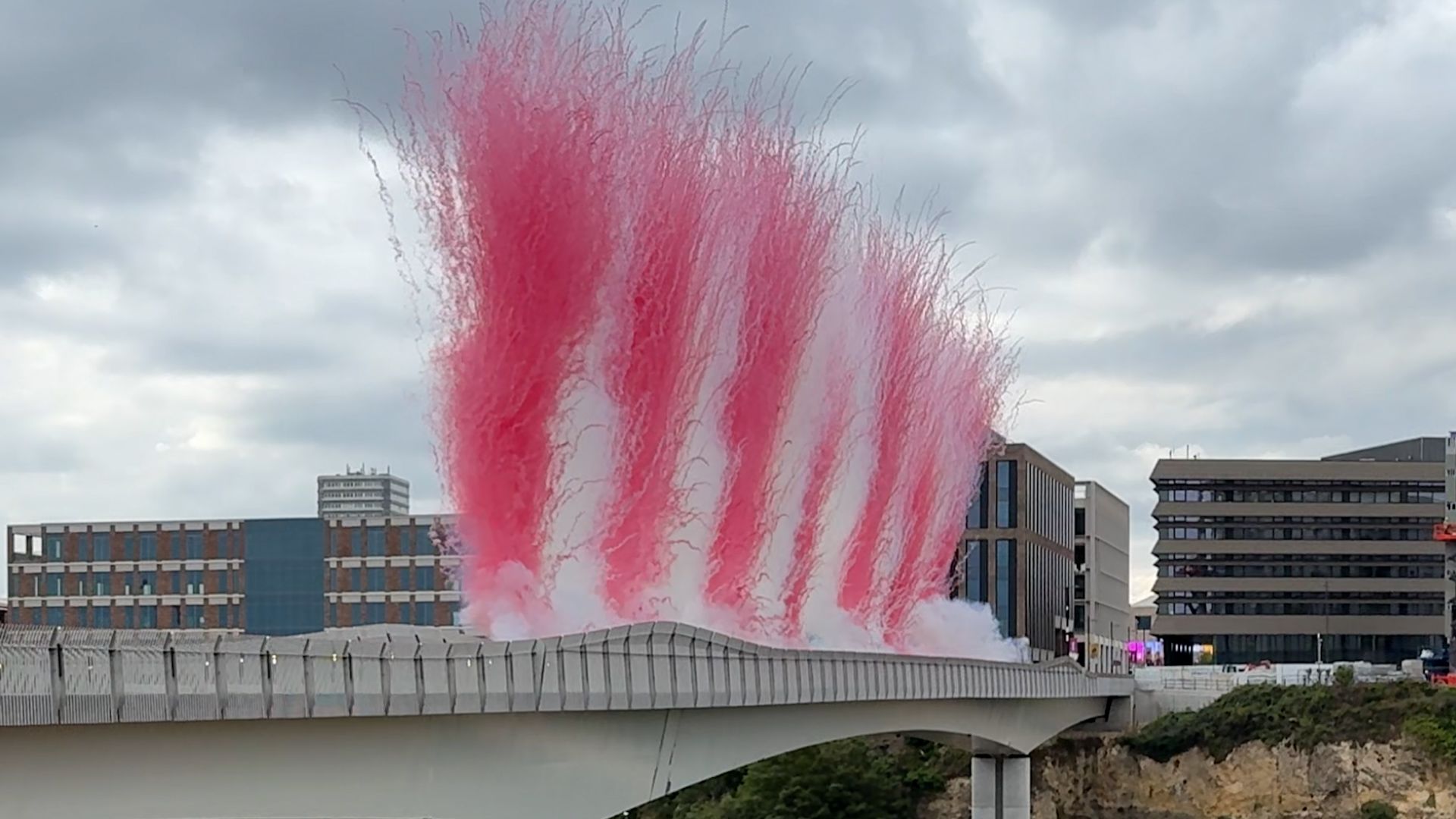

Sunderland’s newest asset, the Keel Crossing, opened to the public on 18 October after an earlier ceremonial opening on 22 August for the Women’s Rugby World Cup match between England and the USA.
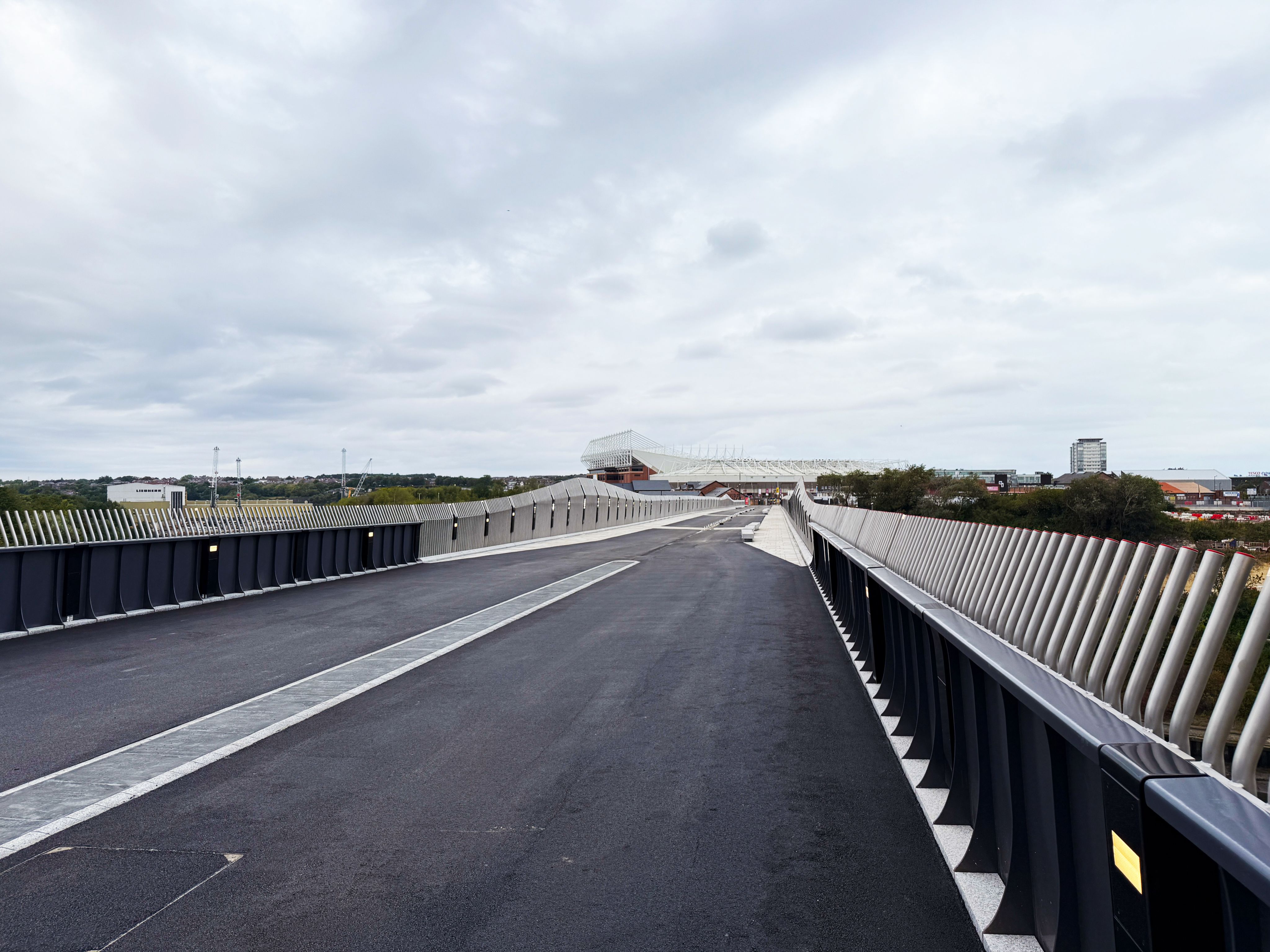
Opening just in time for a 3 o’clock kick off at home against Wolverhampton Wanderers, the bridge allowed thousands of fans from the south of the city, which included those enjoying pre-match novelties in the city centre, quicker access from Keel Square to the Stadium of Light.
It also allowed thousands of cheering fans back to the city centre's bars and restaurants after a well-deserved 2-0 win against the West Midlands team.
The bridge is the latest addition in the Riverside Sunderland development, a 32-hectare site that is set to be a "dynamic, carbon-neutral urban quarter".
Michael Mordey, Sunderland City Council Leader, wanted the new £31 million pedestrian bridge opened "for the first couple of games" of the new Premier League season, especially after Sunderland AFC's recent promotion to the top tier of English football.
Engineering work had to continue after the bridge's ceremonial debut in August, with the England vs USA match being attended by 42,723 fans from across the country and the Atlantic.
The new way to cross the River Wear, something Mackems have been doing for millennia, reduces the restrictions on road traffic crossing the Wearmouth Bridge on match days, and links the new central hub of the city’s night life with the Sheepfolds development.

The Story So Far
Spanning nearly 100km from Wearside to Weardale, the list of crossings over the Wear has changed dramatically over the years. The latest addition is the sixth connection from the North Sea to Sunderland.
1879
Monkwearmouth Bridge
Also known as the Sunderland Railway Bridge, it was originally built as part of the Monkwearmouth Junction Line, which provided the first direct train link between Sunderland and Newcastle. Nowadays, the bridge is used by the Tyne and Wear Metro and trains on the Durham Coast Line.
10 June 1909
Queen Alexandra Bridge
Opened by the Earl of Durham on behalf of the bridge's namesake, the original upper deck transported about six million tonnes of coal a year before closing in 1921. The below deck continues to connect Pallion and Southwick by road, foot and bicycle.
31 October 1929
Wearmouth Bridge
Not to be confused with the Monkwearmouth Railway Bridge, construction on Wearmouth began in 1927, replacing the original which opened on 9 August 1796. Thousands of SAFC fans south of the river have used this vital piece of infrastructure to get to both Roker Park and the Stadium of Light.
Watch the Duke of York, who later became King George VI, open the bridge on 31 October 1929.
30 September 1974
Hylton Viaduct
The A19 crossing that connects the two Hyltons, the steel box girder bridge also allows pedestrian access. The bridge was due to open two years earlier in 1972, and when it eventually permitted access to traffic, it wasn’t for another two months that cars could travel on both carriageways.
29 August 2018
Northern Spire Bridge
No longer the “new” bridge, the two span cable-stayed bridge connects Pallion and Castletown, and was Sunderland’s first new bridge in over 40 years when it opened in 2018. The central A-frame pylon rises to 105m (344ft), which is twice as high as Gateshead’s Millennium Bridge and taller than Big Ben’s clock tower.
22 August 2025
Keel Crossing
The jewel in Sunderland’s bridge crown and a part of the Riverside Sunderland development, the new bridge connects the recently renovated Sheepfolds to the heart of the city at Keel Square. The bridge continues The Keel Line, a granite art installation that features the names of up to 9,000 ships built on the Wear.
Watch the Mayor of Sunderland, Ehthesham Haque, and former Sunderland AFC goalkeeper, Jimmy Montgomery BEM, cut the ribbon on the opening day of the Keel Crossing.
What it means for Sunderland
Keel Crossing bridges the gap between the new heart of the centre of Sunderland, Keel Square, and the recently refurbished Sheepfolds site, which neighbours the Stadium of Light.
Originally home to more than 100 working horses on the Monkwearmouth Junction Line, the Sheepfolds was originally built in 1884 for the North Eastern Railway. The redeveloped area is now home to restaurants, cafes, and bars.
Architect and television presenter George Clarke, who grew up in Washington and attended Oxclose Comprehensive School, attended the opening ceremony in August, calling the new bridge "better than Wembley Way".
George Clarke, TV architect
George Clarke, TV architect
Sunderland City Council Leader Michael Mordey said it was a "proud moment for the city" to open this "vital piece of infrastructure".
Michael Mordey, Sunderland City Council Leader
Michael Mordey, Sunderland City Council Leader
On the opposing banks of the Wear to the Sheepfolds is the brand new Vaux site complex, which continues to be home to cranes and scaffolding as work continues. Keel Square is the city’s new central event space, like its own version of Times Square in New York. The Botanist and The Keel Tavern provide entertainment and drinks, with the soon-to-be-finished Culture House being the new home for Sunderland’s archives and library.
On match days, thousands of those coming from south Sunderland, including from the recently renovated central train station, will now have easier access straight to the Stadium of Light.
KEEL CROSSING IN NUMBERS
A TOTAL LENGTH OF
260 metres
WEIGHING
1,150 tonnes
ON A BUDGET OF
£31 million
Cultural links like no other



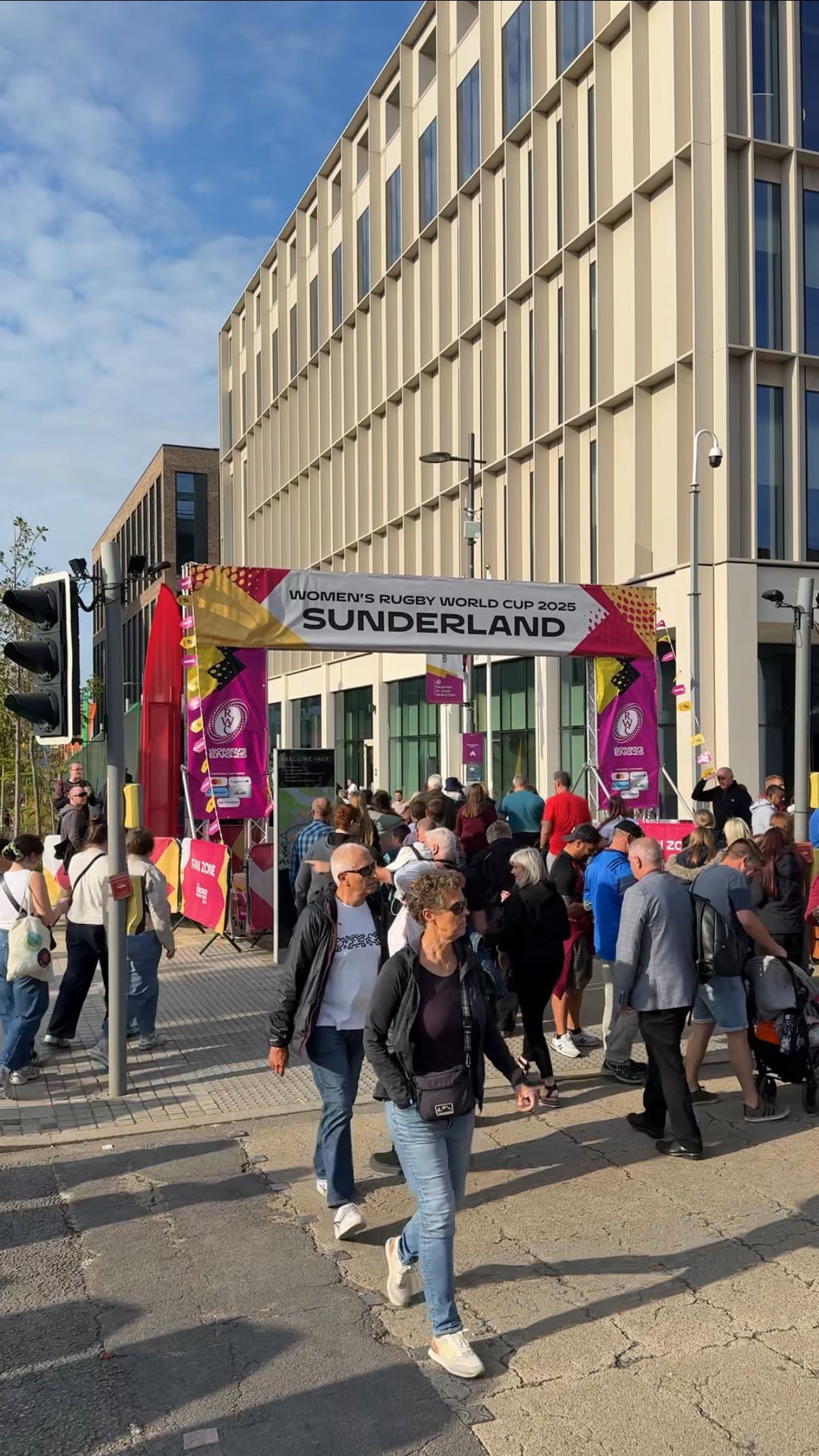
Before the opening whistle blew on the Red Roses vs the Eagles, a cultural parade including performers, fans, and over 150 flags christened the Keel Crossing with their passing.
Dance troupes, musicians, and community groups crossed from Keel Square to the Stadium of Light in the summer sun, whilst hundreds of onlookers stood alongside and watched in awe.
Benjy, 24, from Silksworth, came down to the celebrations in the city with his camera, hoping to get snaps of rugby fans from across the world enjoying his city. “It’s just great to see everyone enjoying the city I’ve grown up in and loved,” he said.
Vicky, 51, from Tunstall, was more concerned with the new structural integrity, which she said she could feel “bouncing” as thousands began to walk across. Regardless, she said it was a “great addition” to the city, and enjoyed the festival before darting off to see the Red Roses win.
Watch highlights from the Cultural Parade held on 22 August below.
The Future
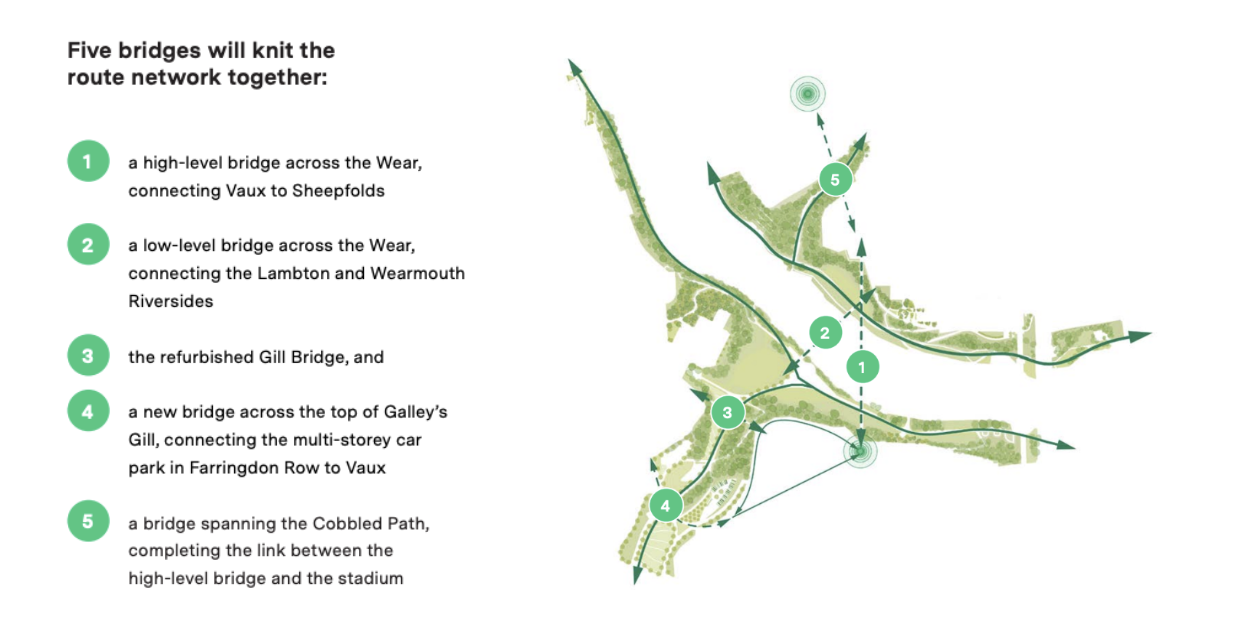
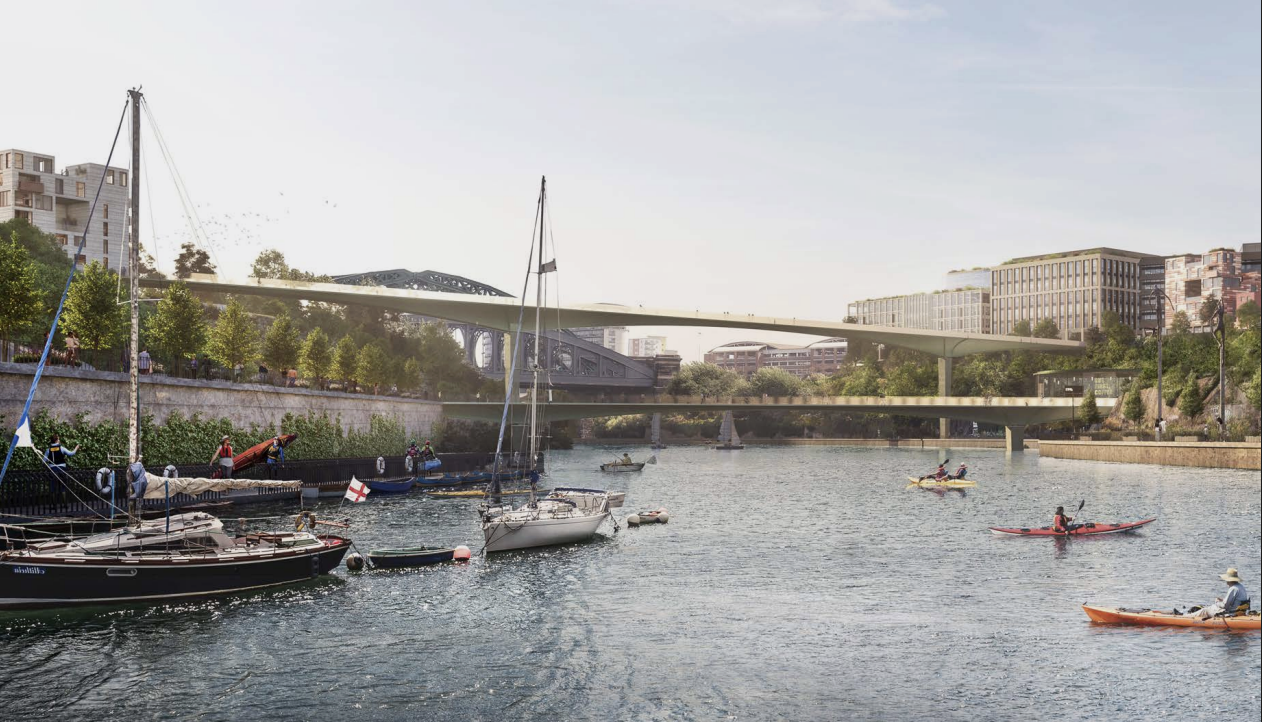
The opening of the Keel Crossing is not the end of developments for crossings over the Wear in the near future, in fact there are plans for the opening of a further four bridges over the next year or so.

Credit: Riverside Sunderland
Credit: Riverside Sunderland
These include a low-level bridge, which will connect the Lambton and Wearmouth riversides; the refurbished Gill Bridge, which will open access between a new park and housing development; as well as a bridge that will connect the stadium to the Keel Crossing.
The next main aim for Sunderland City Council will be the lower-level crossing across the Wear, once the regeneration of Riverside Park is completed. But for now, residents can enjoy passing from the city centre to the Stadium of Light with ease.

 Built with Shorthand